
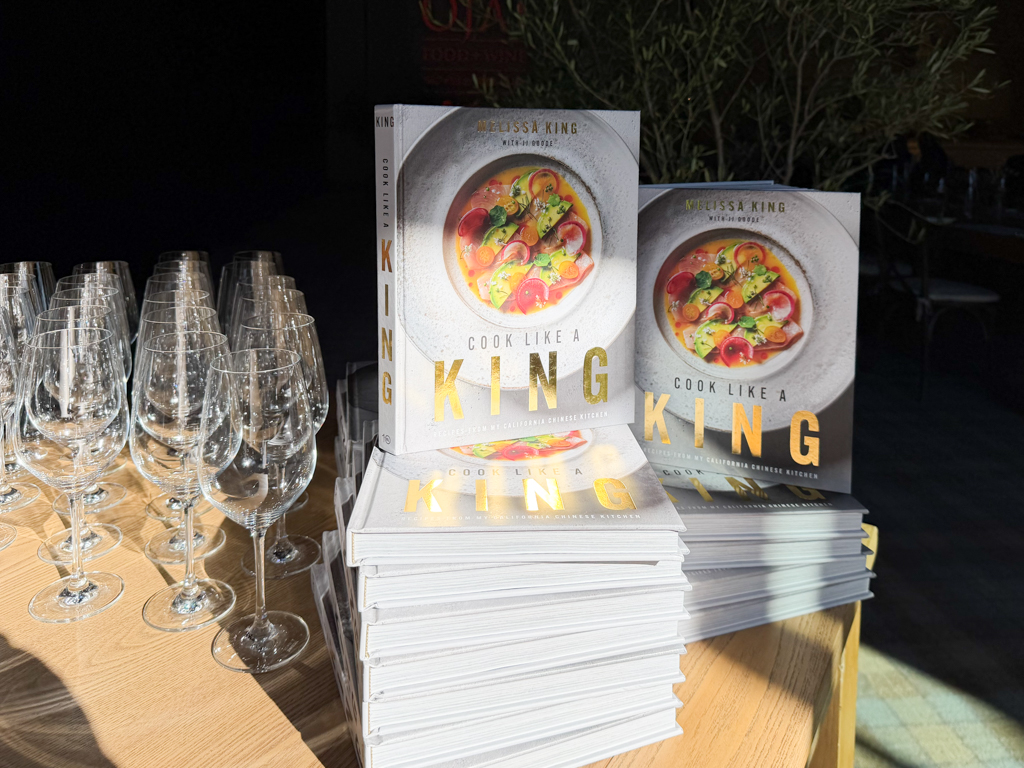
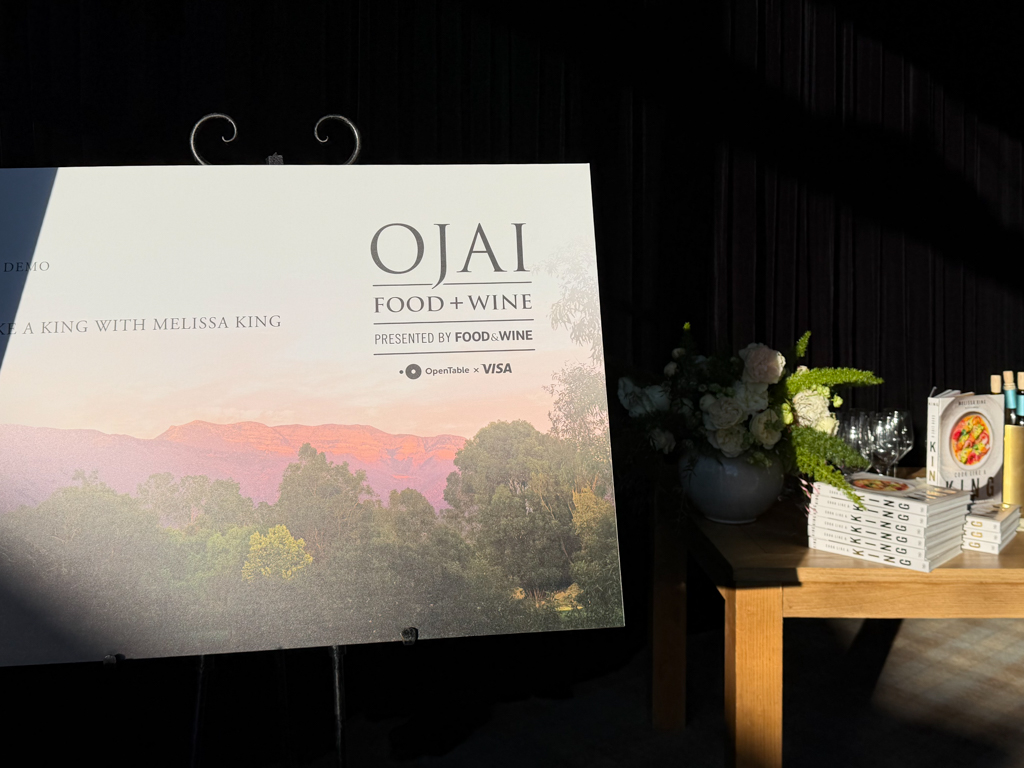
After such a fanatic experience at Culinary Demo: Showcasing Nini Nguyen's Dac Biet Cookbook at the Ojai Food + Wine Festival, I was exceptionally excited when the year's Food + Wine Festival was announced. After browsing the listing for the single event page, my eyes settled on the "Cook Like a King" Culinary Demo with Melissa King.
ARriving to Ojai Valley Inn + Check In
The experience began with yet another smooth drive to Ojai. Before I knew it, my car was valet parked and I was whisked away in a golf cart to the Farmhouse.
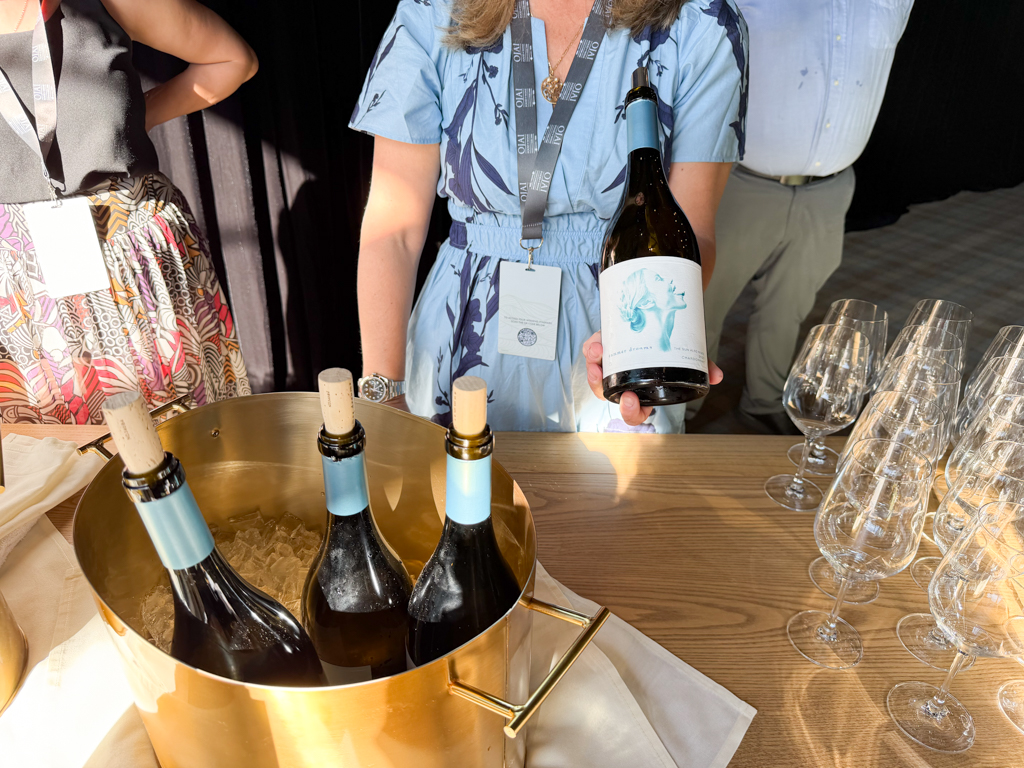
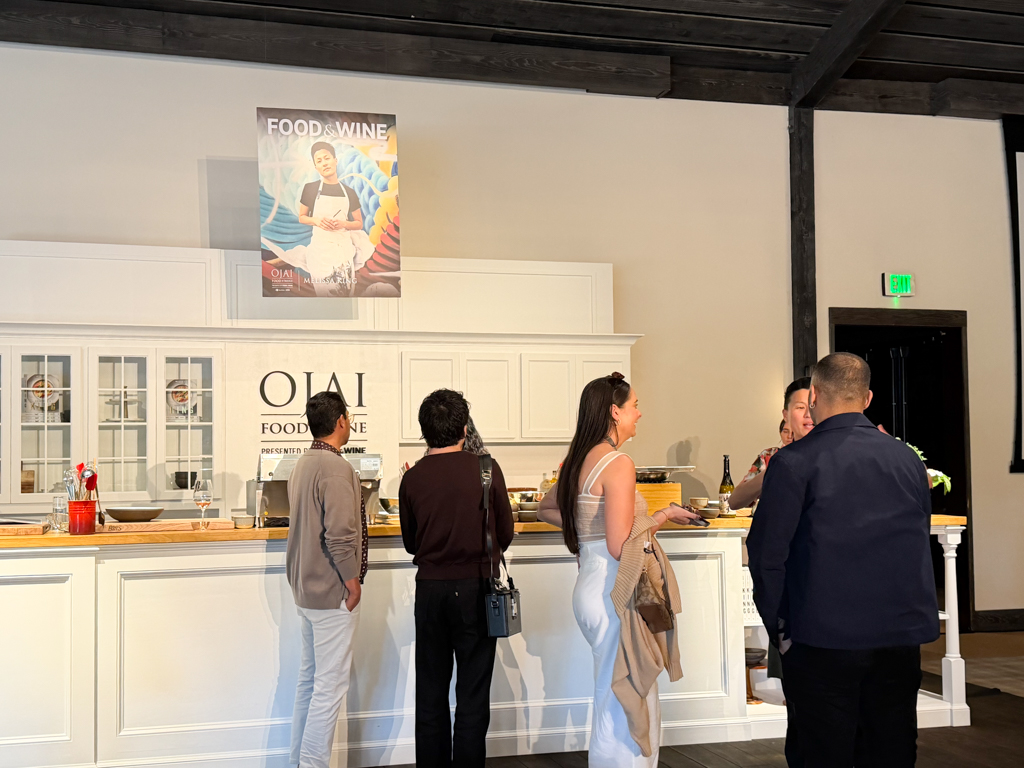
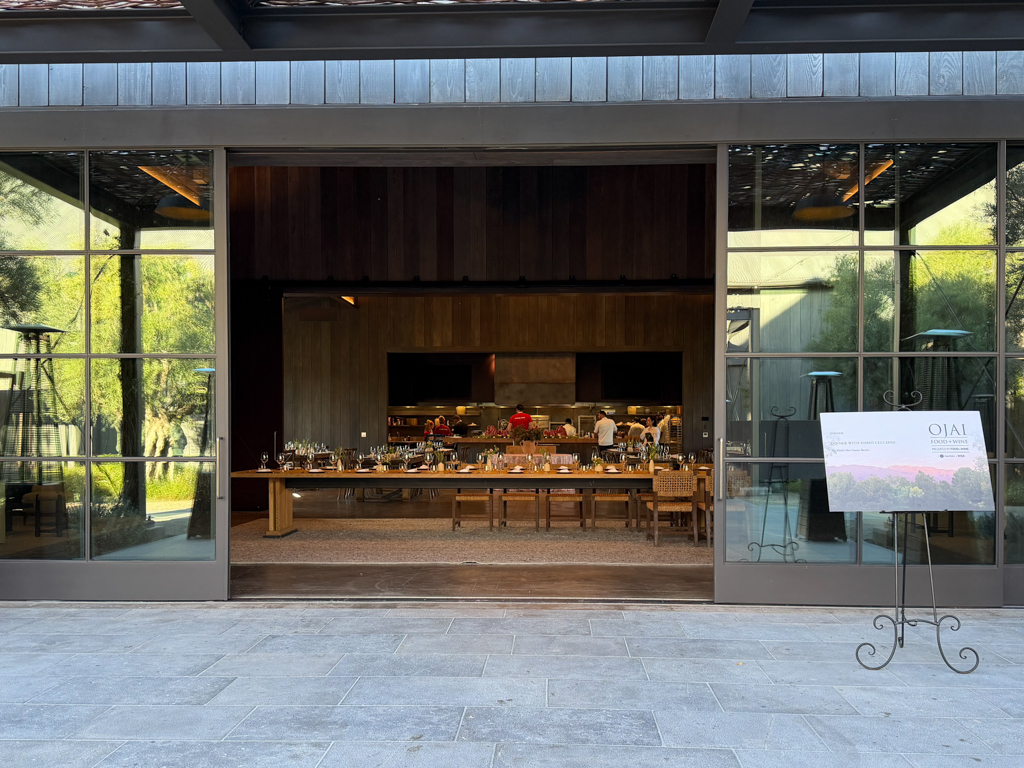
Walking in, I was poured a welcoming glass of 2023 Summer Dreams “The Sun Also Rises’ a Chardonnay from the Sonoma Coast, California. I quickly found a seat, front and center of the room, in clear eyesight of the culinary fun.
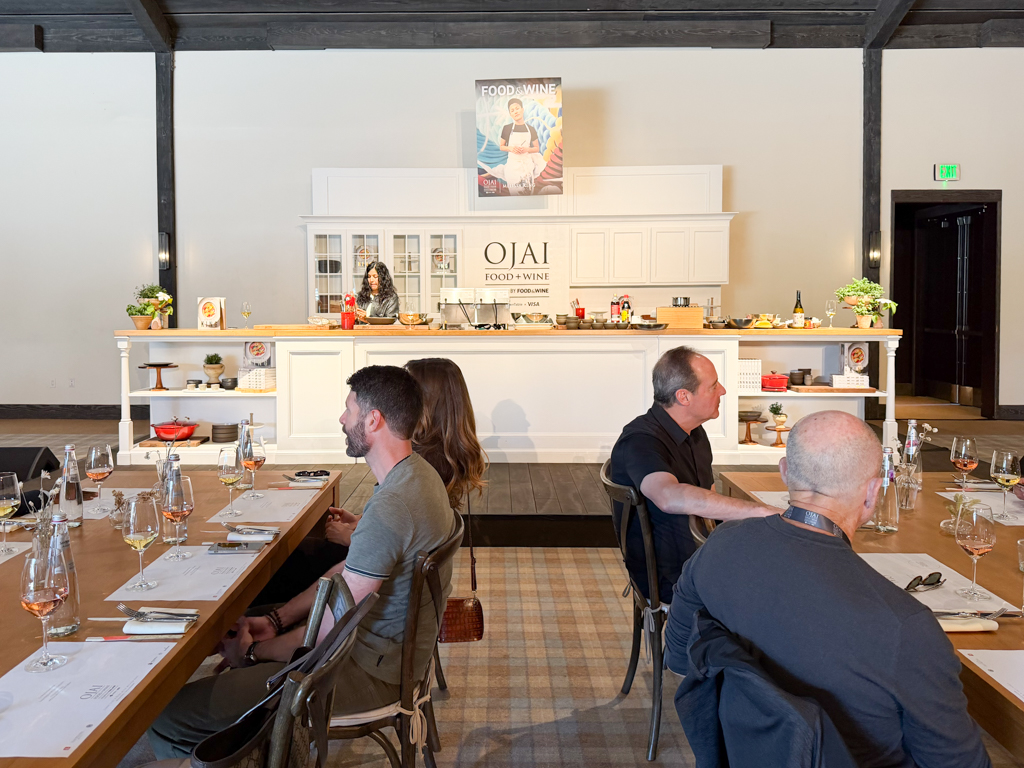
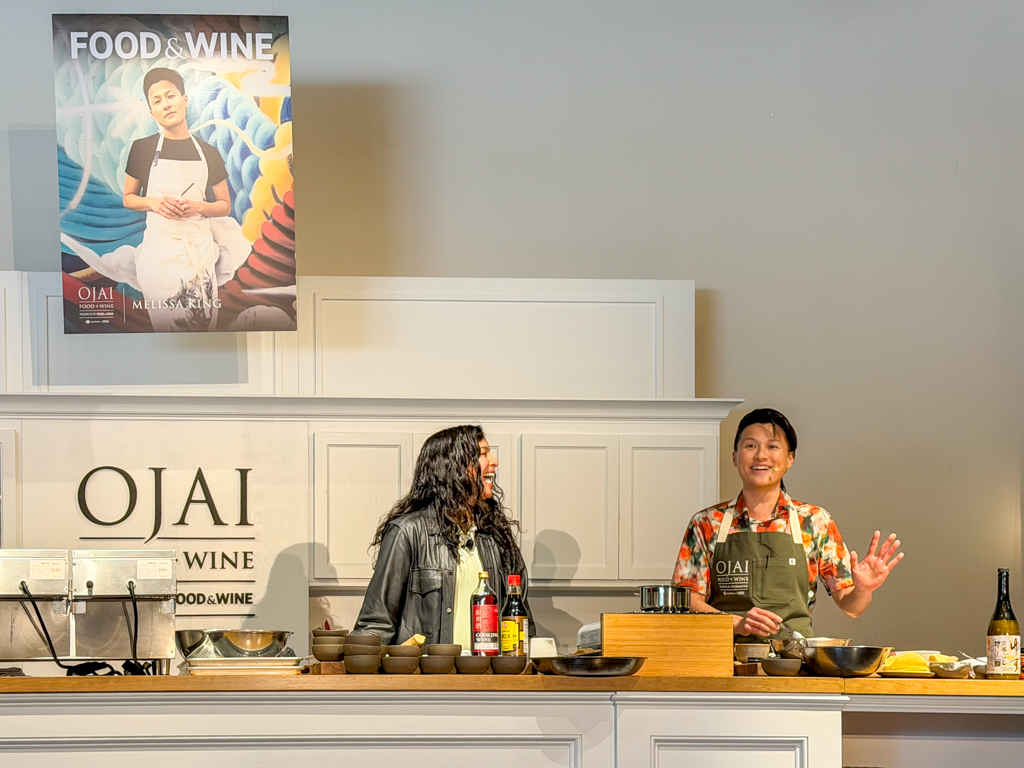
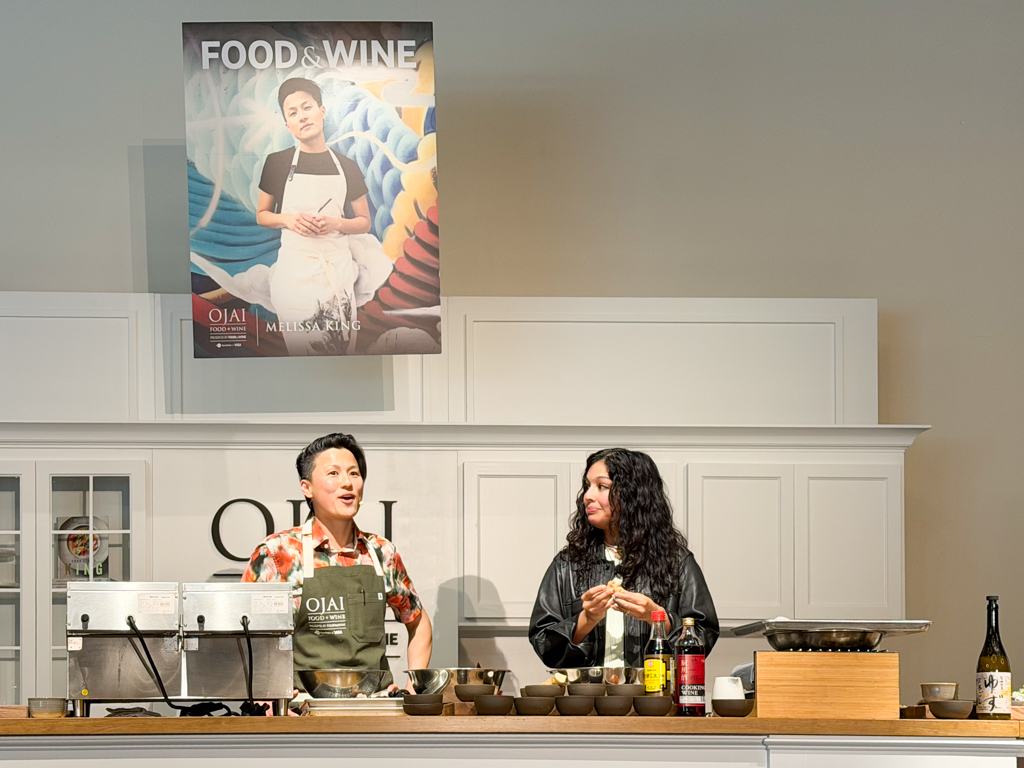
At the appointed time, we were introduced to the chef with the most challenge wins in Top Chef history: Melissa King.
Melissa King is a San Francisco-based chef who rose to national prominence after winning Top Chef: All-Stars L.A., Season 17. Known for her blending her Chinese – American heritage with fine dining precision, she has built a reputation as a distinctive culinary voice focusing advocacy, speaking openly about LGBTQ+ representation and Asian American visibility in the food industry.
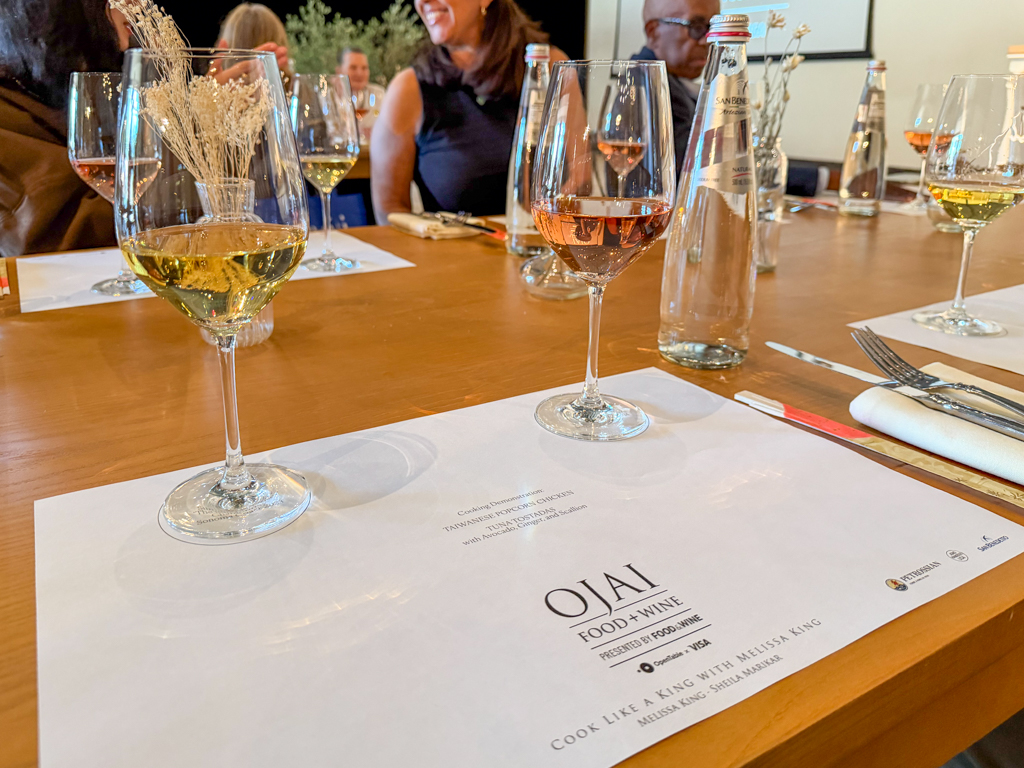
Demo 1: TUNA TOSTADAS
First up for demonstration, Melissa began preparing the tuna tostadas as she conversed with Sheila Marikar the session’s host. As they conversed, Melissa spoke of how the dish was inspired by a trip to Hawaii.
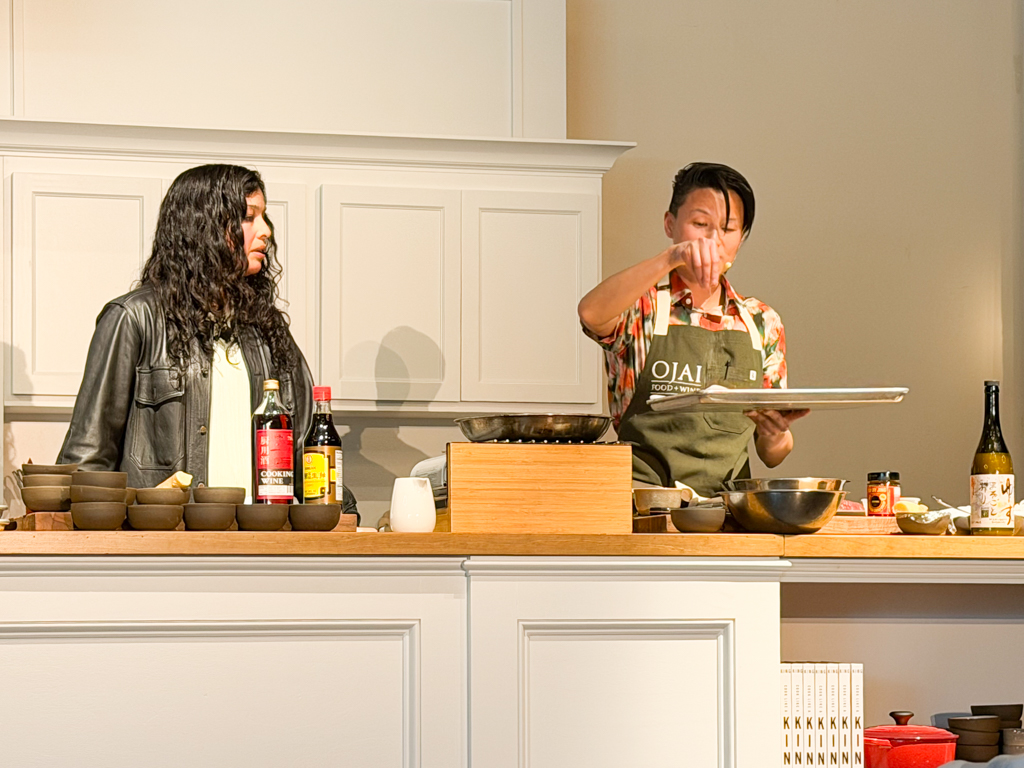
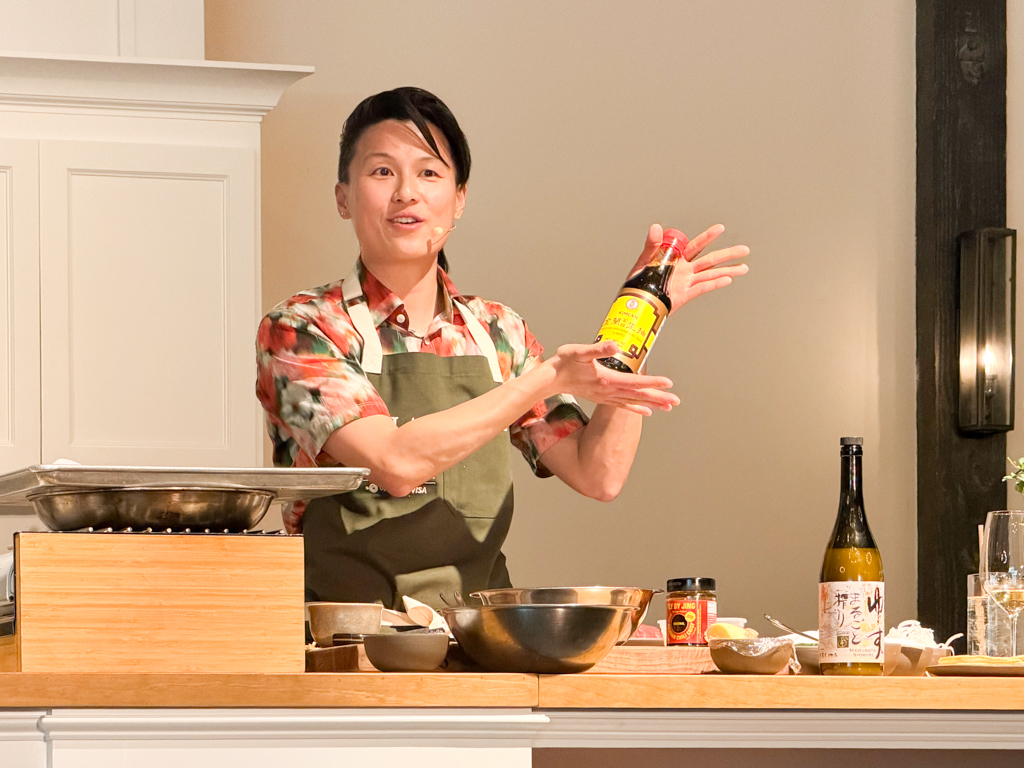
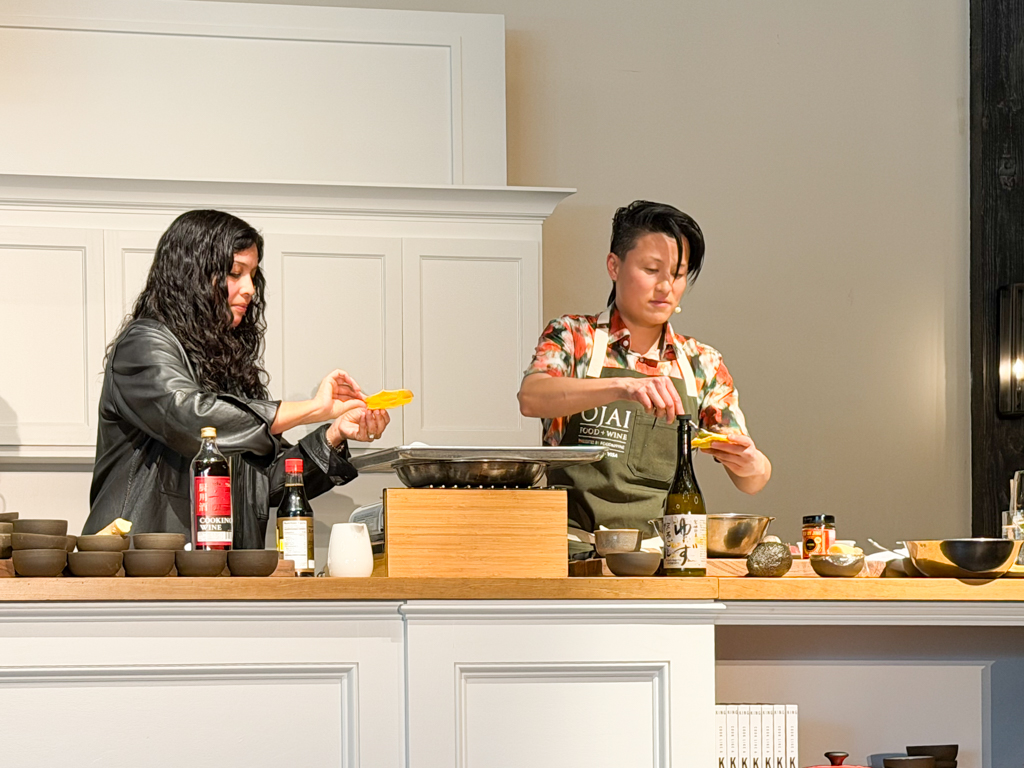
She also spoke of the true time it usually takes to complete a cookbook: 3-5 years – due to recipe testing and feedback. She admitted that due to her cooking style, it was a challenge to translate intuition onto a sheet of paper. Melissa stressed that she wanted people to follow the idea of her cookbook – but make the recipes their own.
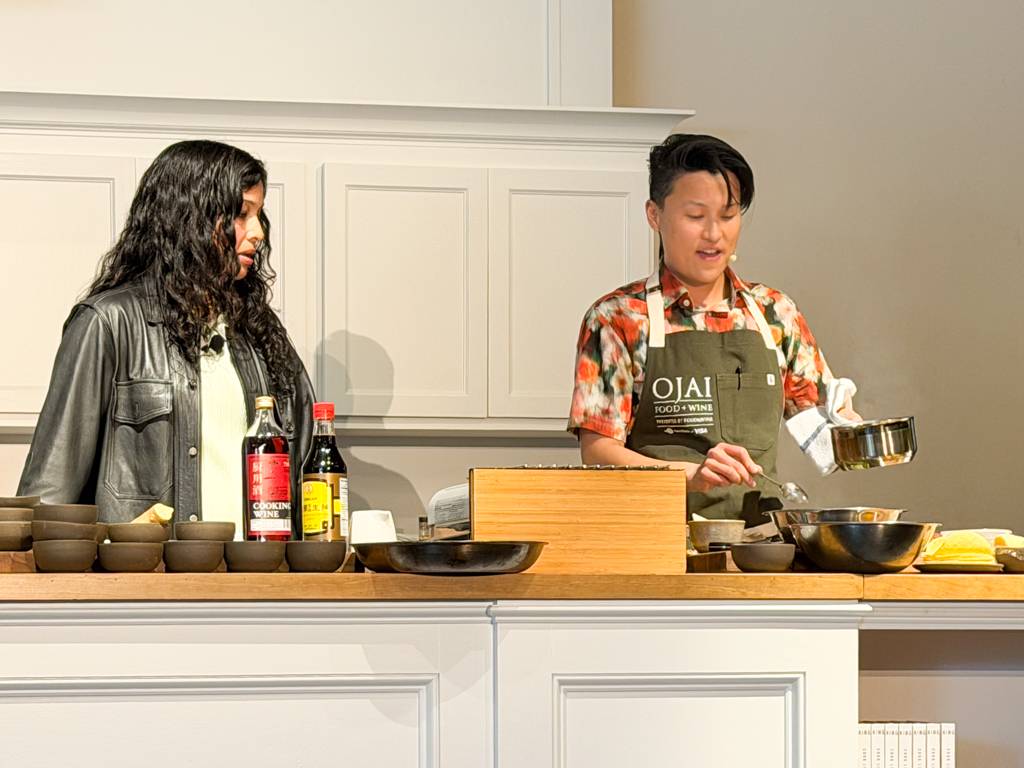
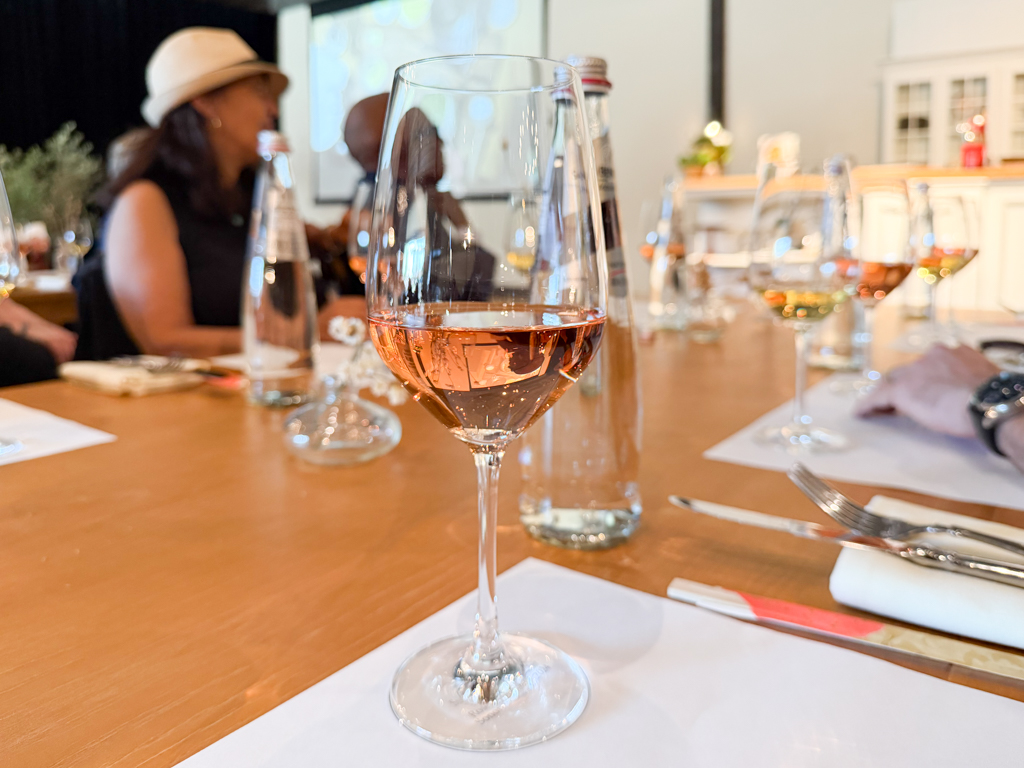
Cooking Tips:
- When shopping for ginger, focus on looking for large pieces with smooth skin. Melissa told us that her grandmother taught her to use a spoon to peel ginger. Best illustrated with this video: Peel Ginger with a Spoon Hack!
- Use a neutral oil when cooking Chinese cuisine. Select choices include canola, peanut, sunflower and vegetable oils. Melissa joked that cooks should save olive oil for Italian dishes.
- When testing how hot your pan is for cooking, take a wooden spoon and stick it into the hot oil. If bubbles pop up, it’s hot enough to begin cooking in.
- Favorite Chinese chili sauce? Fly by Jin is Melissa’s recommended commercial brand. But, there is also a make from scratch recipe in the book.
- Regional grocery access to ingredients is key when shopping for ingredients. Ingredients in California are gonna be different than in rural Texas. So, feel free to modify when necessary.
- Use kosher salt as the finishing salt
- Soy sauce: The difference between light soy sauce and dark soy sauce is intention. Light soy sauce is for marinating. Dark soy sauce is aged and used for coloring and flavor.
- How to add Asian influence into guacamole? The recipe calls for Japanese yuzu, a poignant citrus sauce that added a brilliant influence of flavor.
The demo continued with Melissa reminiscing about her travels. She spoke of a birthday trip to Mexico City, in which she enjoyed tasting and exploring the city. As I loved visiting Mexico City for a previous birthday, I later asked her about her favorite restaurant. She recommended: Contramar in the Roma Norte area.
Working with seafood Tips:
- For the tuna based dish, you can also consider using scallops or Japanese amberjack, along with yellowfin tuna. It really comes down to flavor preference and what’s available.
- When looking at packaged fish to purchase for your recipe, look for tuna that is red in color and – most importantly – dry. If there is pulled liquid or it looks like it’s been sitting for a few days, don’t buy it.
- If you’re walking into a place and it smells really fishy, walk right out.
- Shopping for scallops? They should be shiny but dry.
“Get to know the people selling you your food”
- Melissa King
Melissa taught us an interesting fact that I hadn’t previously known: if you see fish that states that it’s sushi grade, that means it was previously frozen. Fresh fish must be frozen in order to kill bacterial and parasites.
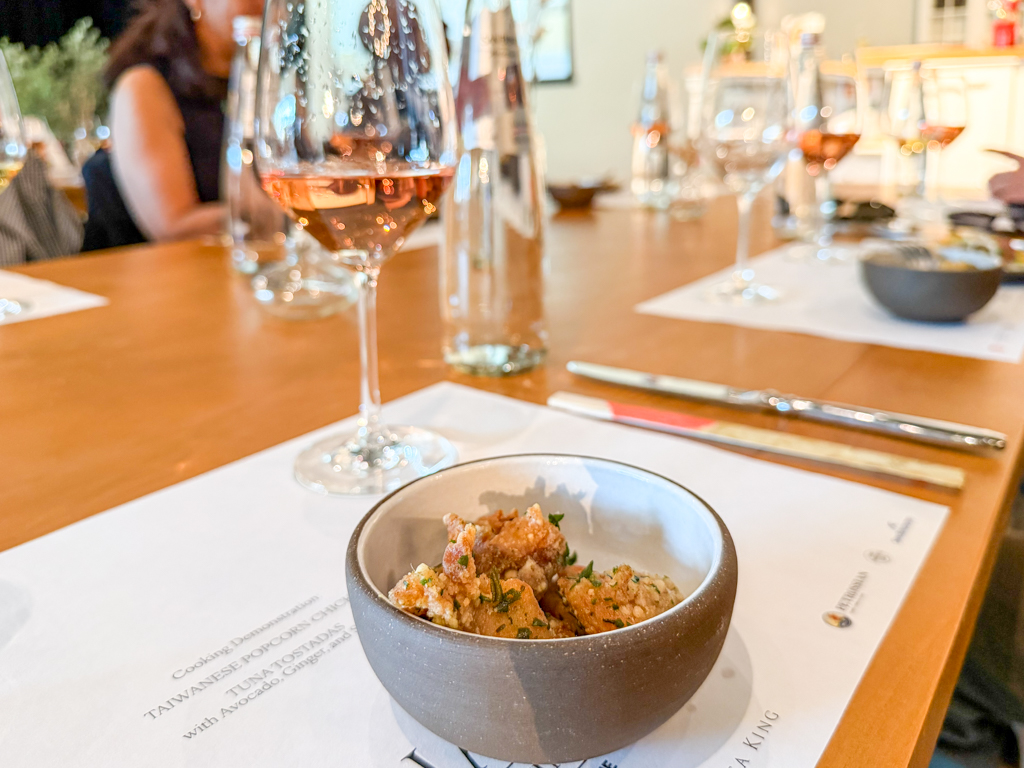
Once the demo was complete, we were served the entree.
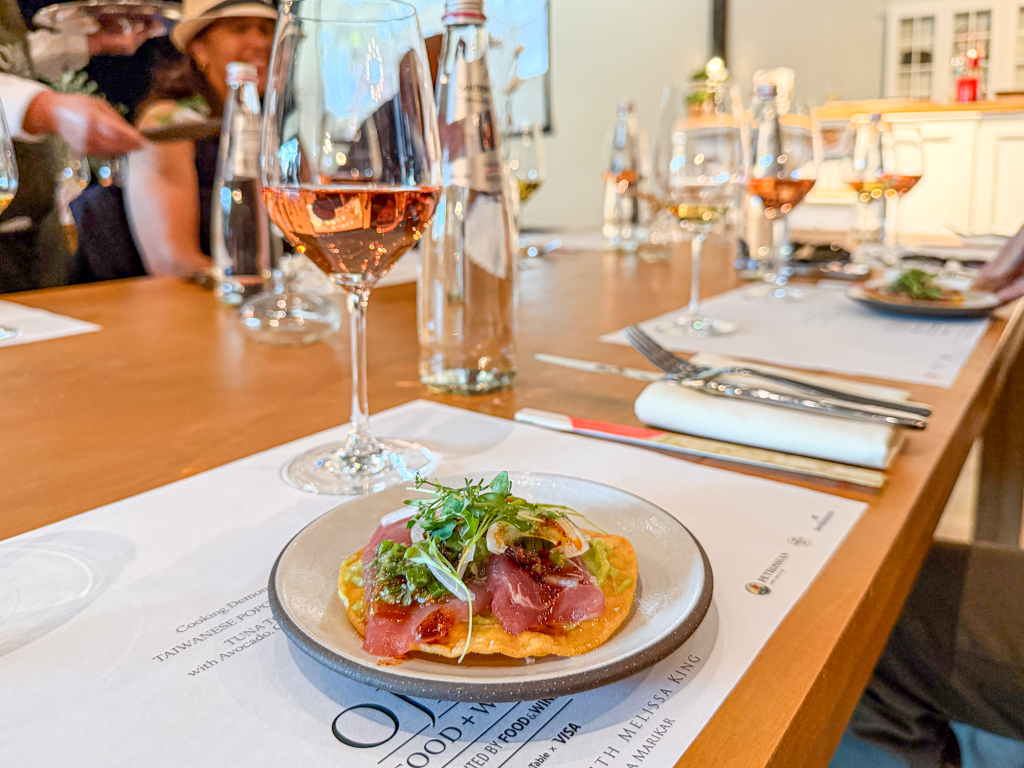
Demo 2: Taiwanese popcorn chicken
This recipe was inspired from Melissa’s high school years.
Cooking Tips:
- If chicken isn’t preferred, Melissa suggested that firm mushrooms could be used.
- You can marinate the chicken for as little as an hour. But, Melissa recommended marinating it overnight.
- Use a microplane to mince the garlic. Use a mandolin to slice the onions for consistency.
- For the fried chicken, Melissa demonstrated a batter with asian influence: egg whites, soy sauce and sweet potato starch. If sweet potato starch was unavailable, then cooks could substitute cornstarch.
- The key to Korean fried chicken is the double fry technique. The first deep fry can be done as early as the day before. Therefore, the second and final fry can be done right before serving. The first fry it to cook the chicken. The second fry is to seal in the flavor.
- If cooks don’t have a deep fryer, then a wok or an air fryer can be used. If none of those are an option, then use a Dutch oven.
- Using Thai basil in the recipe brings out delicious anise and fennel flavor.
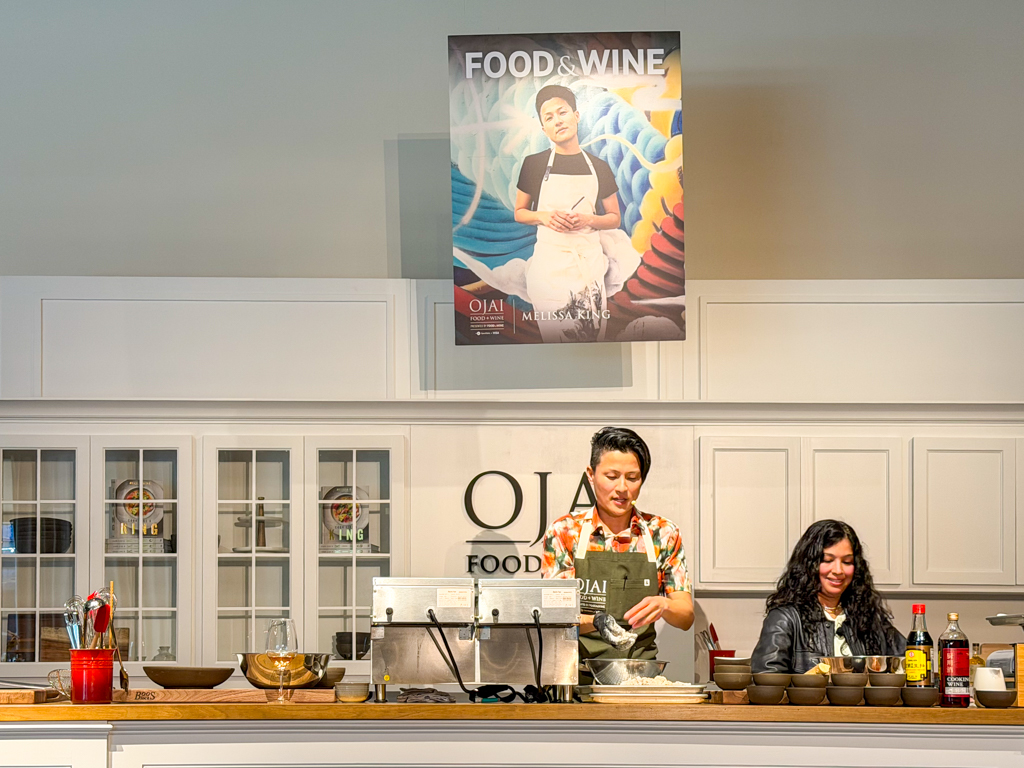
While prepping at the demo station, Melissa reflected openly on Top Chef – describing it as both the most stressful and most rewarding experience of her life in the same breath. The peak of that stress? A challenge during Top Chef Boston, Season 12, that hit closer to home than any technical test could. It was a Thanksgiving-themed episode that brought her mother onto the show – and then required Melissa to cook alongside her. The dish that came out of it was a fish collar, the recipe for which she had to reconstruct entirely from her mother’s verbal description over the phone.
But what she carried out of the experience was something she still draws on – the permission to just go with it. To flow. Earlier in her life and career, Melissa had played it safe, pulled back, kept herself within the guardrails of what was expected. Top Chef cracked that open. It gave her creative freedom she hadn’t allowed herself before, and what came through that opening changed everything – not just her cooking style, but the story she understood herself to be telling.
Once the demo was complete, we were served the dish.
Growing up Chinese-American, she had spent years working within a Eurocentric culinary tradition – the Michelin-focused, French-inflected world that defined prestige in professional kitchens. Top Chef pushed her to lean into her own story instead. To stop performing for a particular palate and start cooking from her own history, her own heritage, her own truth. The shift was profound: from interpreting someone else’s culinary canon to authoring her own.
Melissa told us that she’s been cooking since she was 5 years old. Her interest began by watching Martin Yan’s “Yan Can Cook” and Julia Child’s “The French Chef”. From then, she knew that she wanted to be a chef.
In her eyes, cooking was something that Melissa could offer her family. Even though it went against the traditional ideas that her parents wanted from her, she prevailed. Yes, she graduated from a traditional school with a traditional degree. But then, she immediately went into cooking school. Now, Melissa admitted, her mother was her biggest cheerleader.
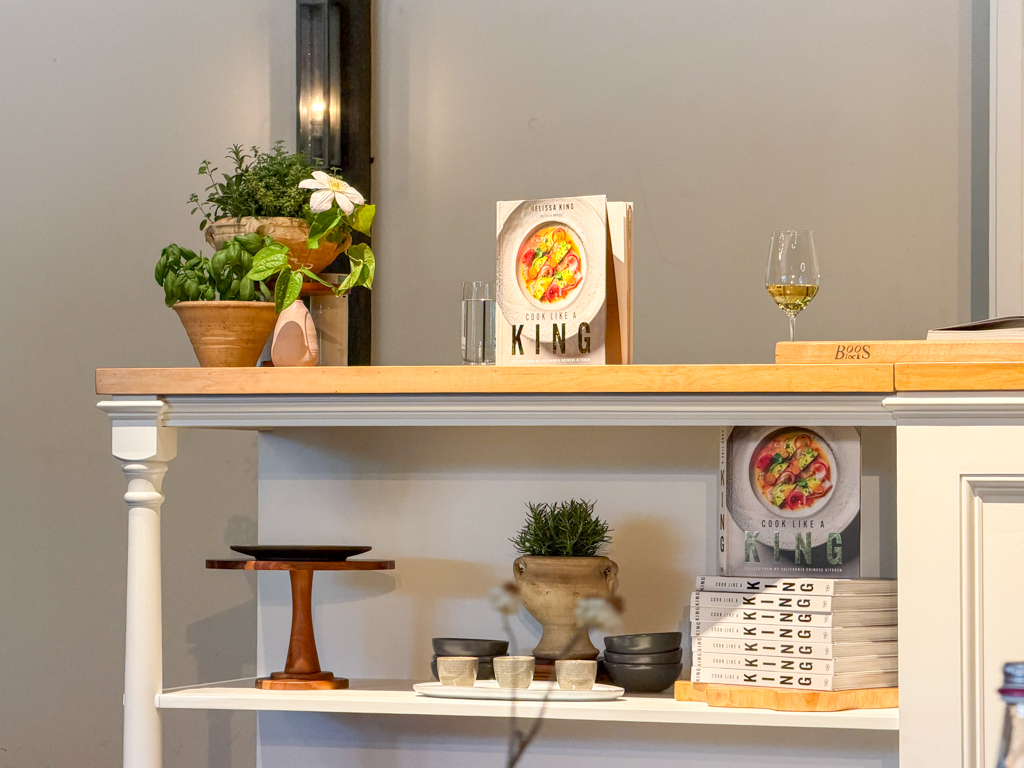
Melissa’s Favorites:
- Favorite place to go for popcorn chicken: Lolicup Fresh Boba and Tea
- When Melissa’s been on the road and wants something comforting, she cooks Chinese hot pot.
- Current favorite restaurant: Theadora in New York.
- Favorite butcher? Dario Cecchini
“Be cool with making mistakes.”
- Melissa King
- Favorite Chinese restaurants in the 626 area of Los Angeles: Dai Ho Restaurant in Temple City, California, Sichuan Impression in Alhambra and Chef Tony Dim Sum restaurant in Monterey Park.
- Favorite restaurants in Mexico City: Contramar, Expendio de Maiz and Panaderia Rosetta.
- Must try dishes in Hong Kong: egg tart, clay pot rice, roast goose
- Must try restaurants in Hong Kong: WING Restaurant, Yat Lok Restaurant, VEA Restaurant
- I also didn’t know how popular hiking was in Hong Kong. Especially, hiking Dragon’s Back. A list of different trails can be found here.
“You deserve to be loved and cared for through food”
- Melissa King
Reflections
Honestly, the portion sizes left me wanting more than the price justified. At $200 for an afternoon experience, I’d expected to leave with the same sense of fullness and satisfaction I’d walked away with the year before. That gap between expectation and reality was hard to ignore.
What the afternoon did give me, unexpectedly, was pause about a much larger investment. I’ve been eyeing the Food and Wine Classic in Aspen – a $3,000 consumer pass is a serious commitment, and this experience made me think twice about pulling the trigger.
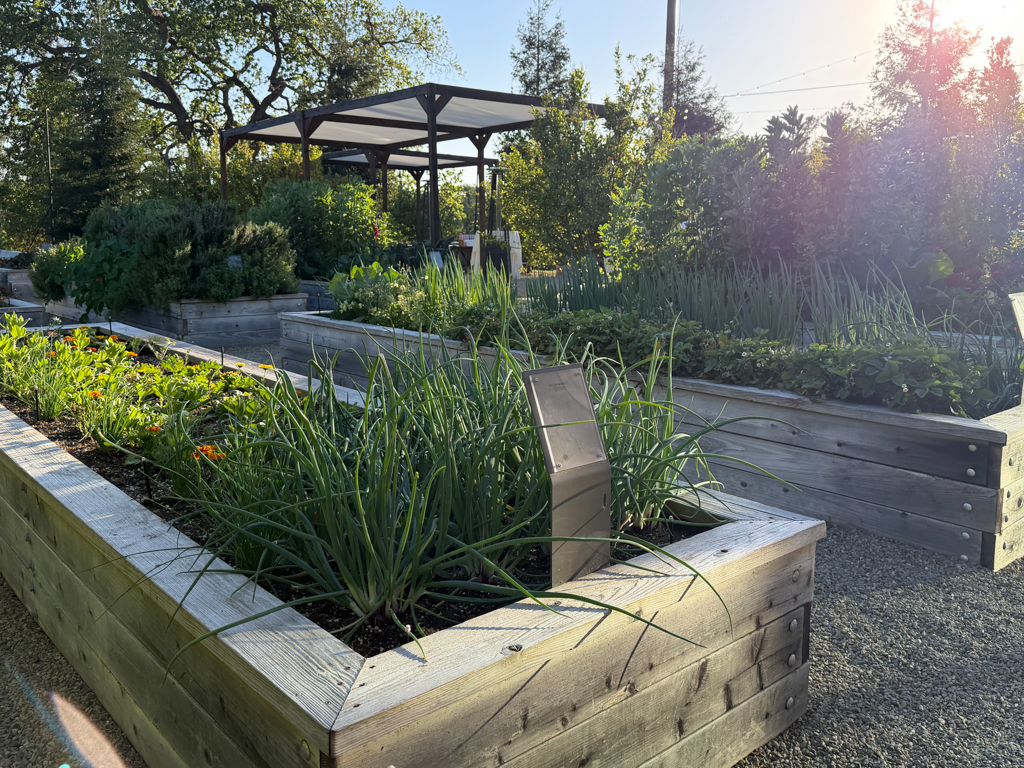
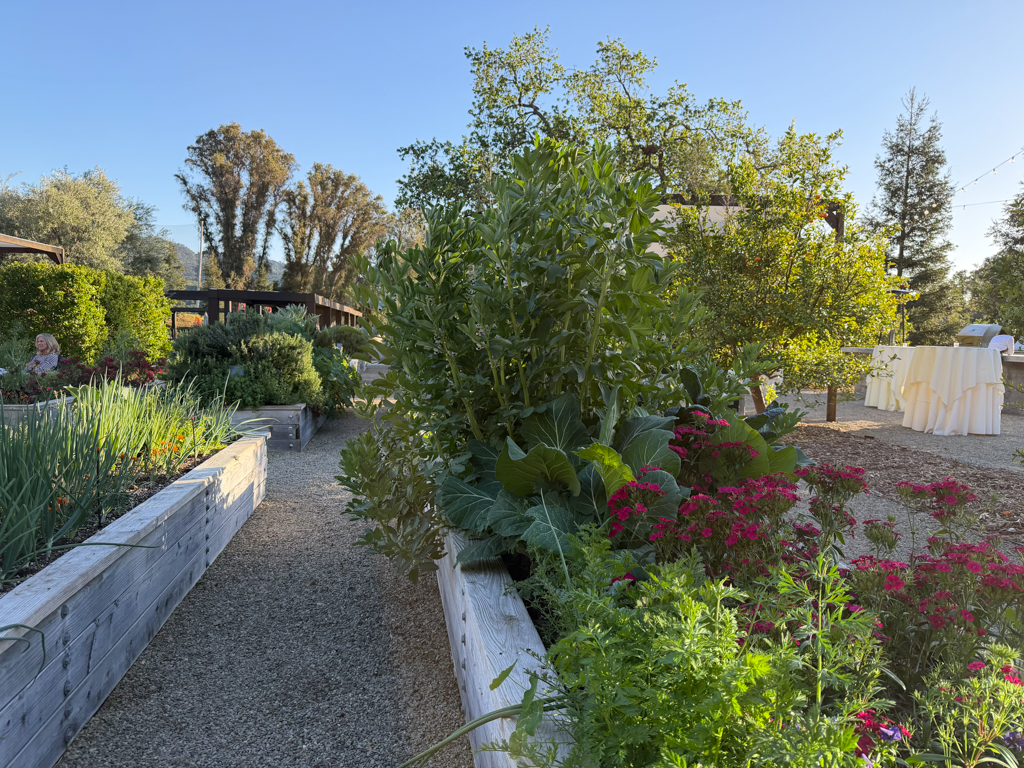
As it happened, the couple seated next to me had a useful data point: someone in their circle had attended Aspen and came away feeling that Ojai did it better. The difference, as they described it, came down to atmosphere. Aspen means crowded tents and shoulder-to-shoulder crowds. Ojai means something closer to what I experienced – unhurried conversation, genuine access to the people at the front of the room, and the particular ease that comes with being in the Ojai Valley Inn’s grounds. Relaxed refinement is a rare thing to pull off at a food festival, and Ojai manages it.
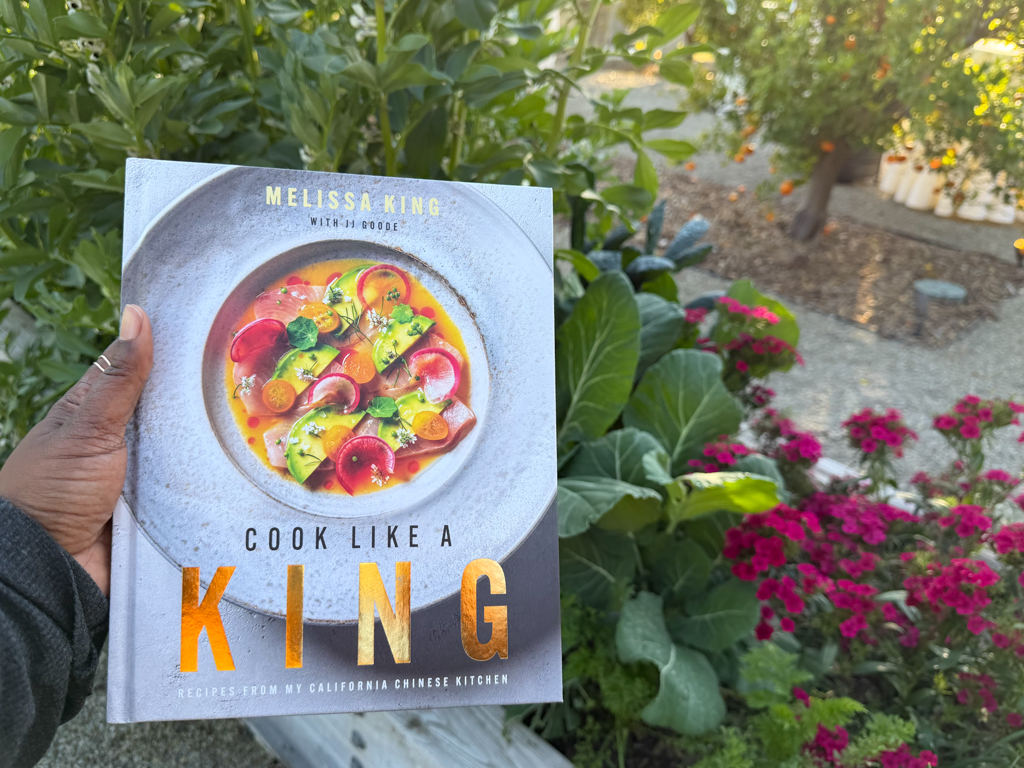
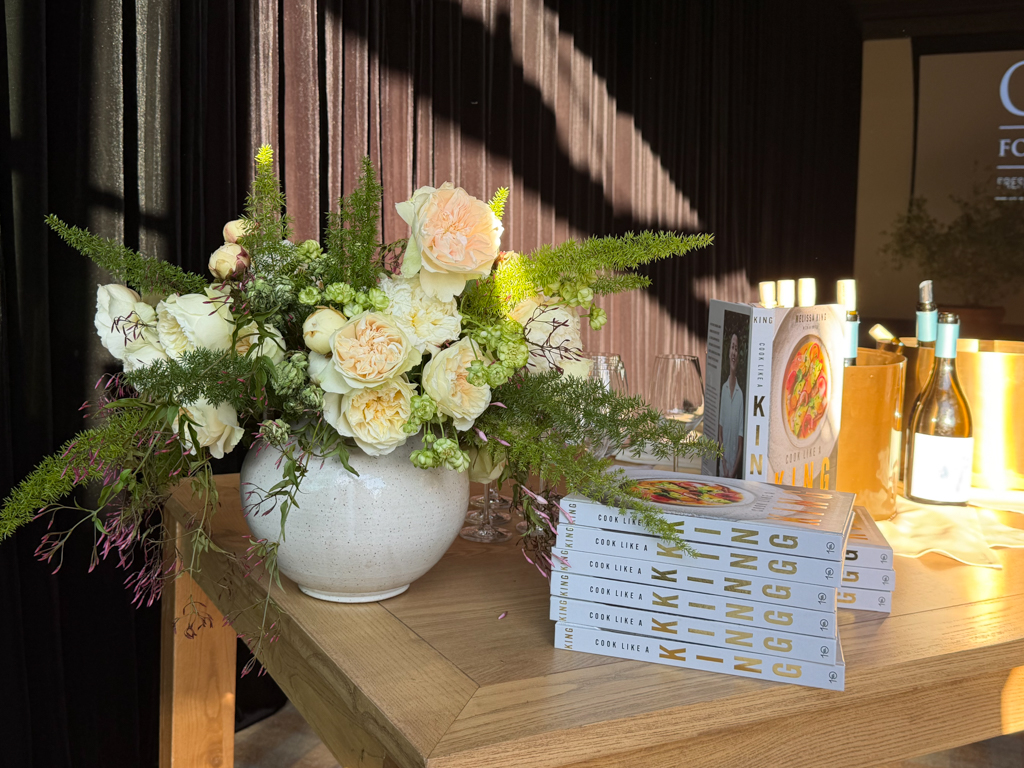
So while the bites didn’t quite match the price point, the experience as a whole still delivered. The setting, the access, the conversation with Melissa – it all added up to an afternoon worth having. And now I have her cookbook waiting, which feels like the most lasting takeaway of all.
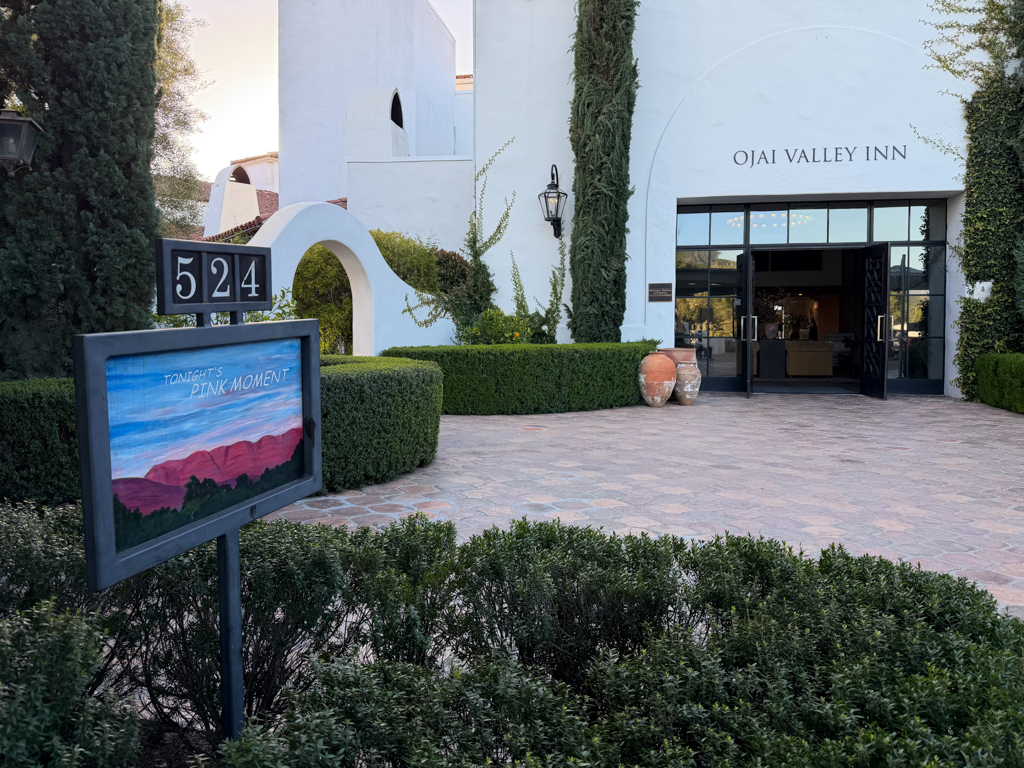
The Farmhouse at Ojai Valley Inn
905 Country Club RoadOjai, California 93023
Related Reviews
 Artisan Pizza & Mozzarella Culinary Class at The Farmhouse at Ojai Valley Inn
 The Art of Macarons Cooking Class at The Farmhouse at Ojai Valley Inn
 Culinary Demo: Showcasing Nini Nguyen’s Dac Biet Cookbook at the Ojai Food + Wine Festival
 French Bistro Demo & Dinner at The Farmhouse at Ojai Valley Inn