
After breakfast at our riad in Fes - Dar Al Safadi - Rachid walked our group (A 10 Day Moroccan Adventure with Kim Larkin Adventures) to our waiting Sprinter van. There, Kamal - our driver - was ready to whisk us away to the day’s journey.

Before long, our guide for the day – Layla – joined us with a warm introduction and overview of our experience. And with that, we set off to discover the beauty, history, and rich culture of Fes, Morocco.
Het Koninklijk Paleis van Fez
The Royal Palace of Fez
n1 boulakhsissat, Fès 33110
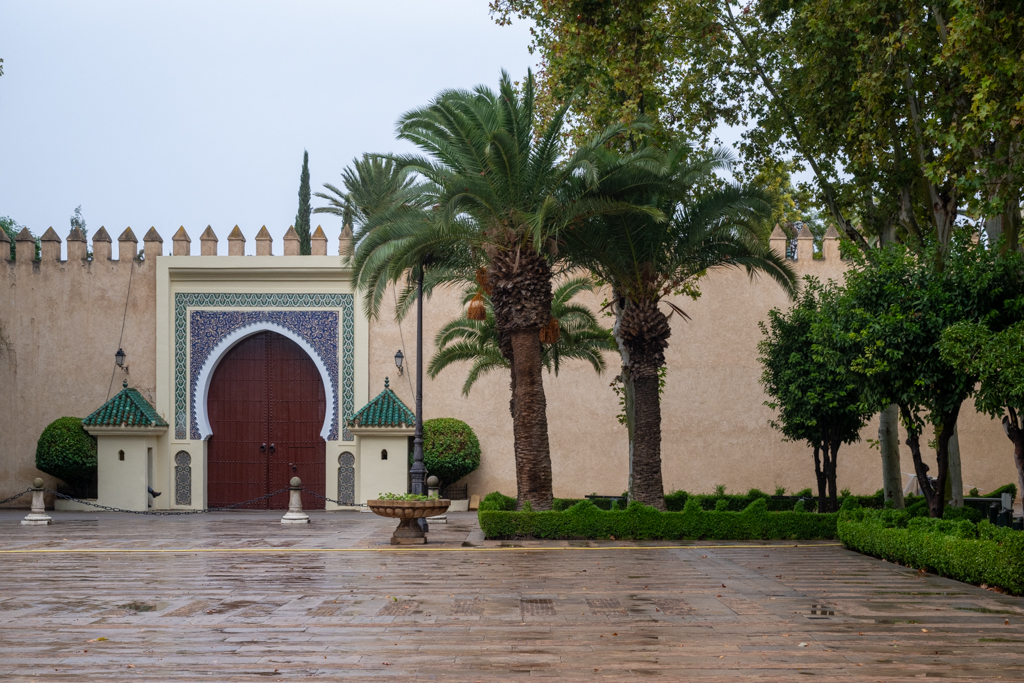
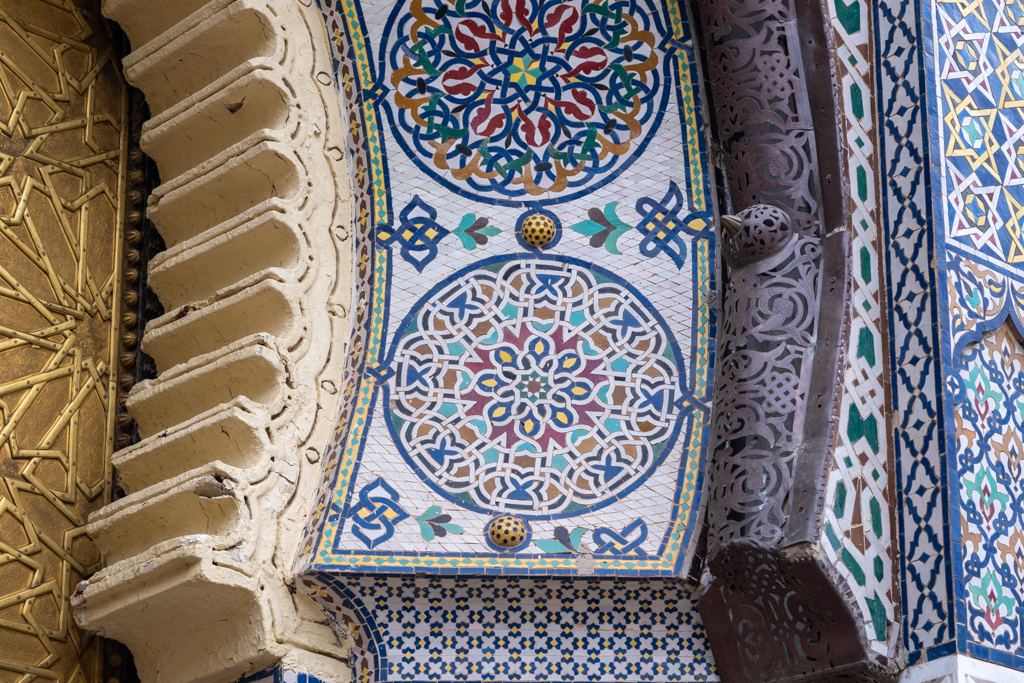
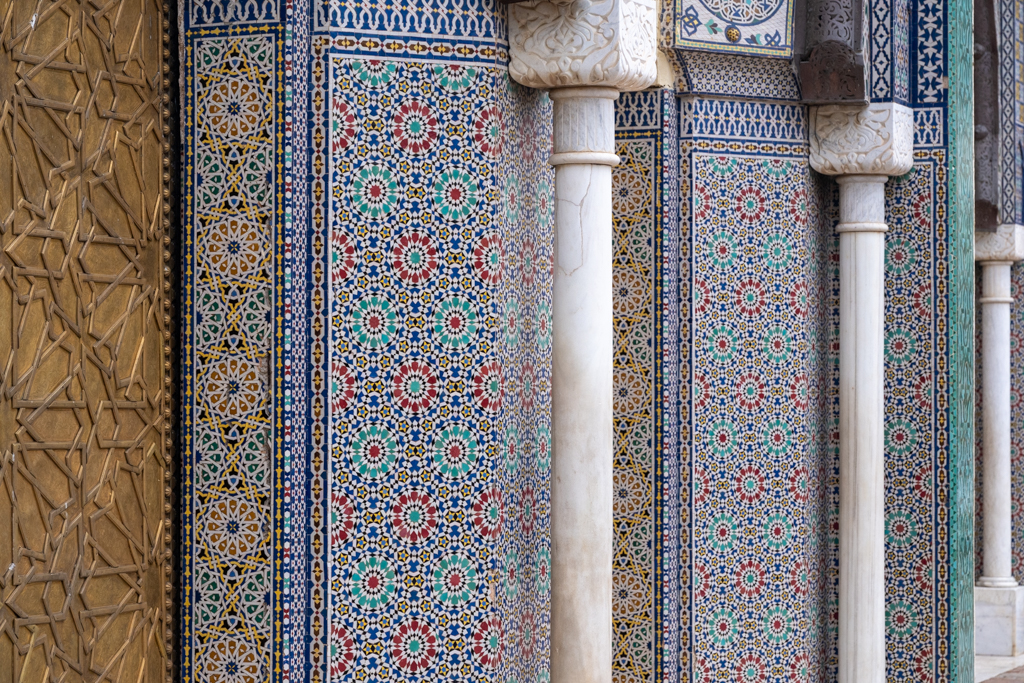
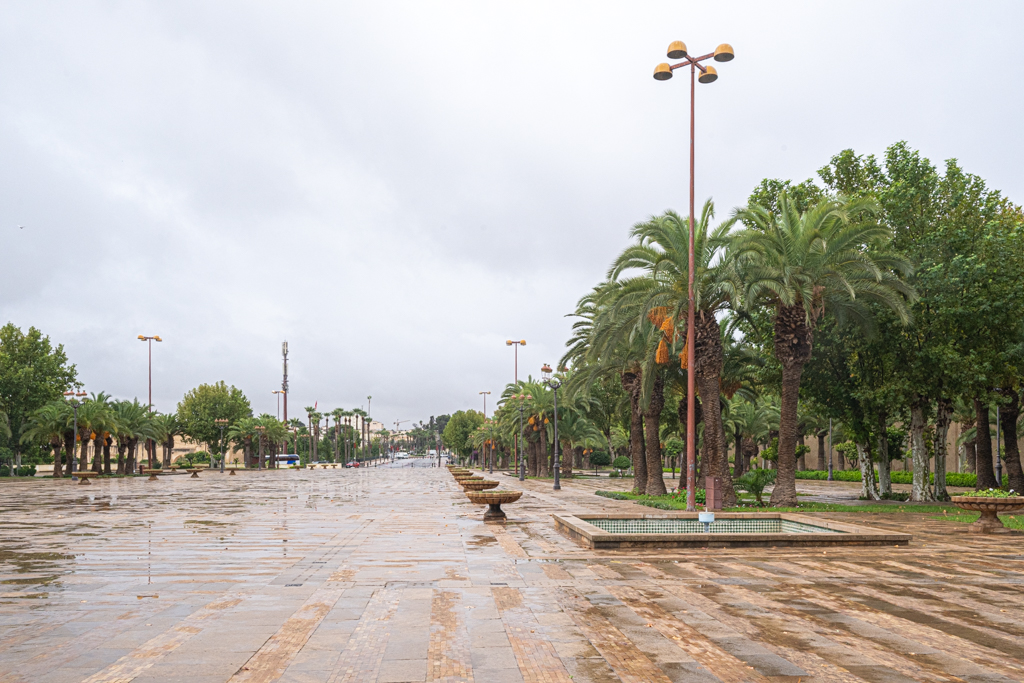
Standing before the palace’s seven iconic doors felt like standing at the edge of time. Each gate was a masterpiece – gleaming brass, intricate zellige tilework, and hand-carved cedar that told stories of centuries-old artistry. Though the palace itself remains closed to the public, the gates alone justified the visit on a rainy morning.
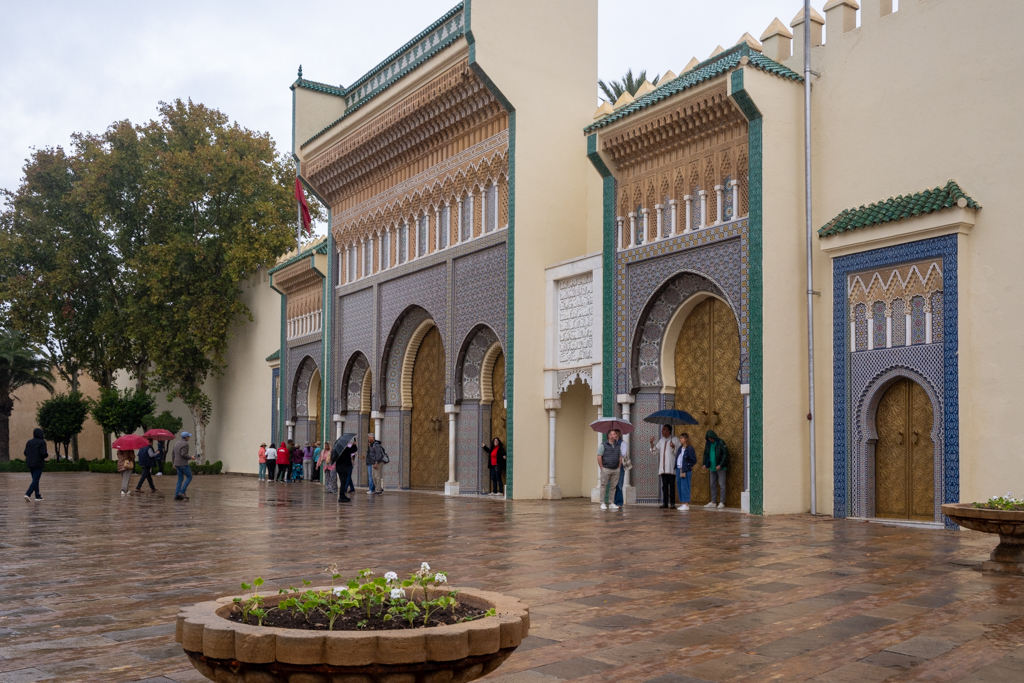
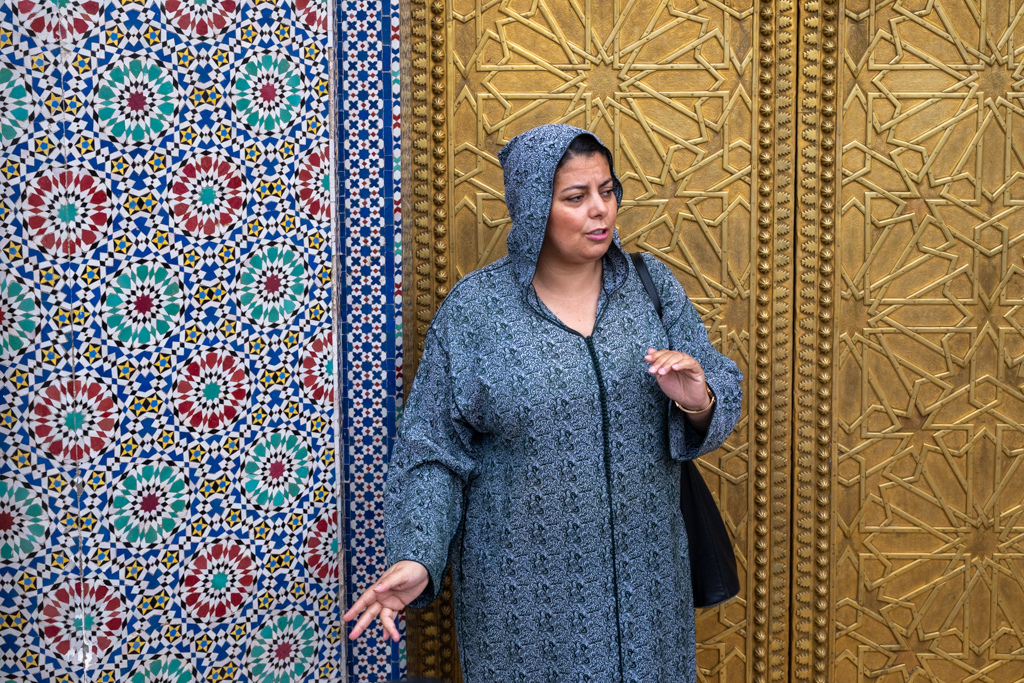

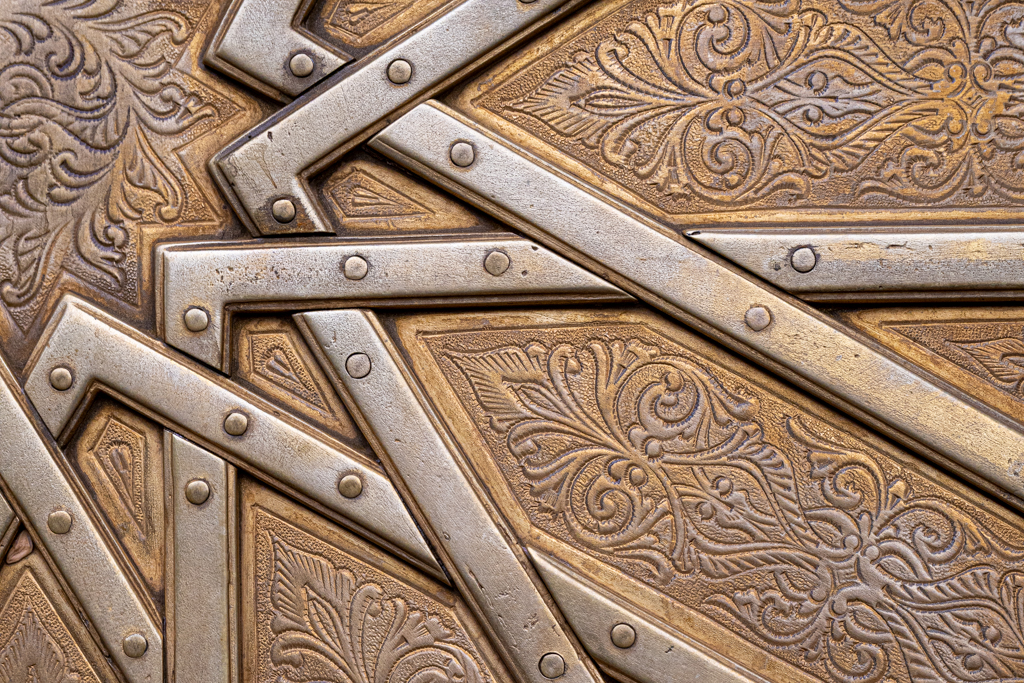
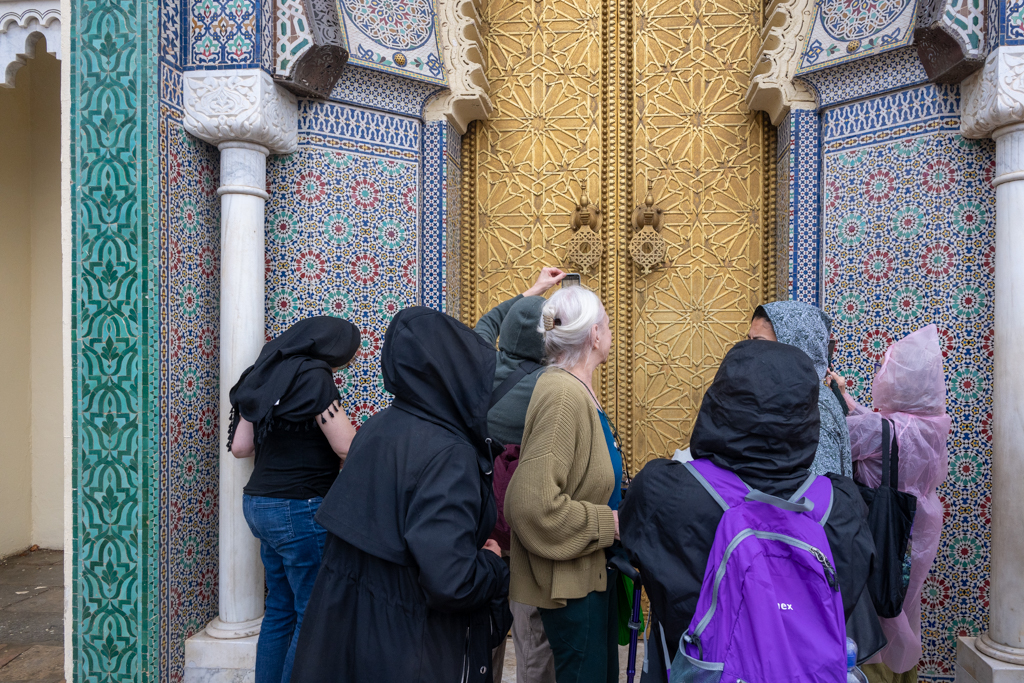
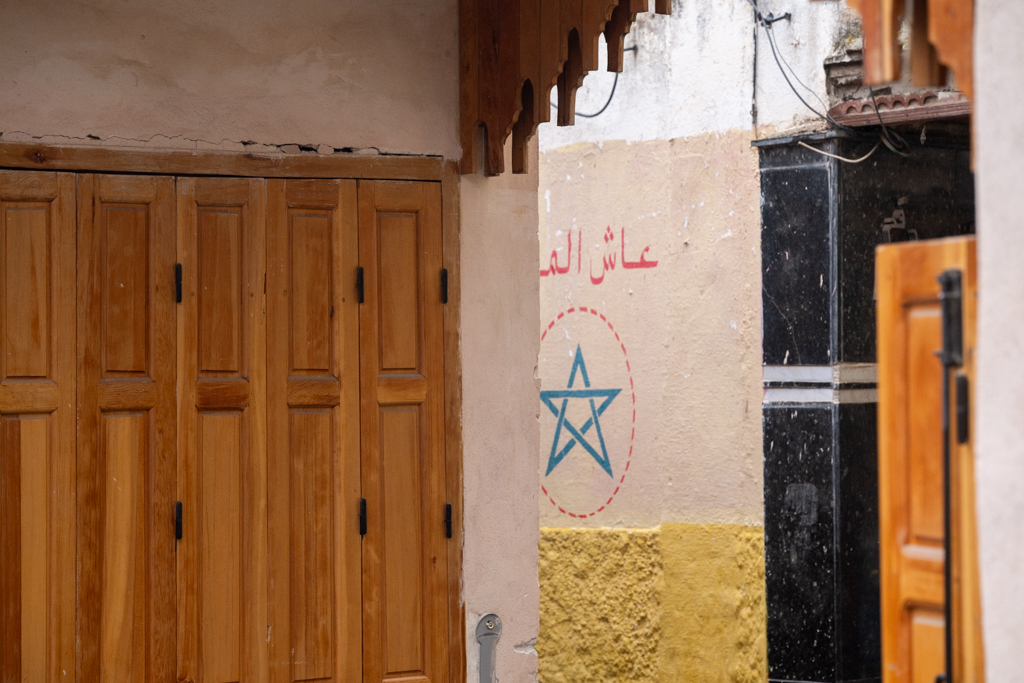
Fes is home to the oldest royal palace in Morocco, and seeing these doors up close offered a glimpse of the grandeur and history hidden behind the walls. Layla pointed out details we might’ve missed on our own: the tiles symbolizing the Moroccan landscape, the doors themselves reflecting the coexistence of Judaism, Christianity, and Islam, and the small soccer-ball motifs added when Morocco joined the World Cup in the United States in the 1990s. Even the five-pointed star on the Moroccan flag came alive with new meaning – each point representing one of the Five Pillars of Islam.
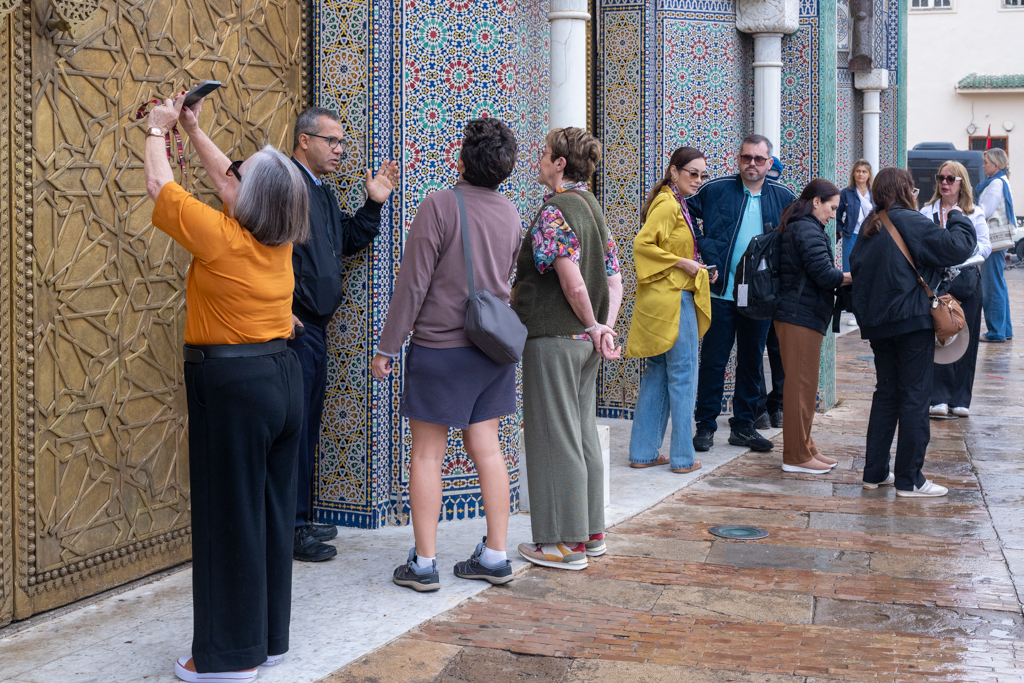
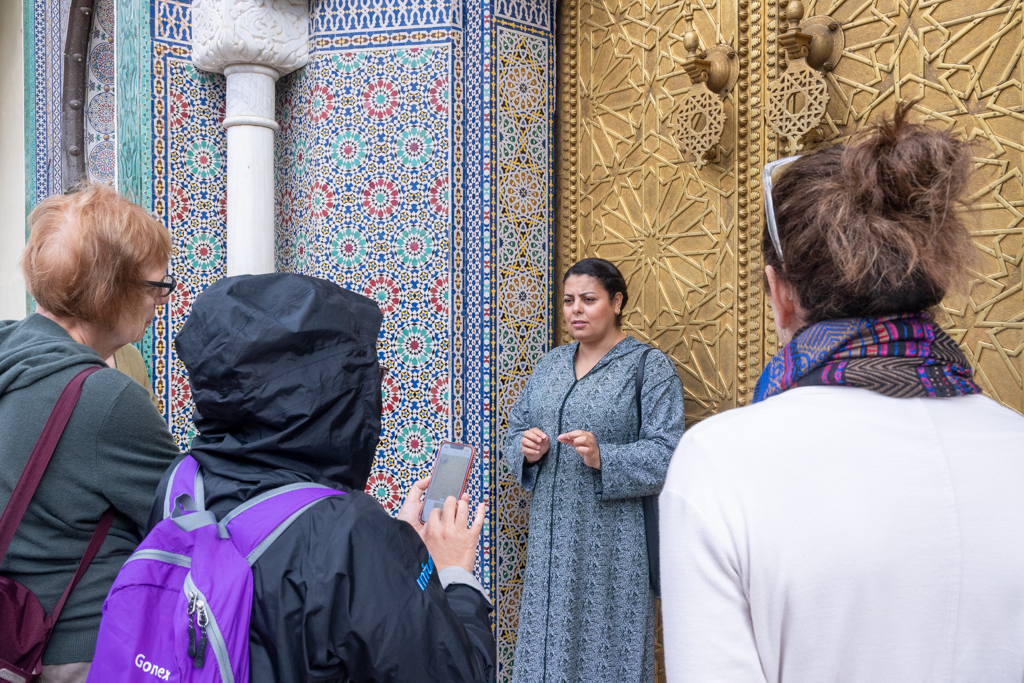
Layla also explained the three levels of beauty in Arabic.
Jamil / Jamila – simple, everyday beauty.
Mallah – deeper beauty, perhaps not stunning on the surface, but marked by a good heart.
Mallaha – the highest level, beauty both inside and out.
Hearing this while surrounded by the layered beauty of Fes – its doors, its tiles, its people – made the city feel even more alive.
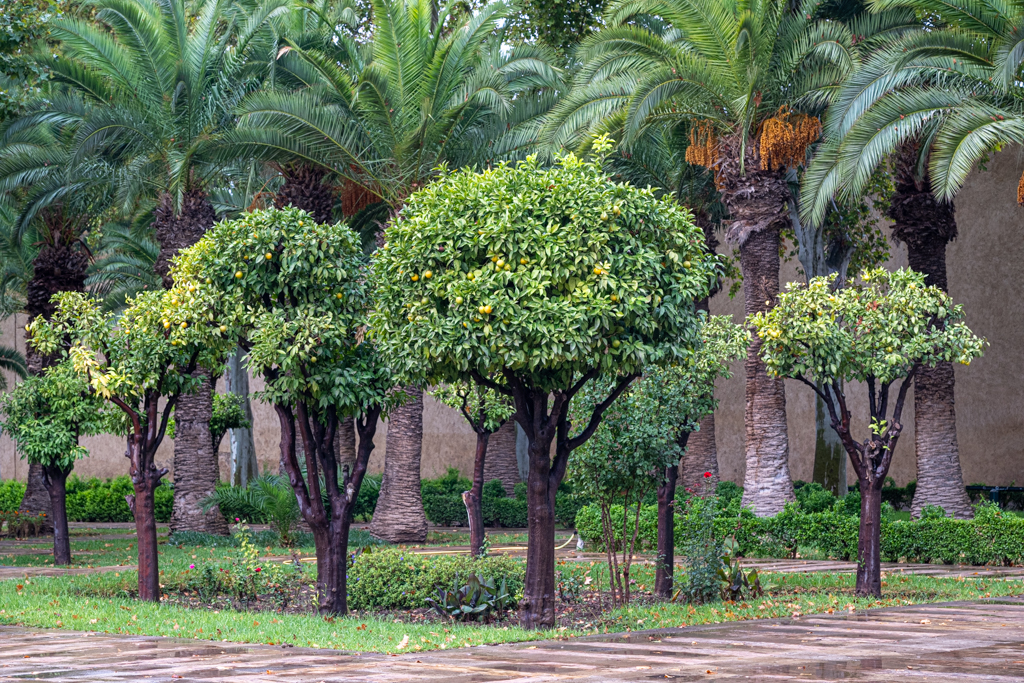
Quartier Mellah Fes
The Jewish Quarter
3235+665, Unnamed Road, Fès
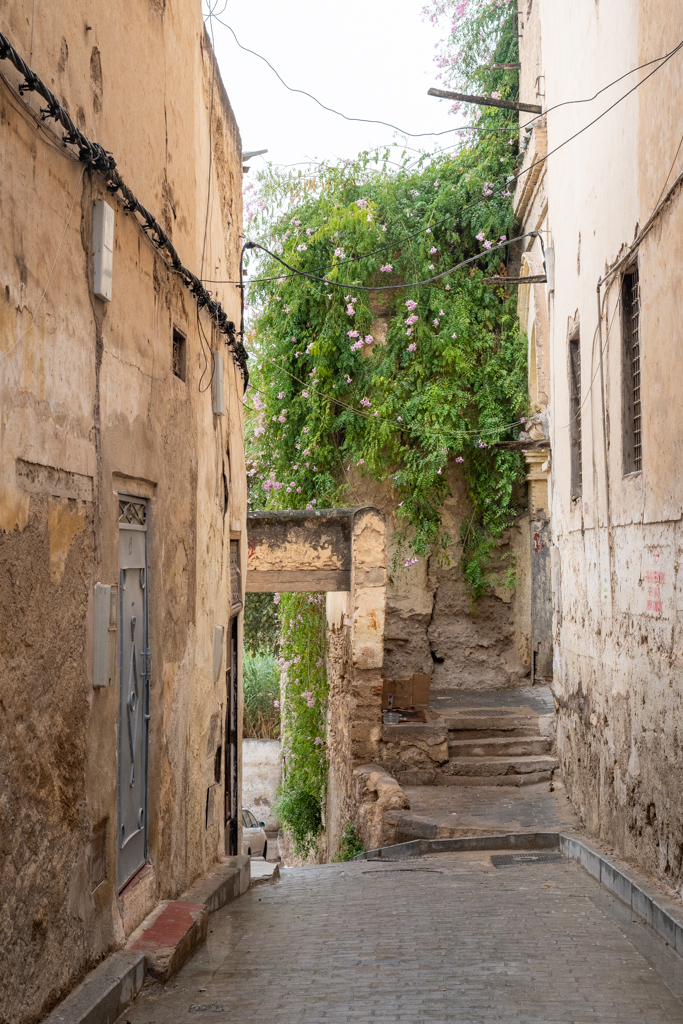
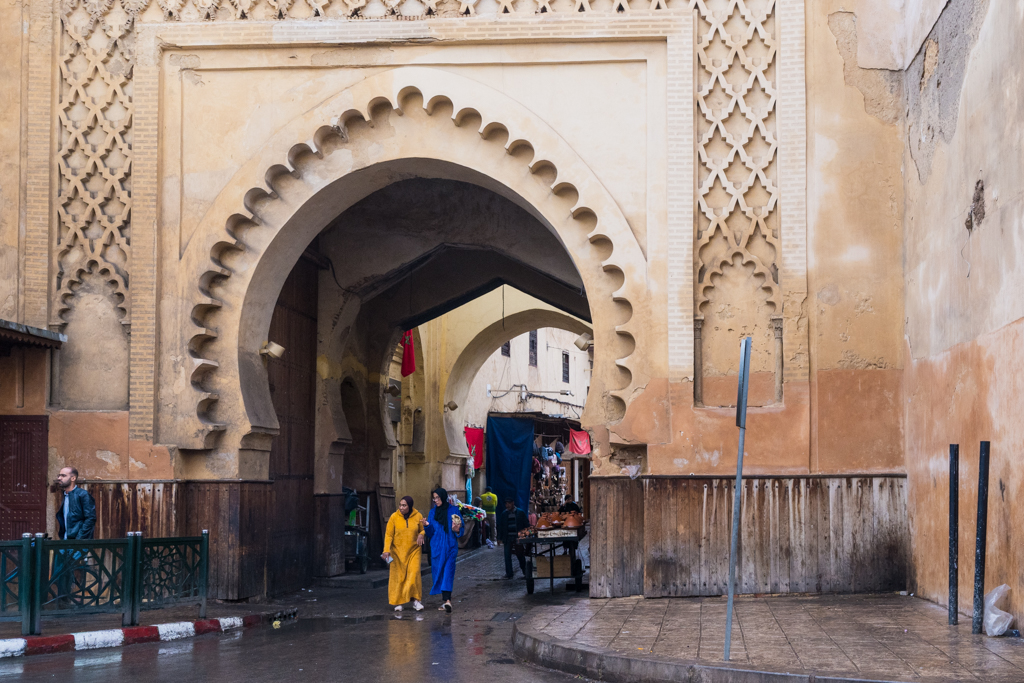
Layla then led us down the Quartier Mellah, the historic Jewish Quarter of Fes. Tucked within the modern city but carrying centuries of heritage, the Mellah offers a more architectural kind of storytelling. The area is one of the most significant Jewish quarters in Morocco. Its history dates back to the 15th century, when Jewish communities found refuge in the city and later became known for their craftsmanship, trade, and contributions to the cultural fabric of Fes.
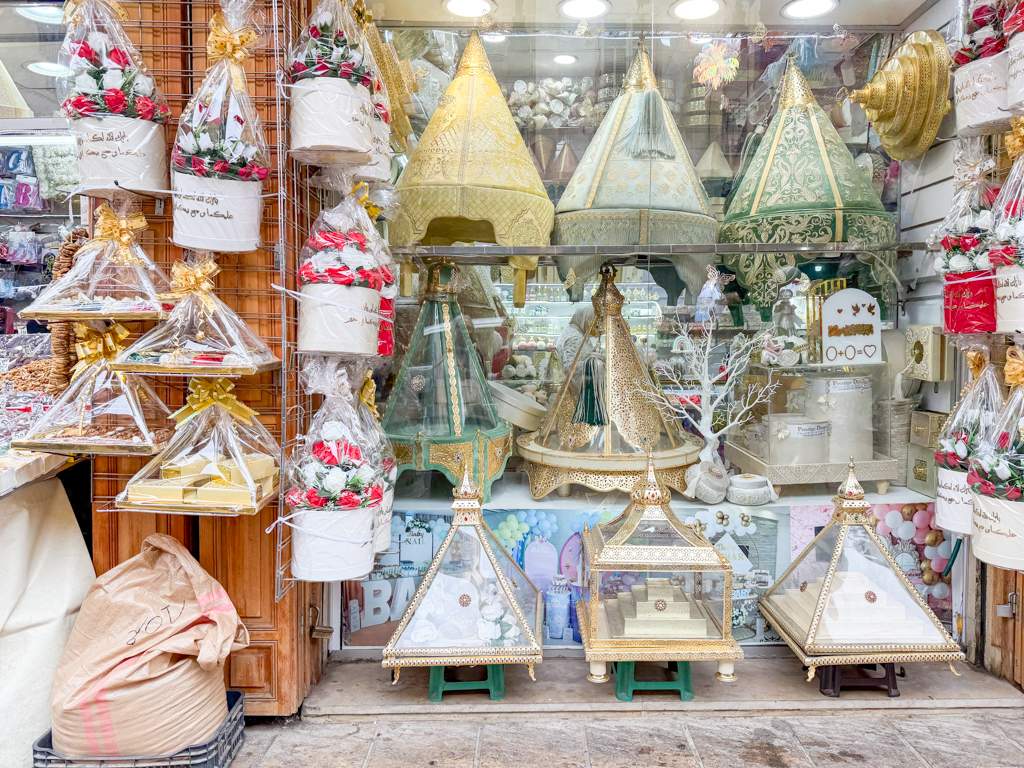
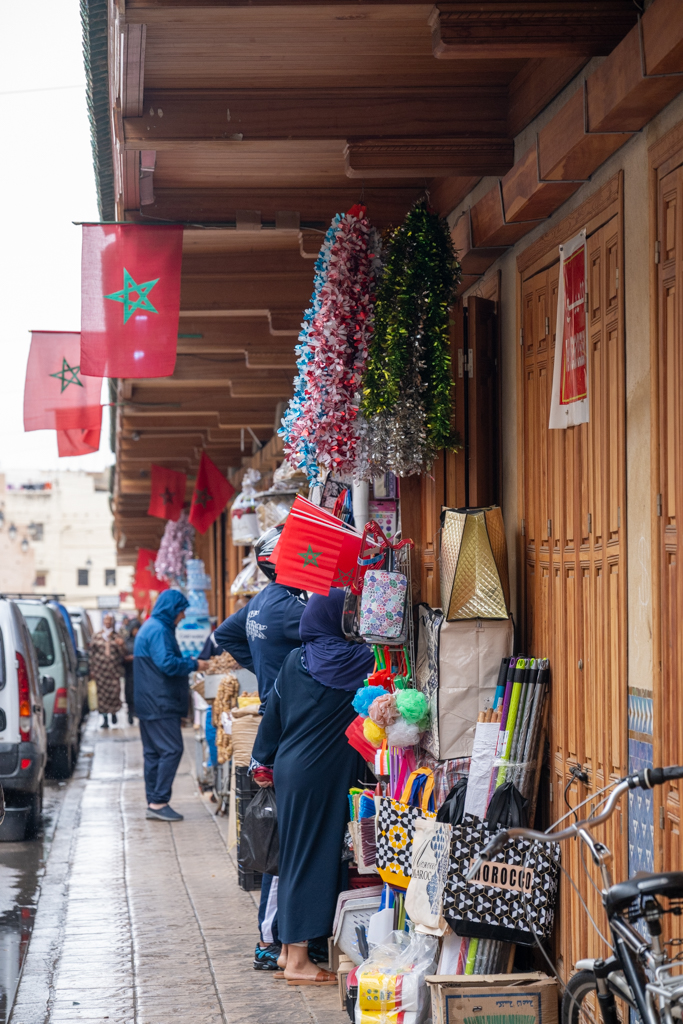
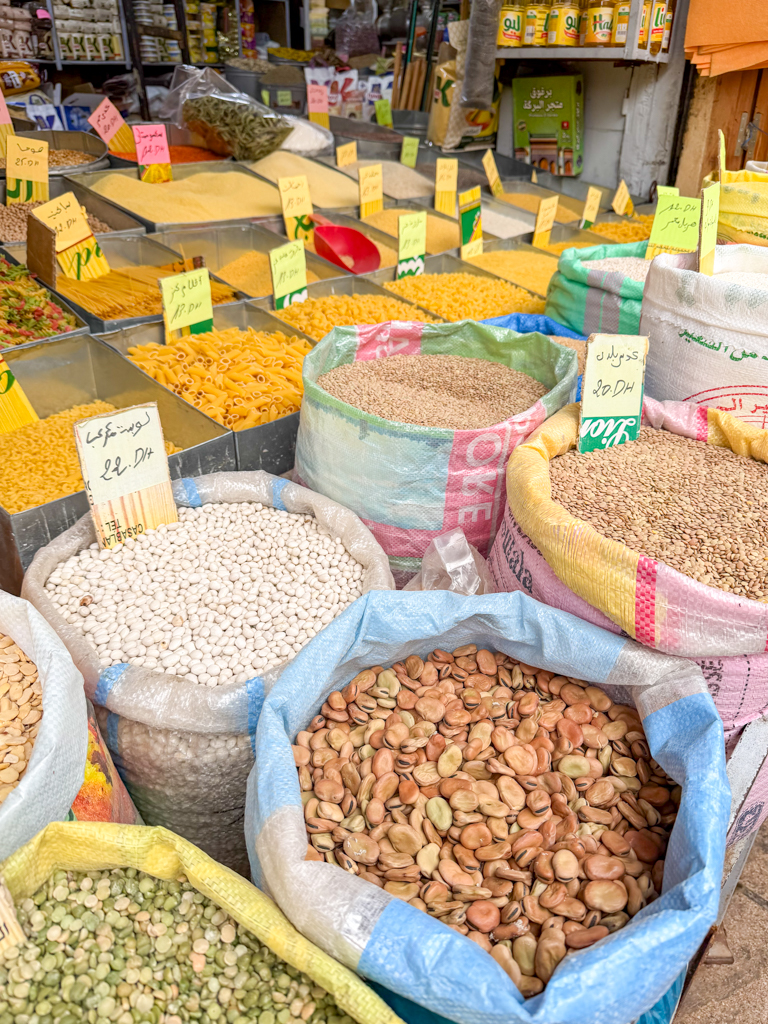
As we wandered through the Jewish Quarter, Layla continued to share insights into local customs and traditions. In Muslim culture, she explained, the groom gives the bride a dowry, and its value typically begins at a minimum of around $500. This gesture is an important symbol of commitment and respect.
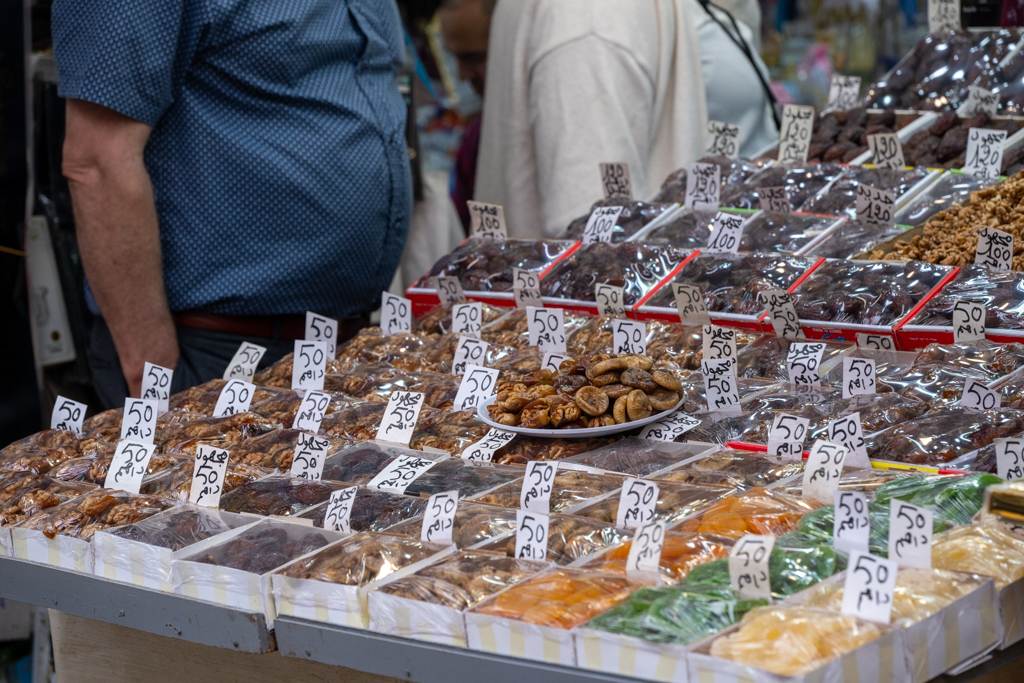
She also told us about the significance of certain foods in Moroccan culture. Dates and walnuts, for example, are more than just snacks. Dates represent slowing down and savoring life’s sweetness, while walnuts serve as a reminder to use your mind wisely.
Then came one of my favorite little traditions: the meaning of storks. If a stork lands on a business, it’s considered a sign of good luck. If one settles on a house, it means babies are on the way. Hearing these beliefs as we walked gave the neighborhood an added layer of magic and meaning.

As we walked, Layla shared a cultural insight that stayed with me: “If a Muslim woman breastfeeds another woman’s child, she becomes a second mother to that child.” This bond – recognized in both culture and religion – speaks to the deep sense of kinship and shared responsibility woven into Moroccan life. It was a beautiful reminder of how profoundly connected communities can be.
Overlooking Fes from Borj Sud
As we piled back into the Sprinter, Kamal drove us up to Borj Sud. Once we arrived, Layla explained where we were. Borj Sud is a 16th-century fortress built by the Saadian dynasty, as part of a larger effort to secure and control the city of Fes. Positioned on a hill south of the medina, it served as a strategic lookout point and a defensive structure designed to monitor movement in and out of the city.
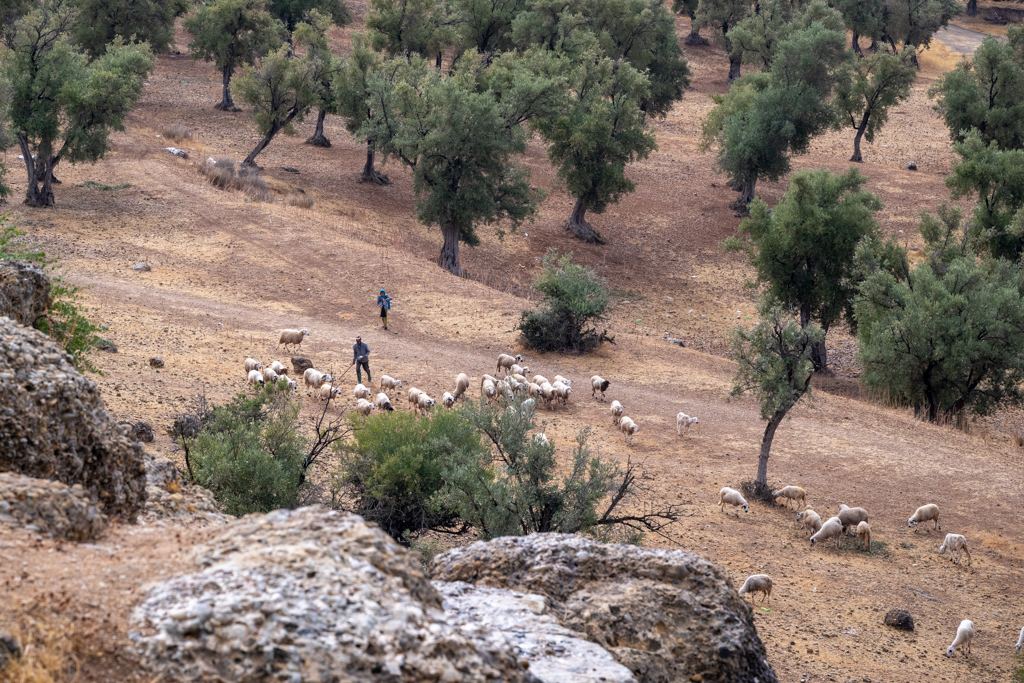
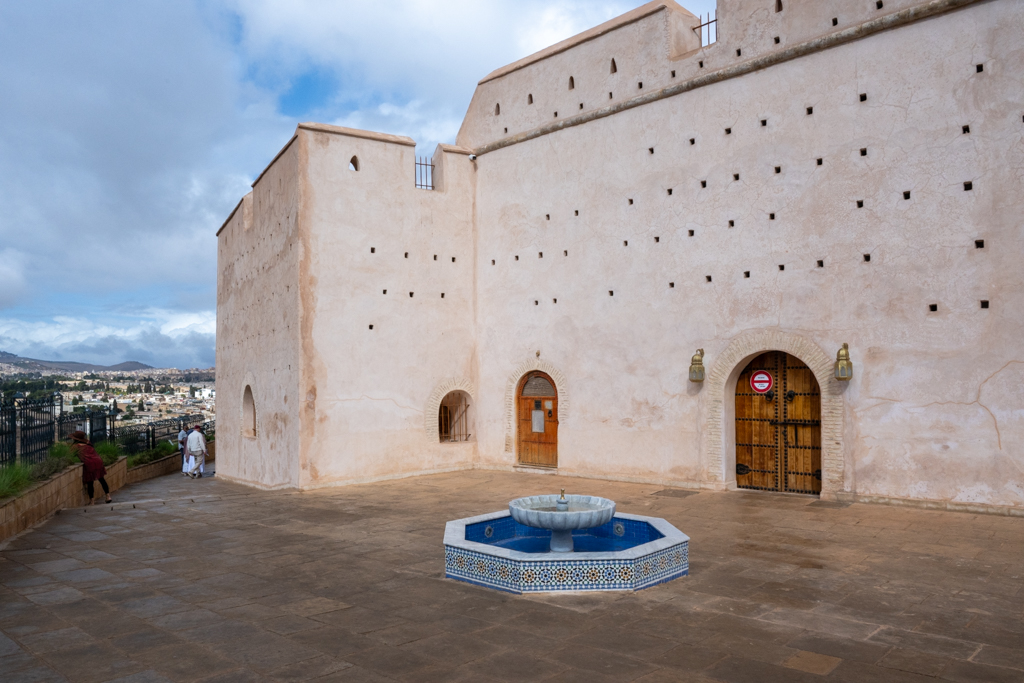
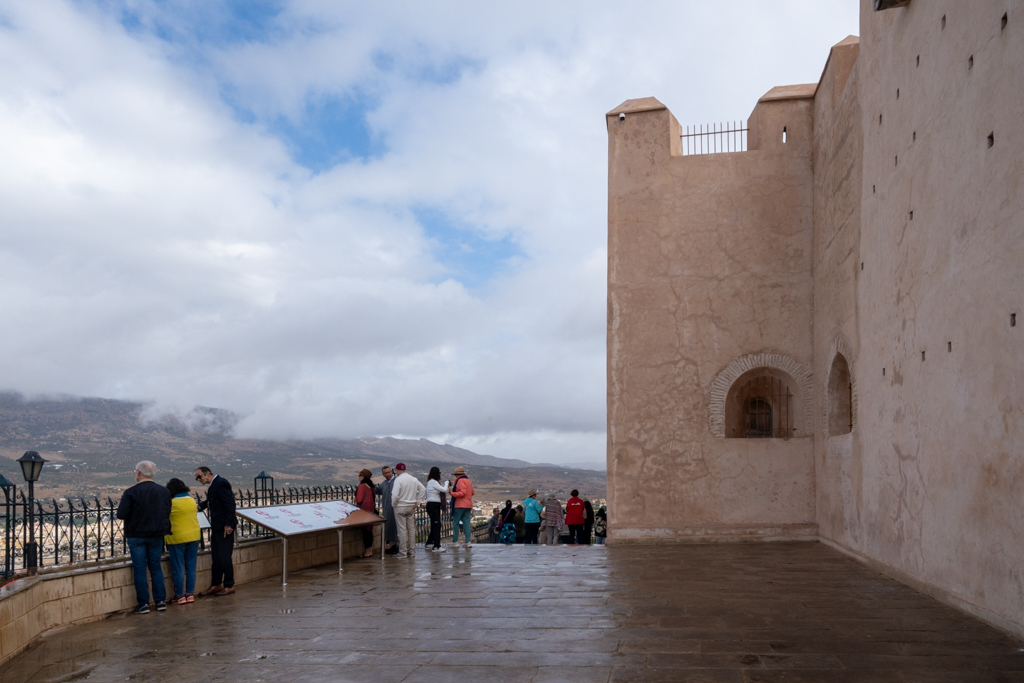
Visiting Borj Sud gave me one of the clearest views of Fes and helped me understand the layout of the city in a way I couldn’t from inside the Medina at ground level. Because the fort sits on a hill overlooking the entire area, and from the top I could see the dense clusters of buildings, the minarets, and the long stretch of the old city walls.
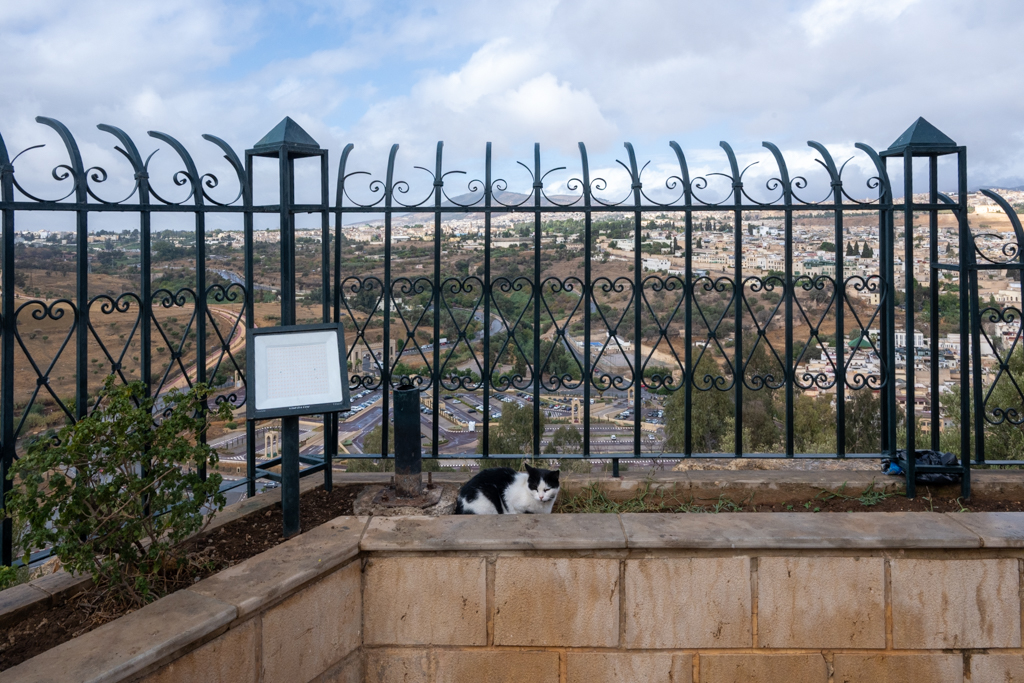
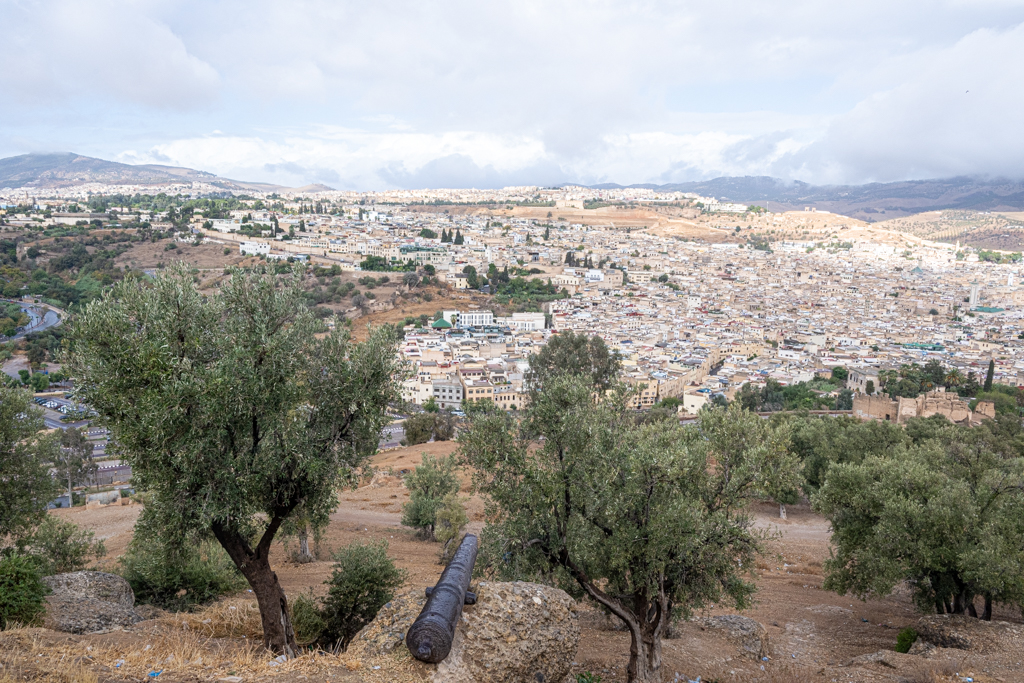
It was easier to grasp just how large and compact the medina really is when seeing it from above. The spot was calm, with plenty of space to walk around and take photos, and it offered a useful perspective before heading back into the busy streets below.
CERAMICS at Art Naji Fez
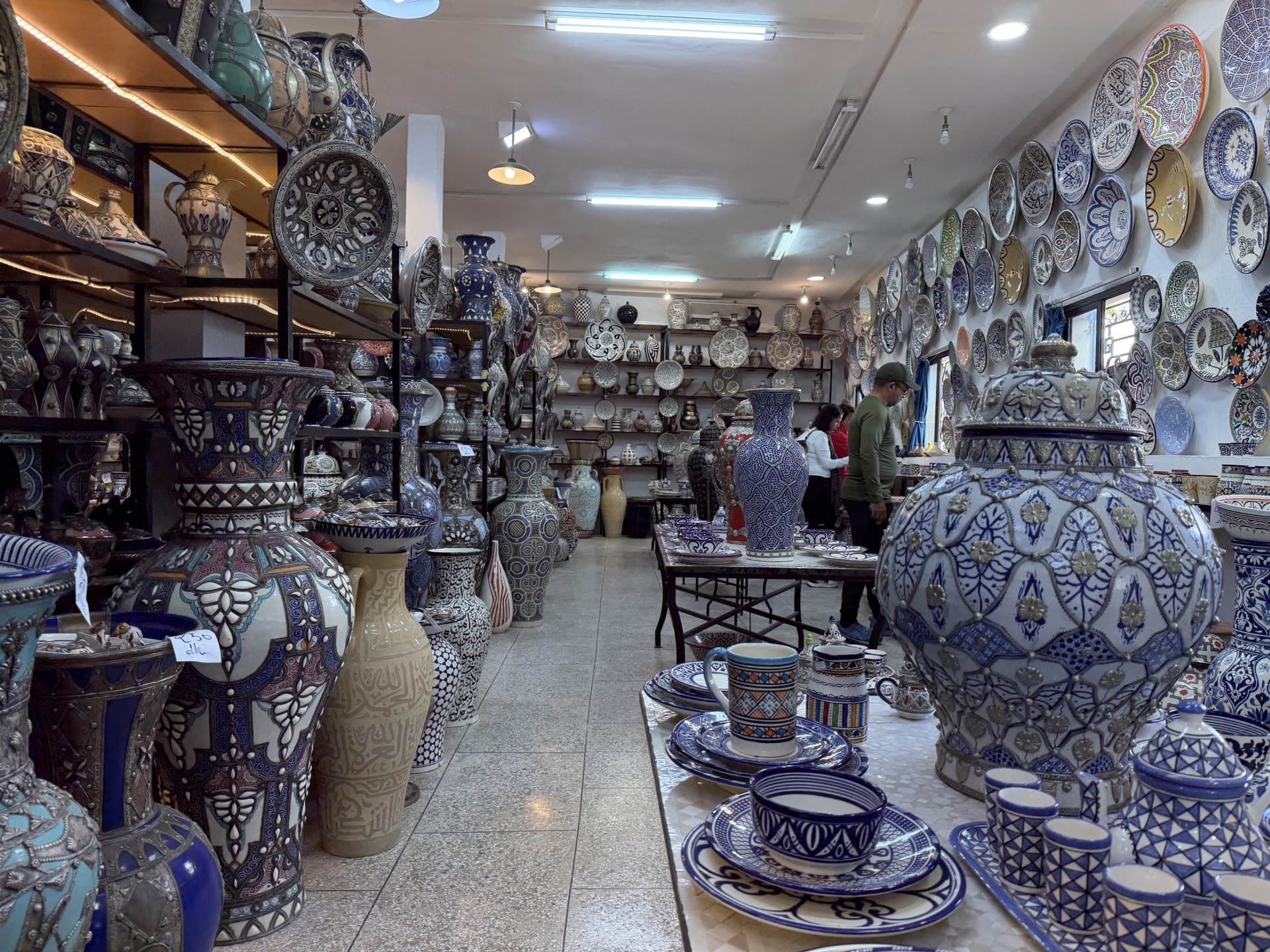
Our next stop was Naji Pottery, where the famous handmade pottery and tiles of Fes come to life. Bushwah, our guide, walked us through each step of the process, revealing just how much artistry is involved in every piece.
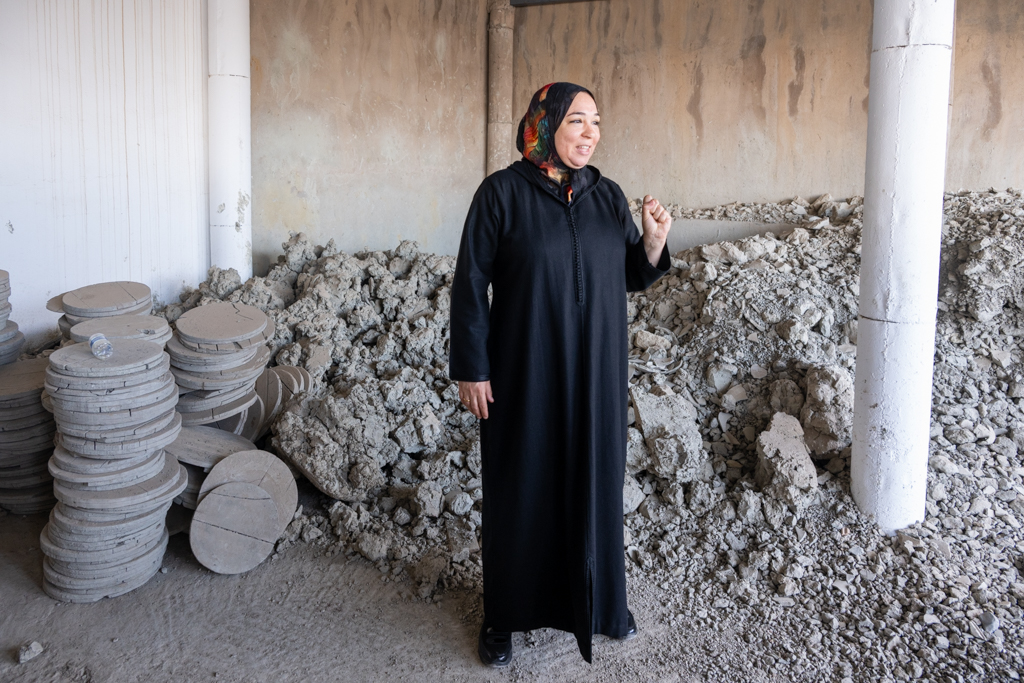
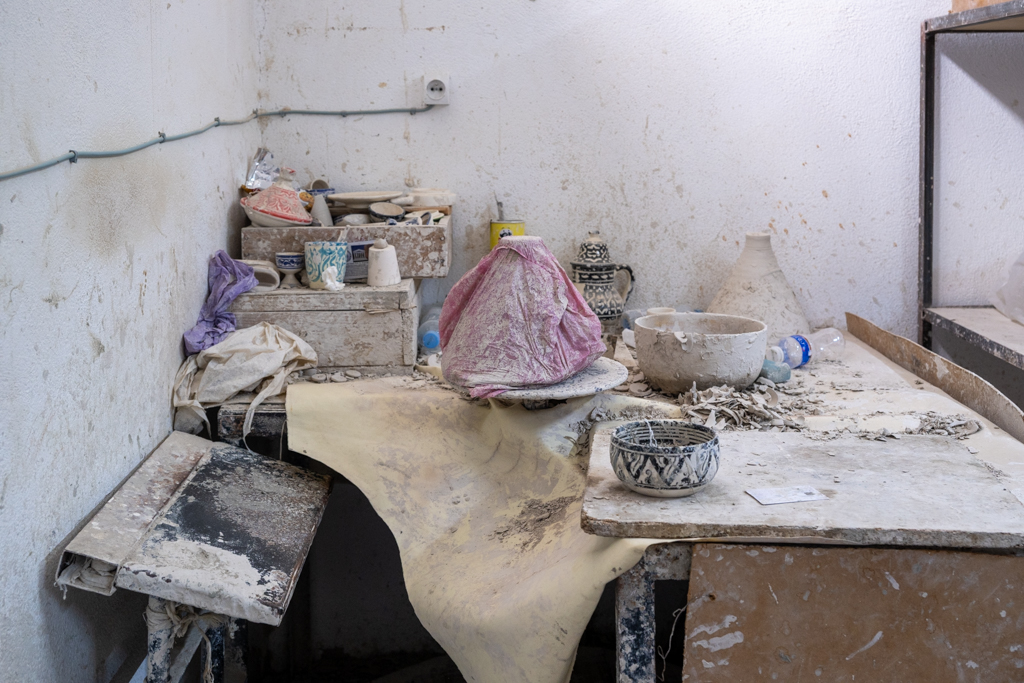
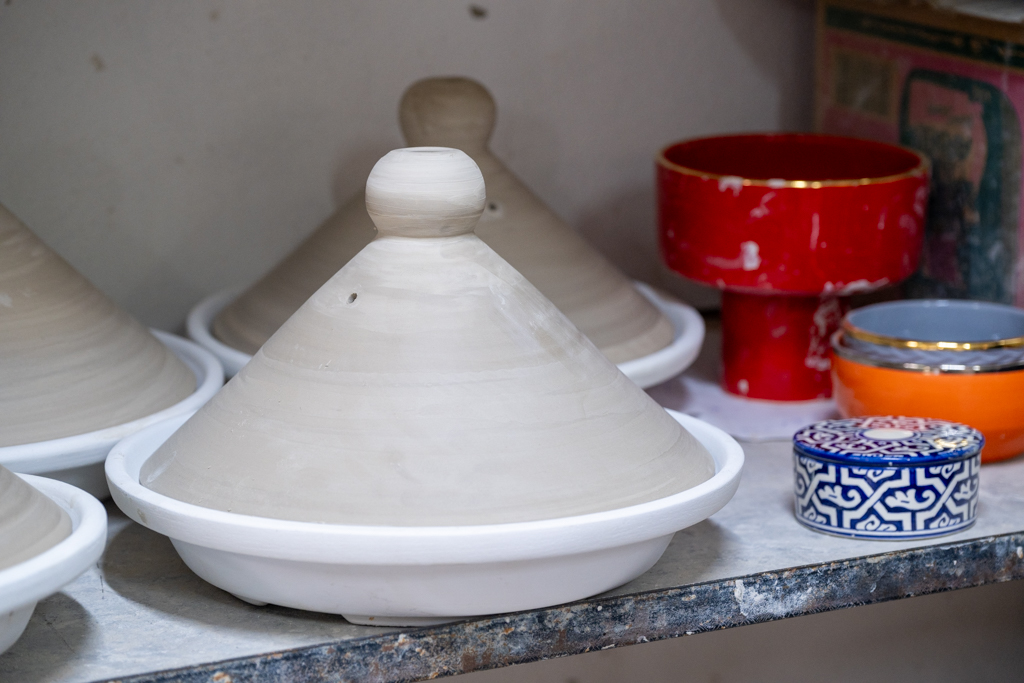
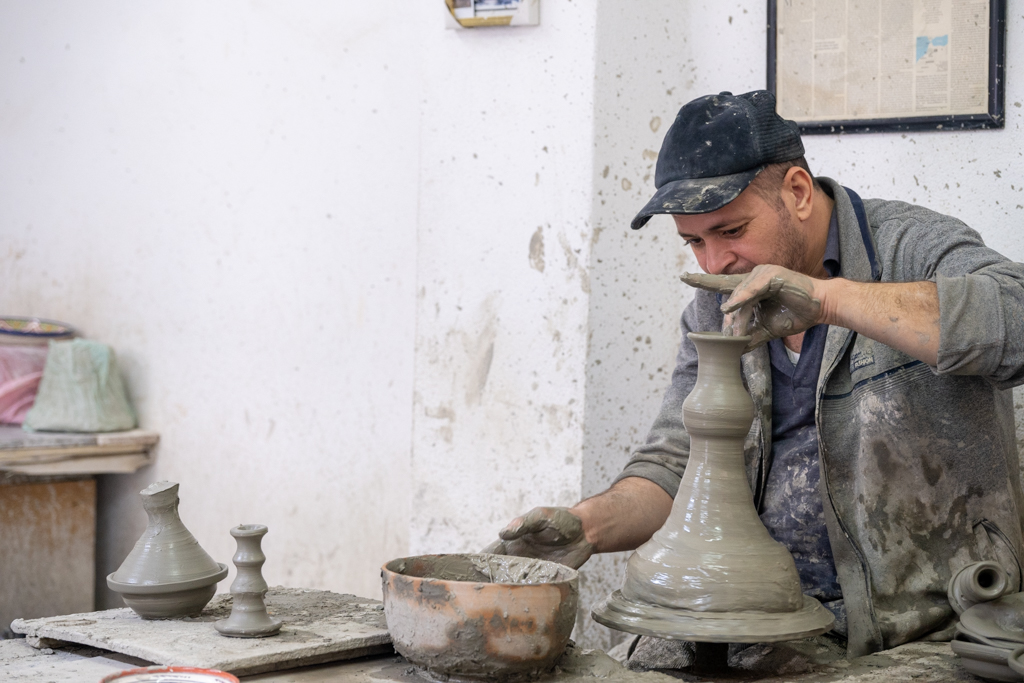
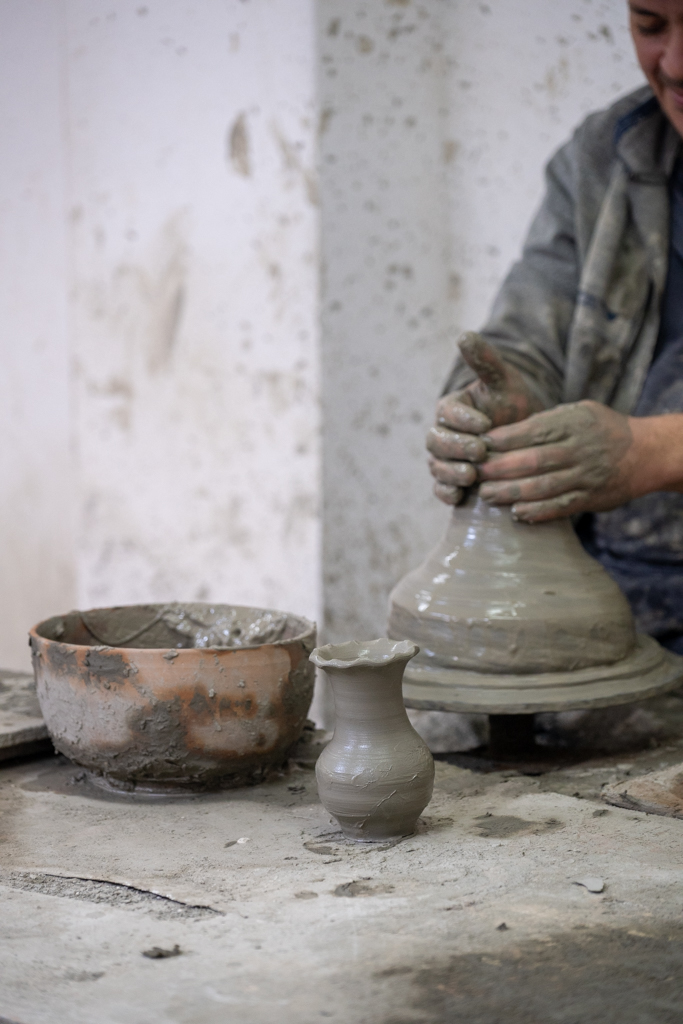
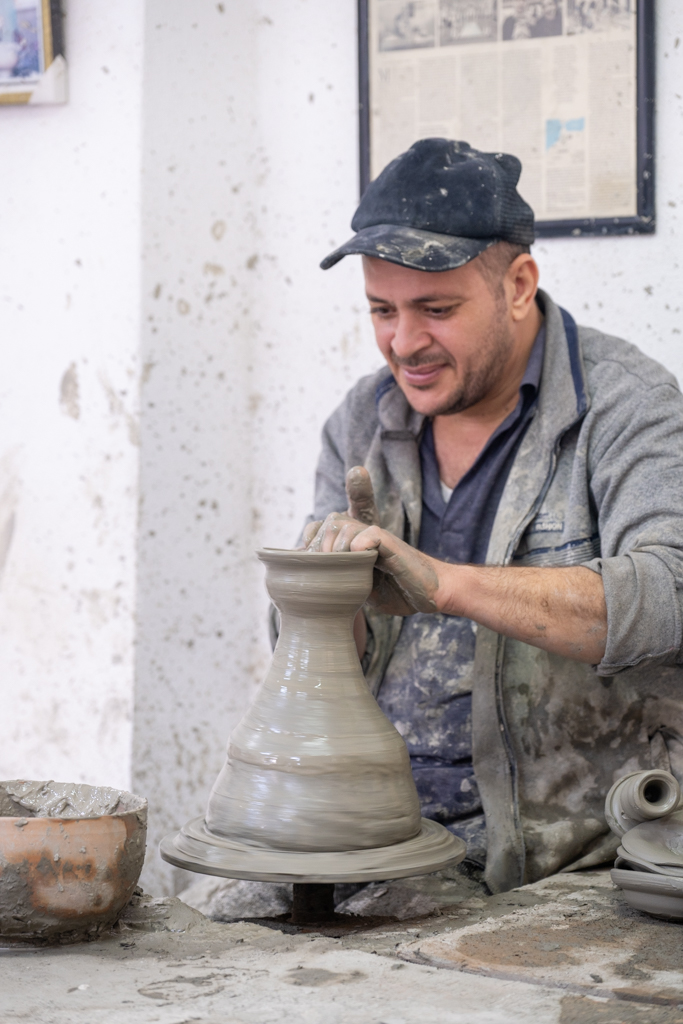
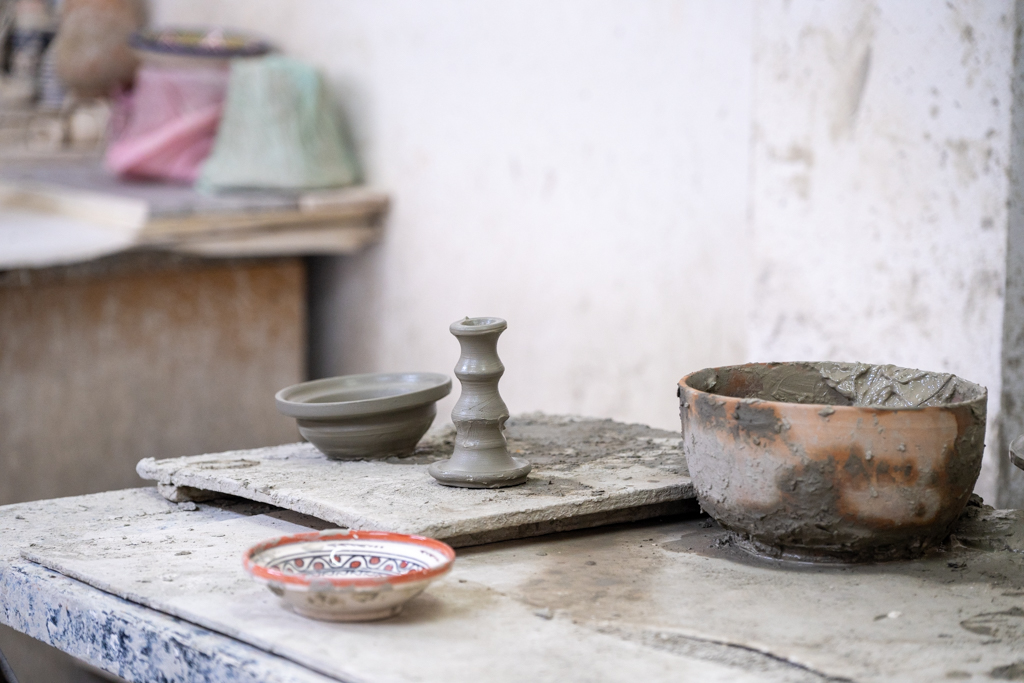
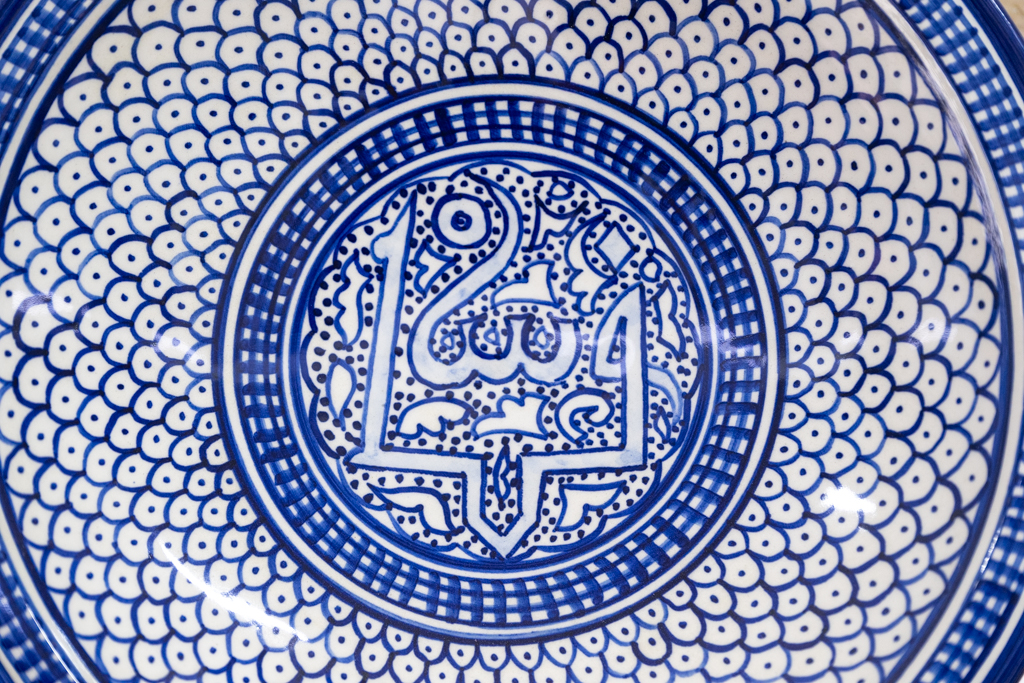
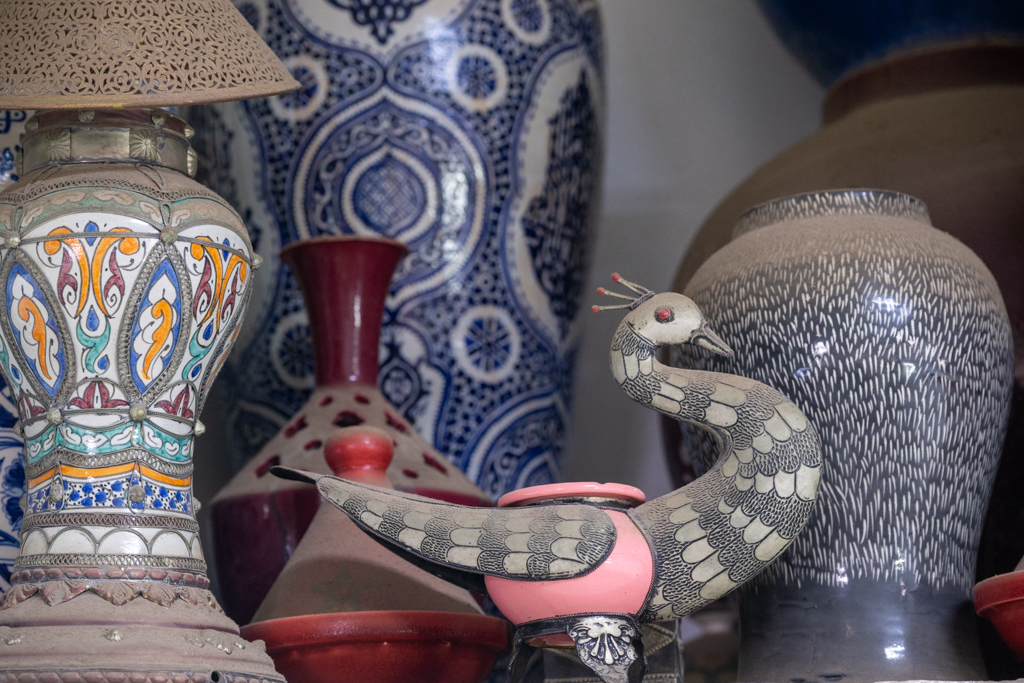
It all begins with a special gray clay found only in the mountains outside of Fes. The clay is cleaned, softened, and purified before being handed over to the artisans. There are two main styles of ceramics produced here: Berber and Arabic, each with its own patterns and traditions.
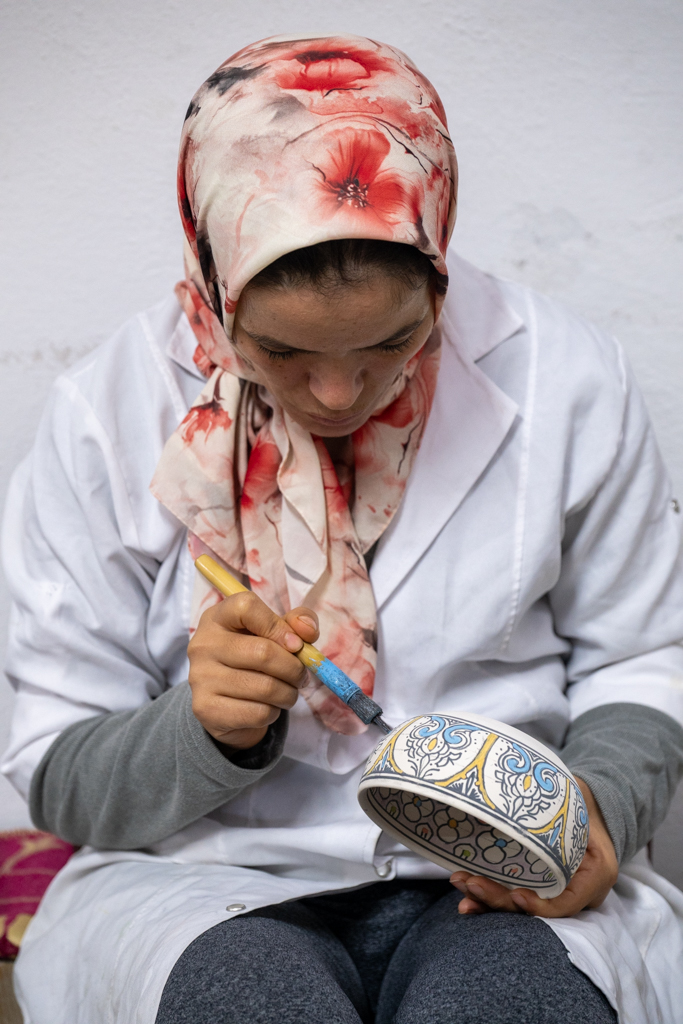
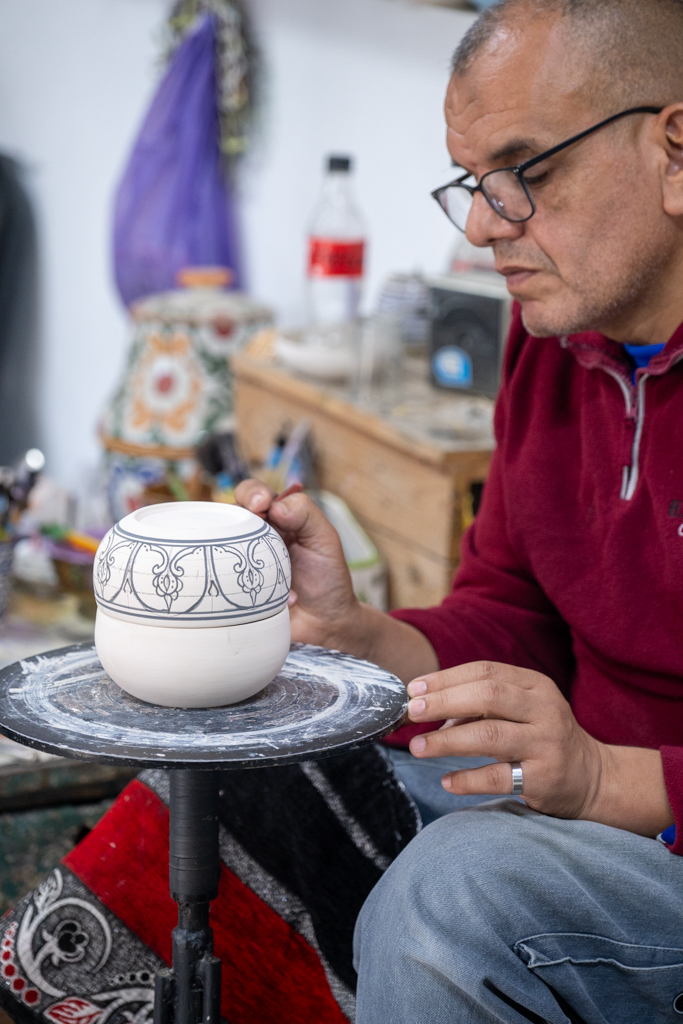
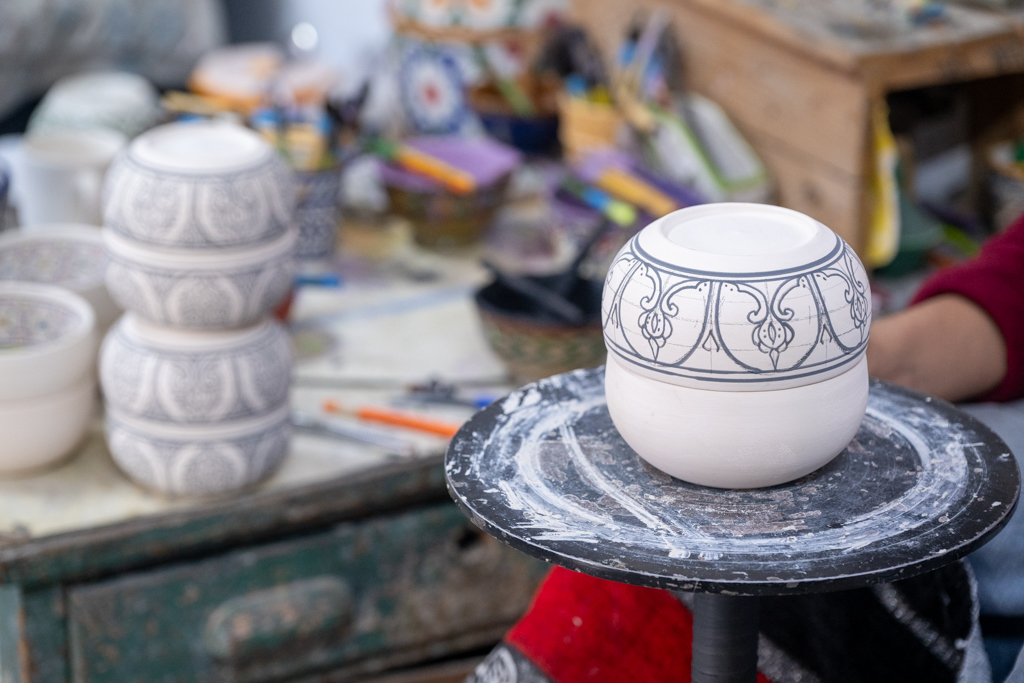
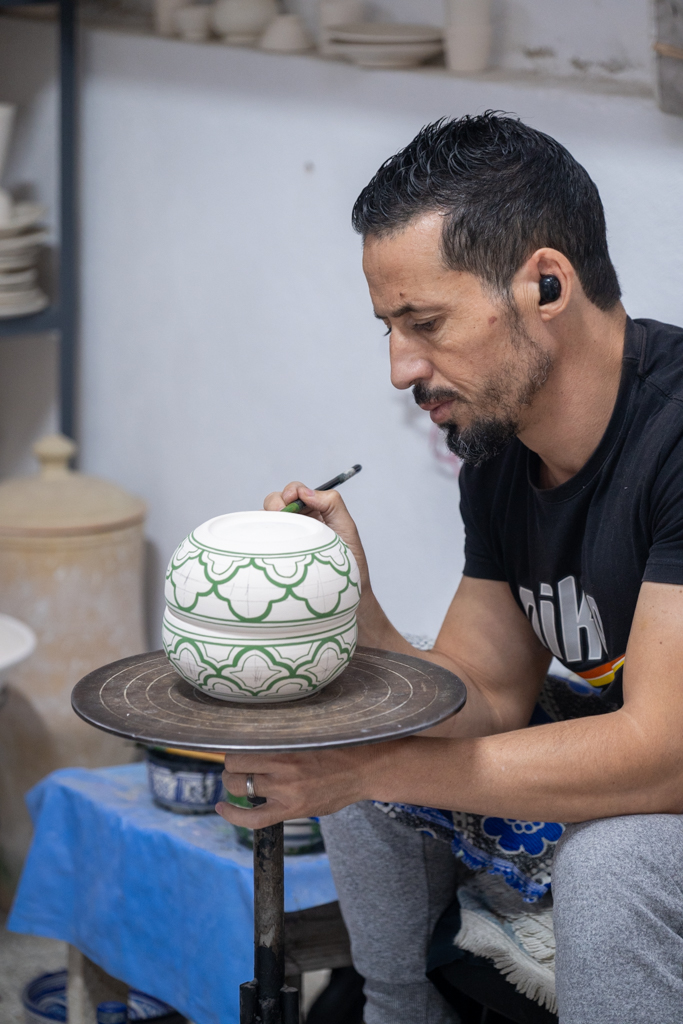
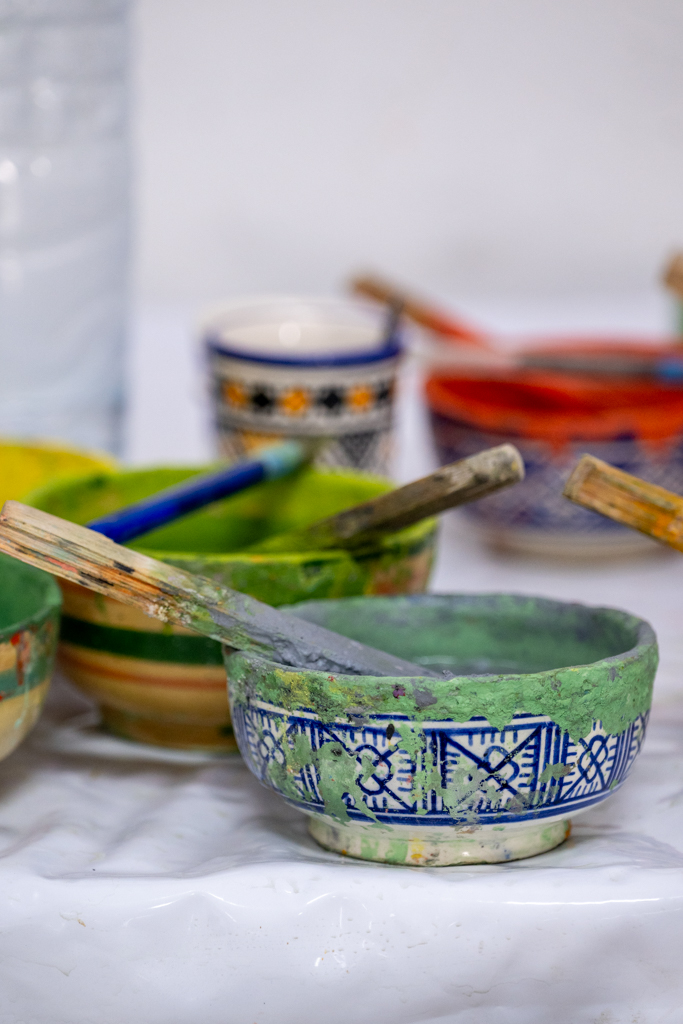
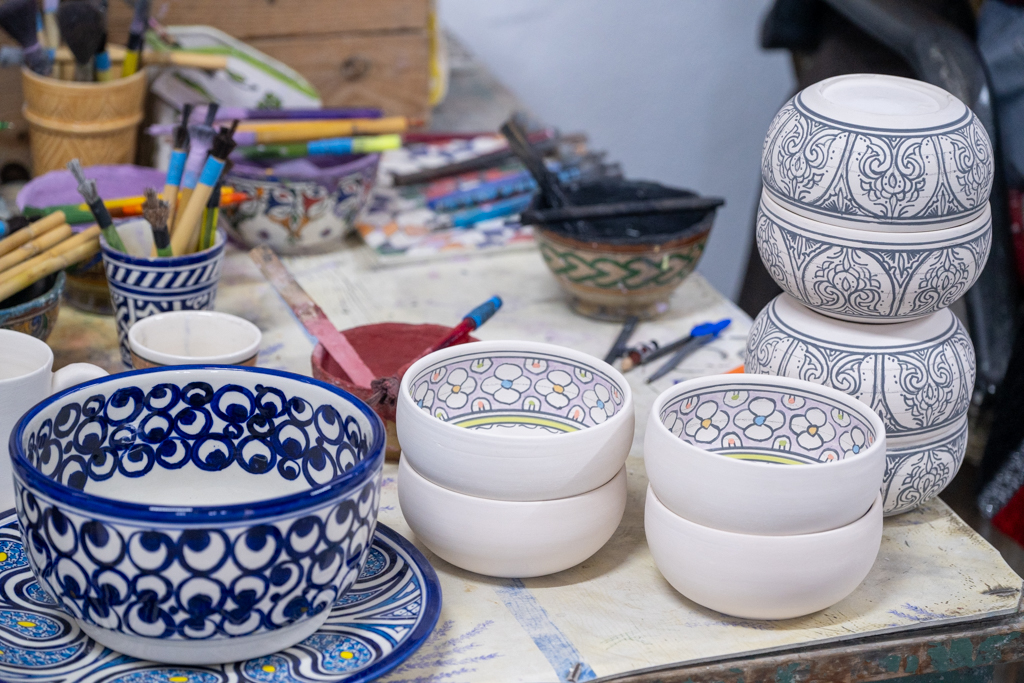
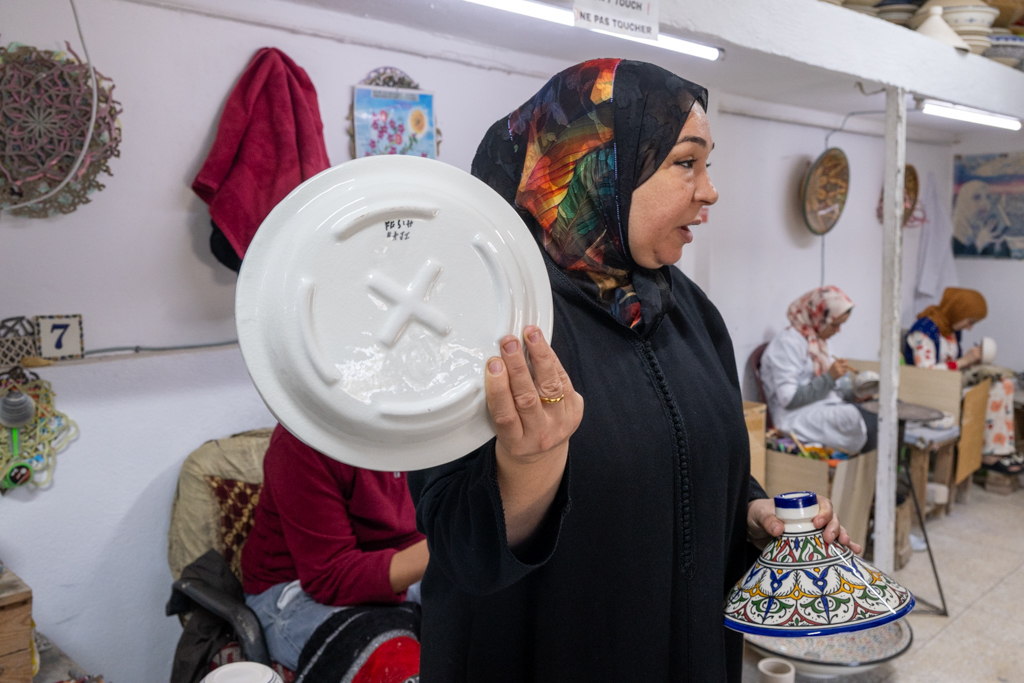
I loved seeing the tools they use, including brushes made from horsehair. Even the way they mark their pieces is thoughtful: the first sign or symbol indicates the school where the artist trained, and the second mark is the artist’s personal initial.

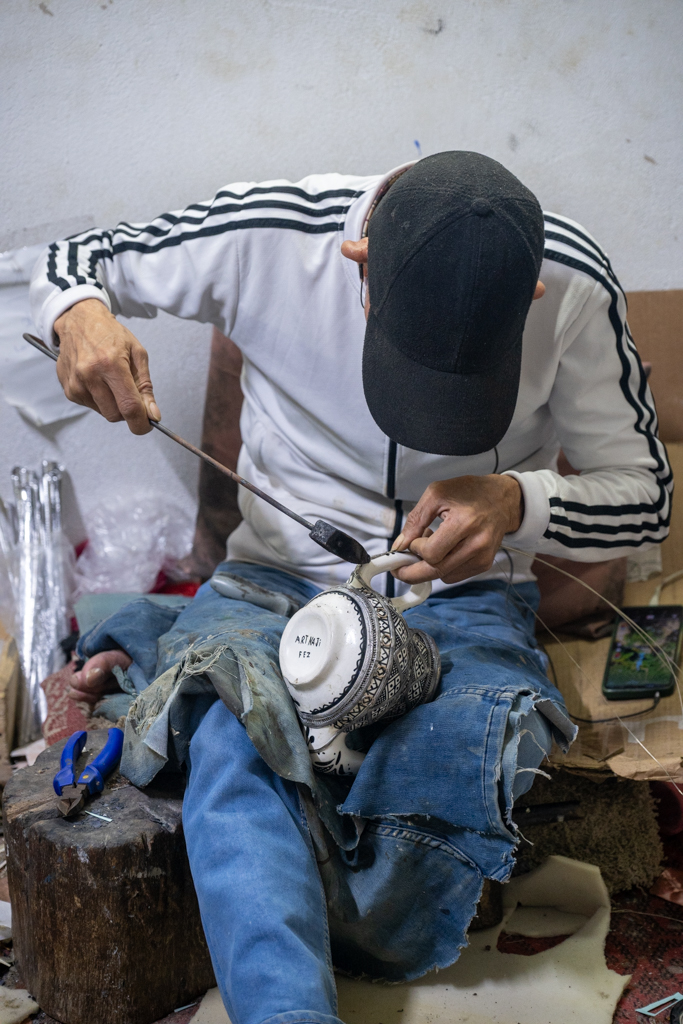
We watched an artist working on a kick wheel, shaping clay with a steady rhythm that looked almost meditative. Additionally, we watched as an artisan worked with pewter.

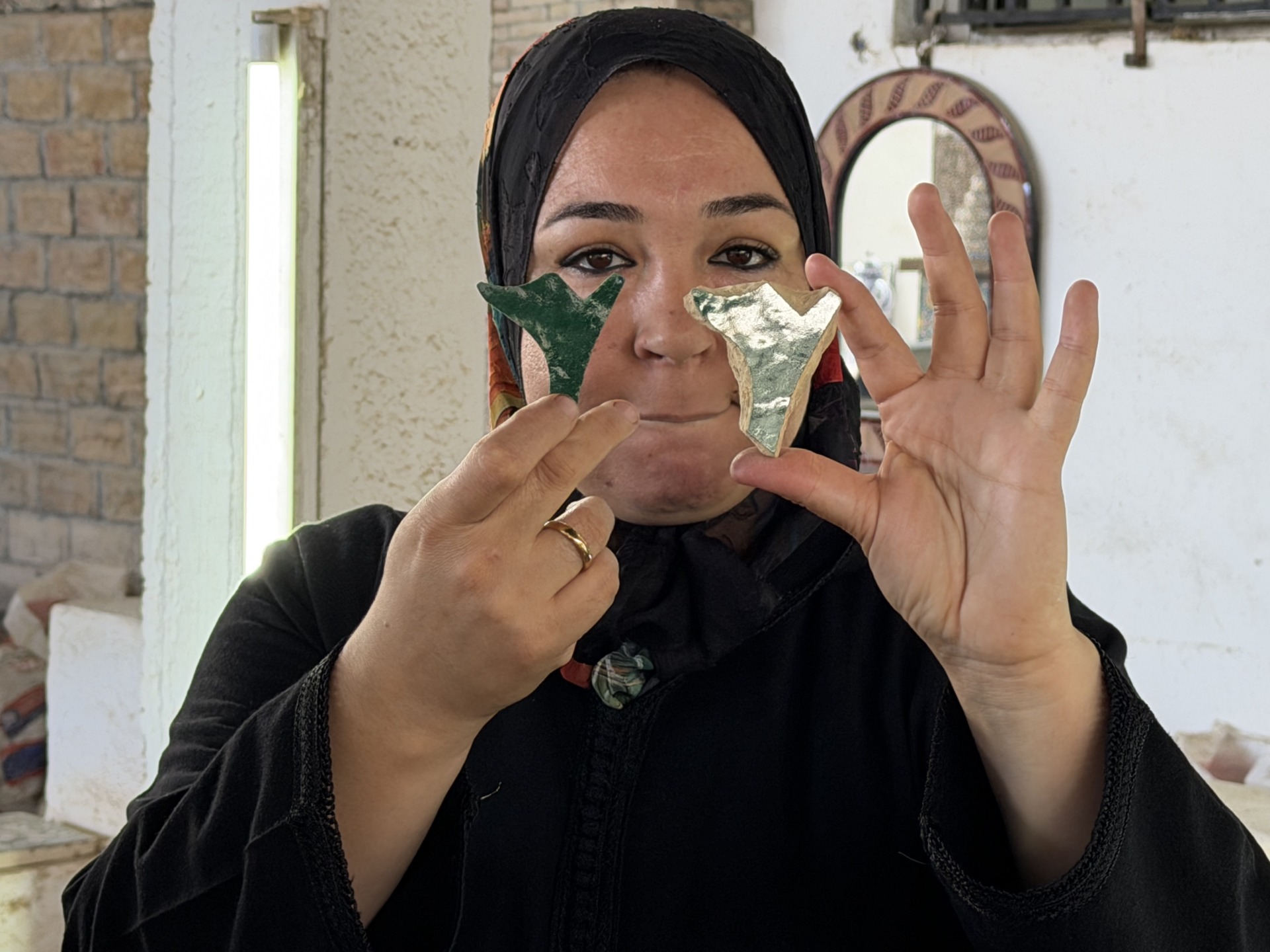
For tilework, the process is a collaboration. One artist draws the design, and another carves the shapes – every piece a team effort.

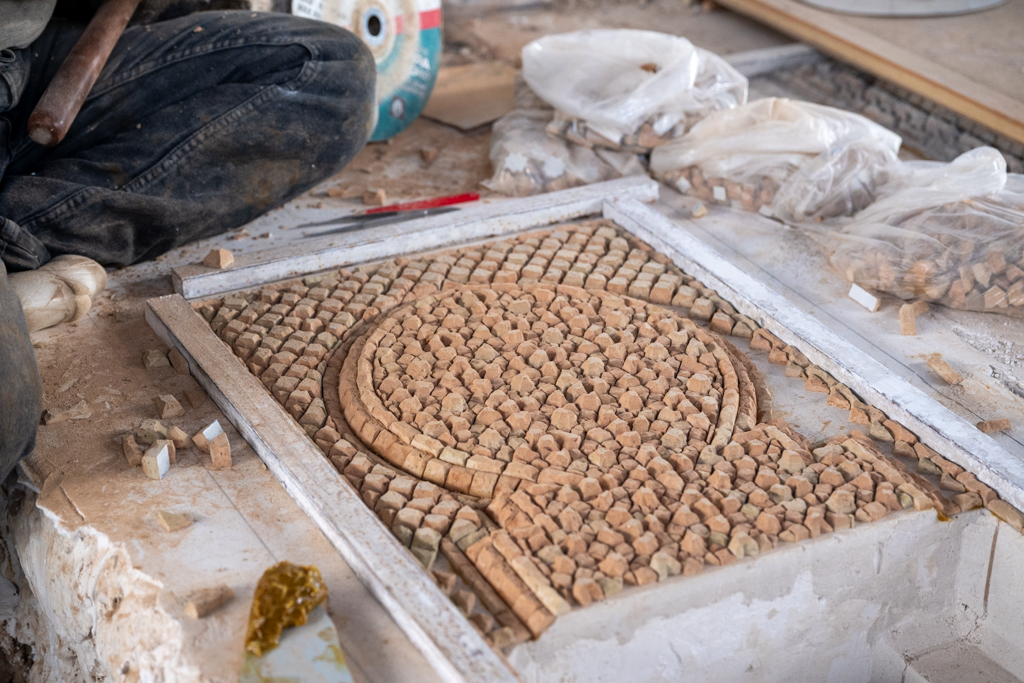
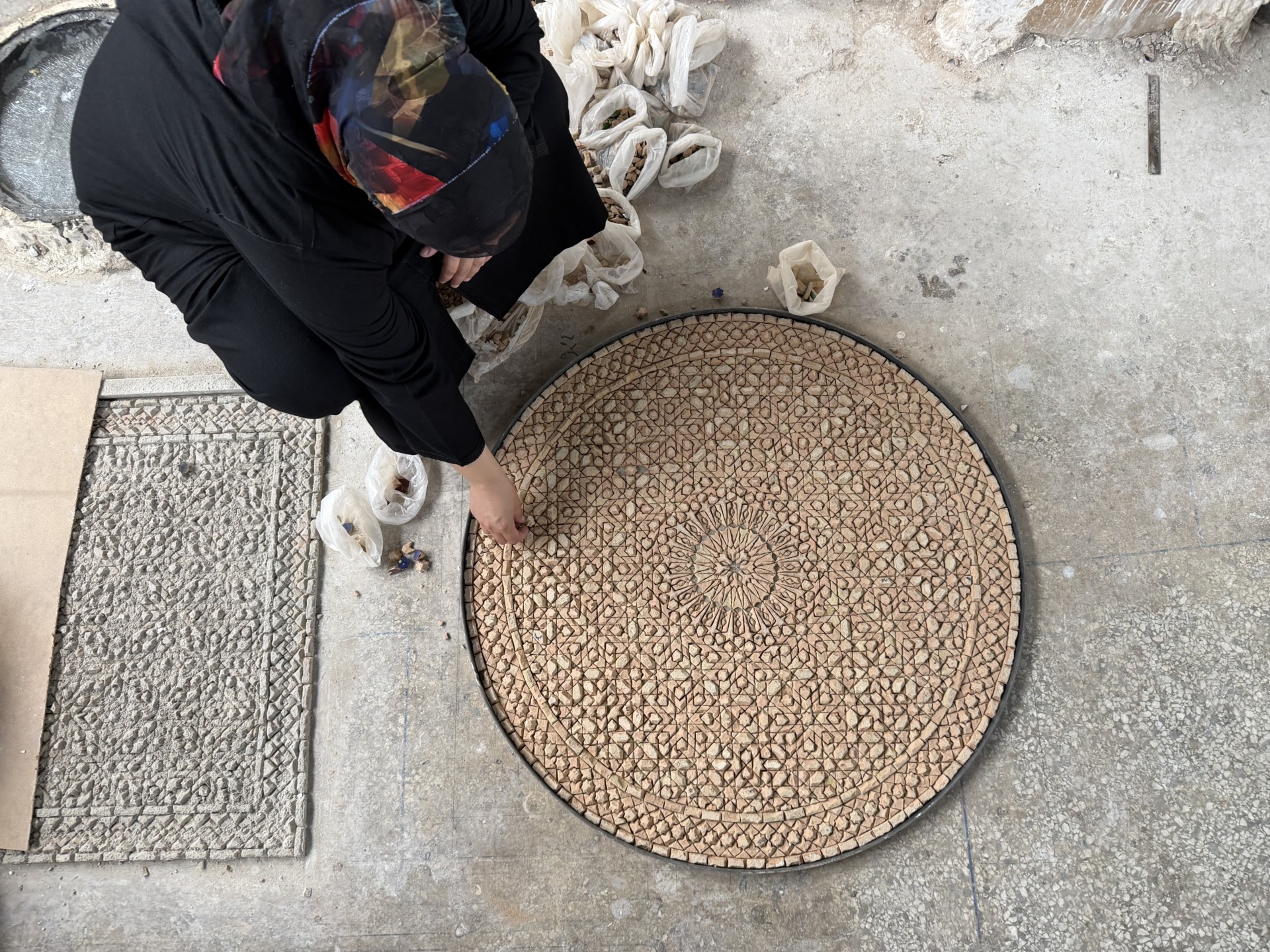
The assembly of mosaic tables was fascinating. The tiles are laid out upside down first, like building a puzzle in reverse. Once the pattern is complete, a frame is added to hold the mosaic in place, and then everything is secured using cement, resin, and fiberglass.
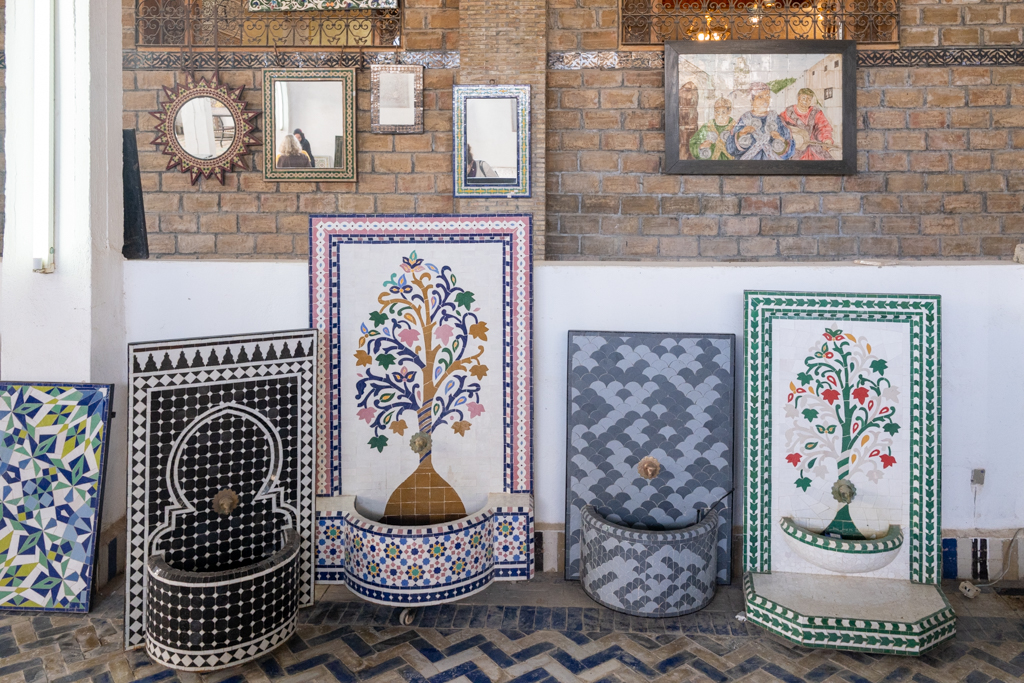
Every piece looked like a beautifully detailed piece of art.


We ended our visit in the showroom, admiring the variety of designs, shapes, and colors. With a little 10% discount in hand, I picked out a small jar – and made sure it proudly said Fes.
the Souks of Fes El Bali
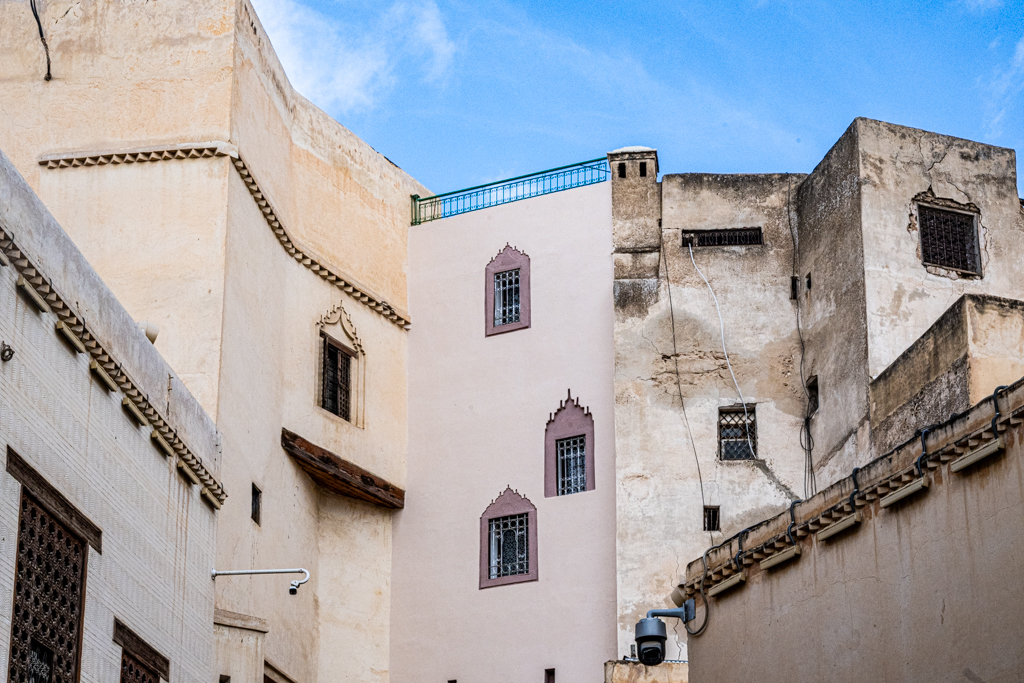
The Medina of Fes is a world of its own. With more than 10,000 streets and alleys, it’s considered the largest medina in the world. It is divided by a river and organized into five historic quarters, each shaped by different waves of settlement. The earliest communities were farmers, followed by Andalusian refugees who arrived centuries ago and helped form the cultural identity of the city.

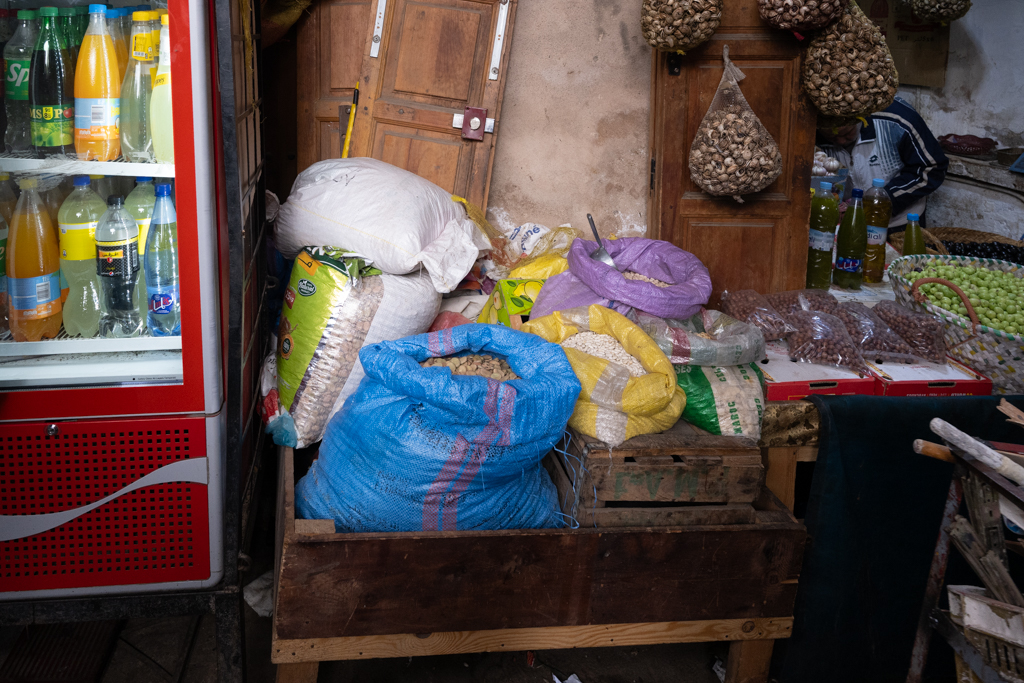
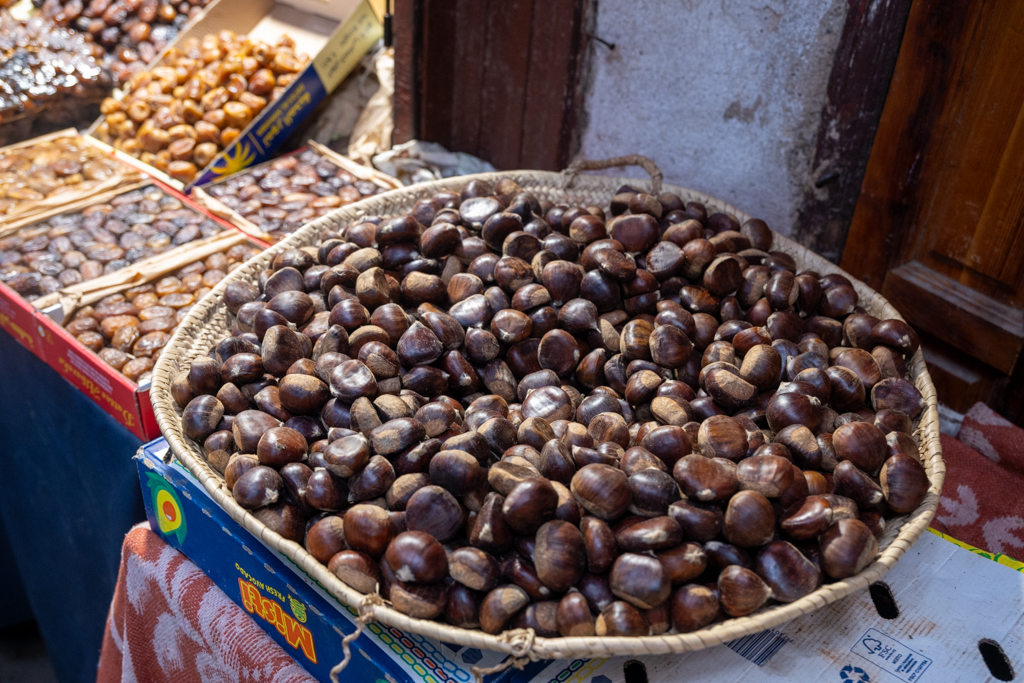
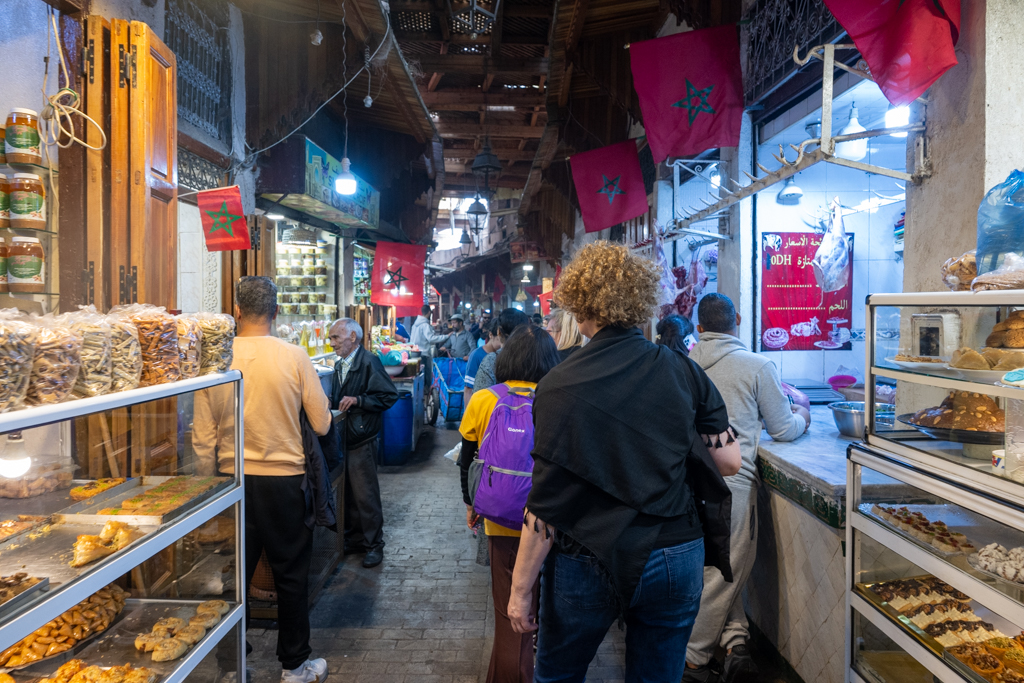
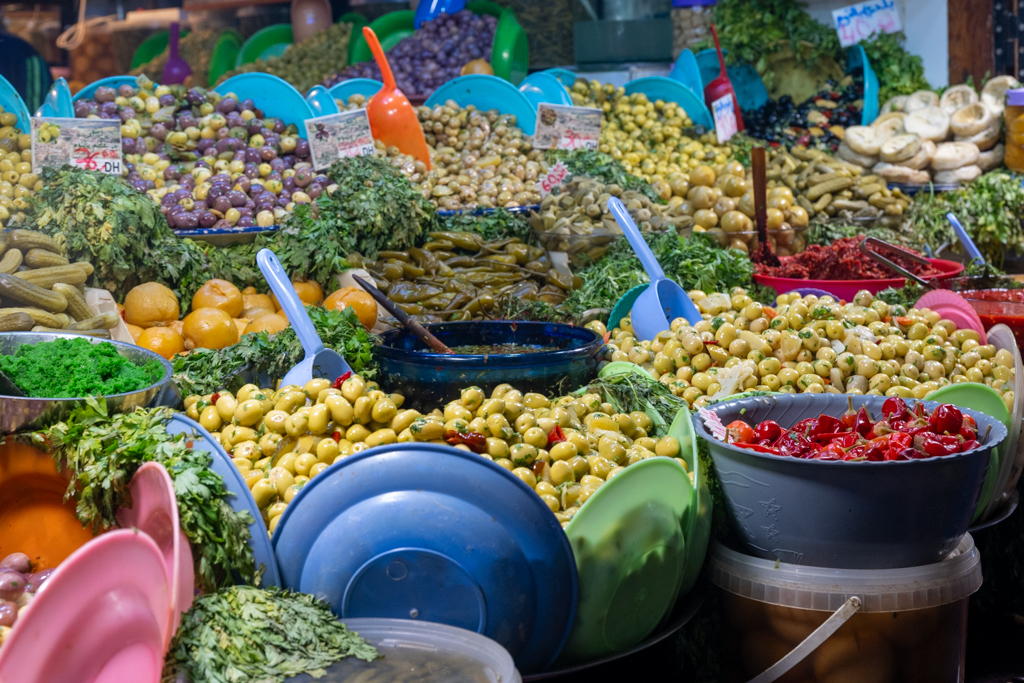
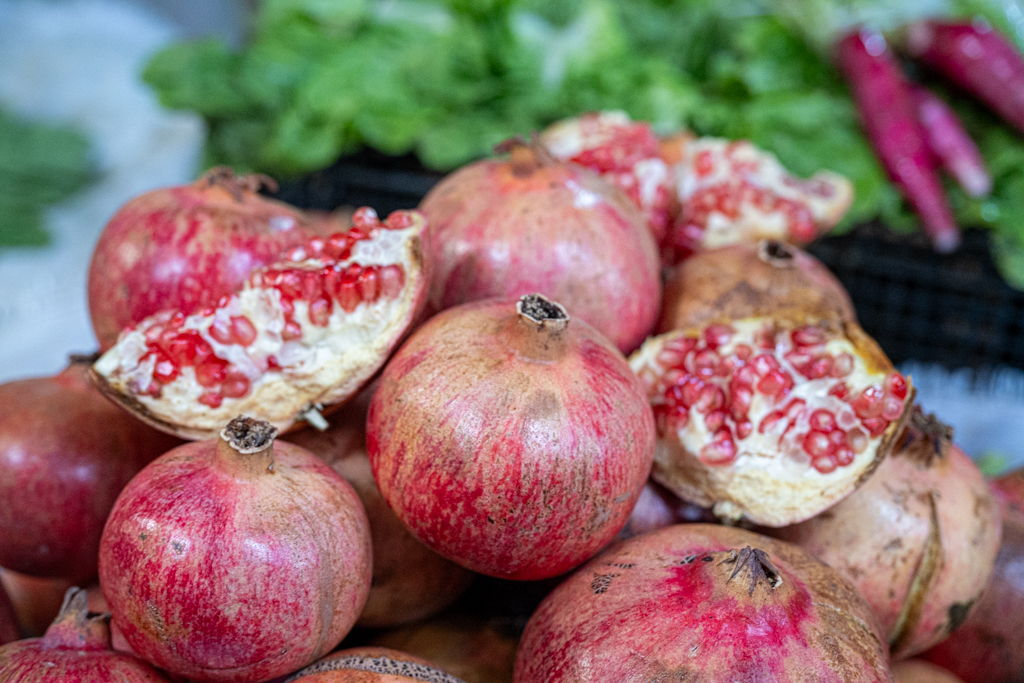
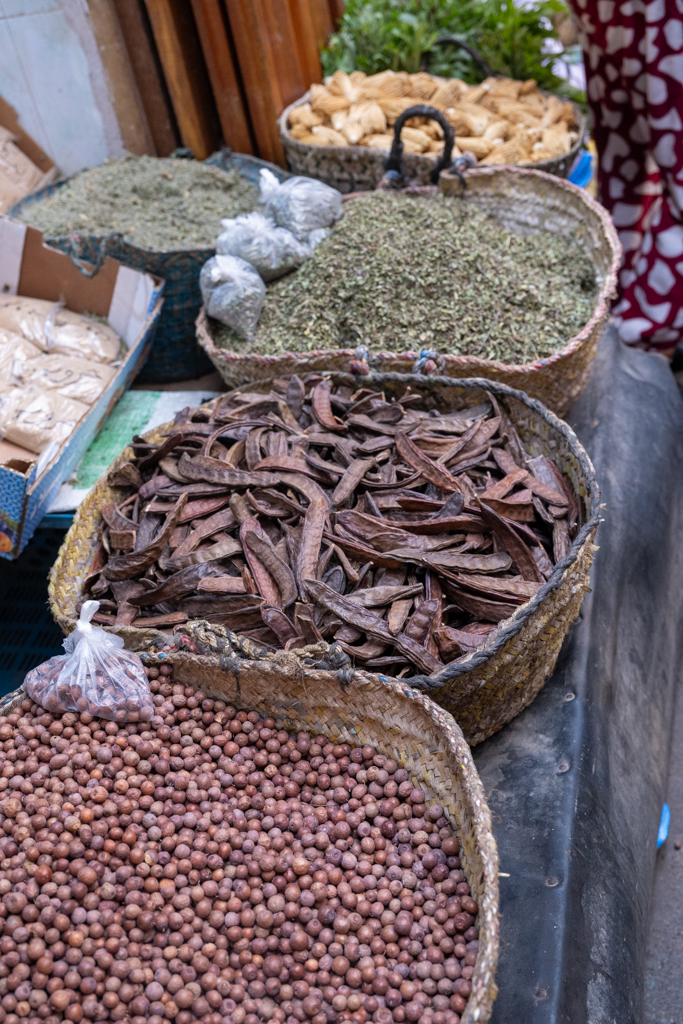
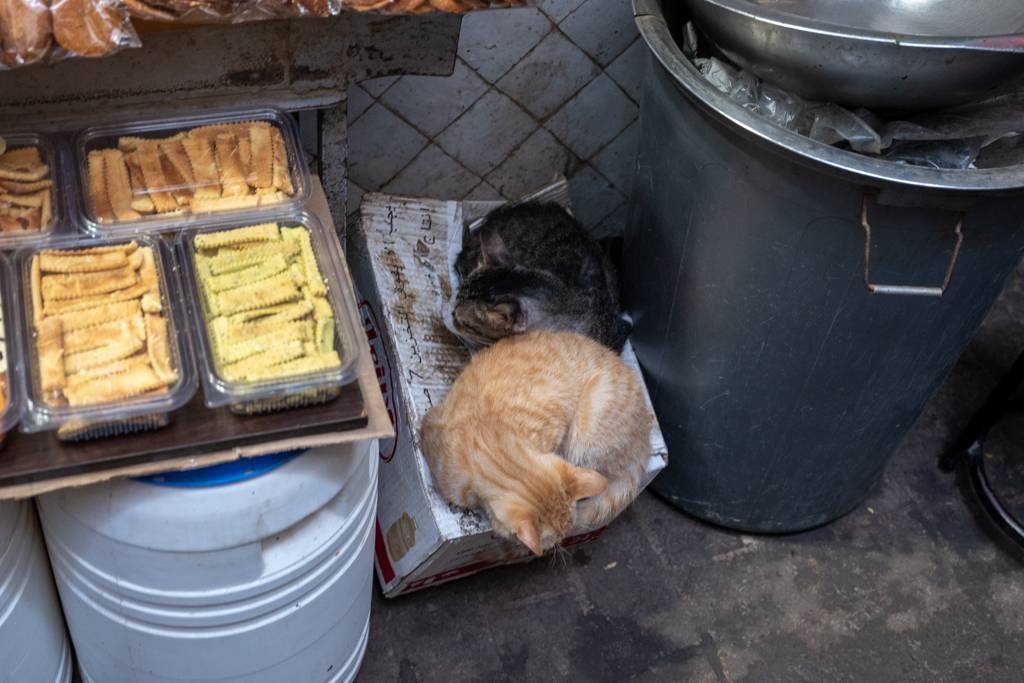
Walking the souks of Fes El Bali, is an experience that awakens every sense. This UNESCO World Heritage site is one of the oldest and most vibrant marketplaces in the world – a maze of more than 10,000 alleys where life has unfolded much the same way for centuries.

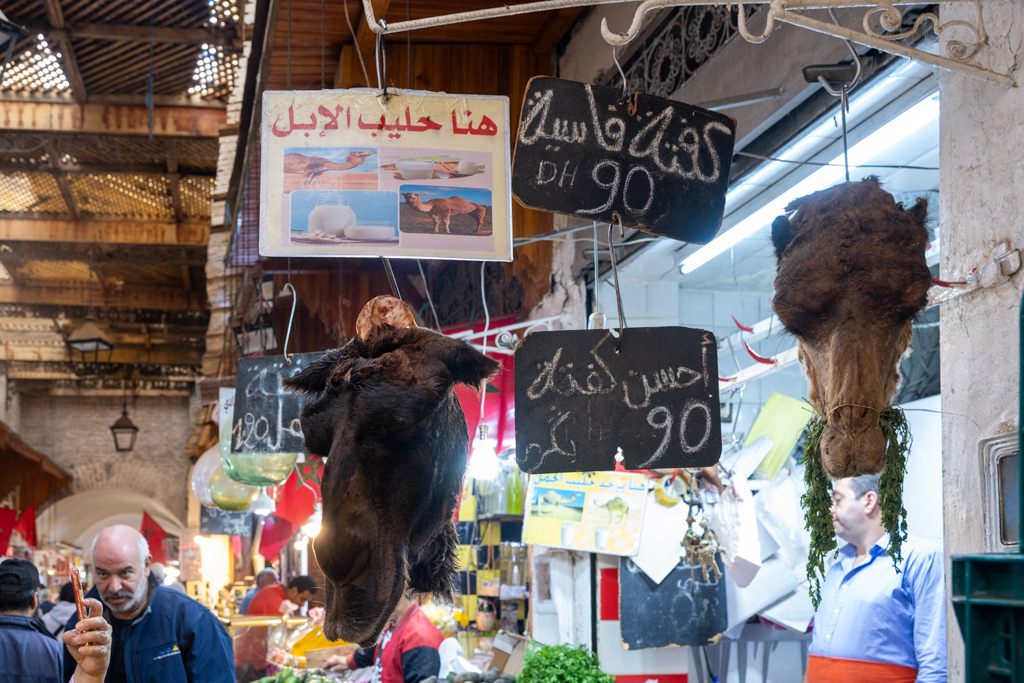
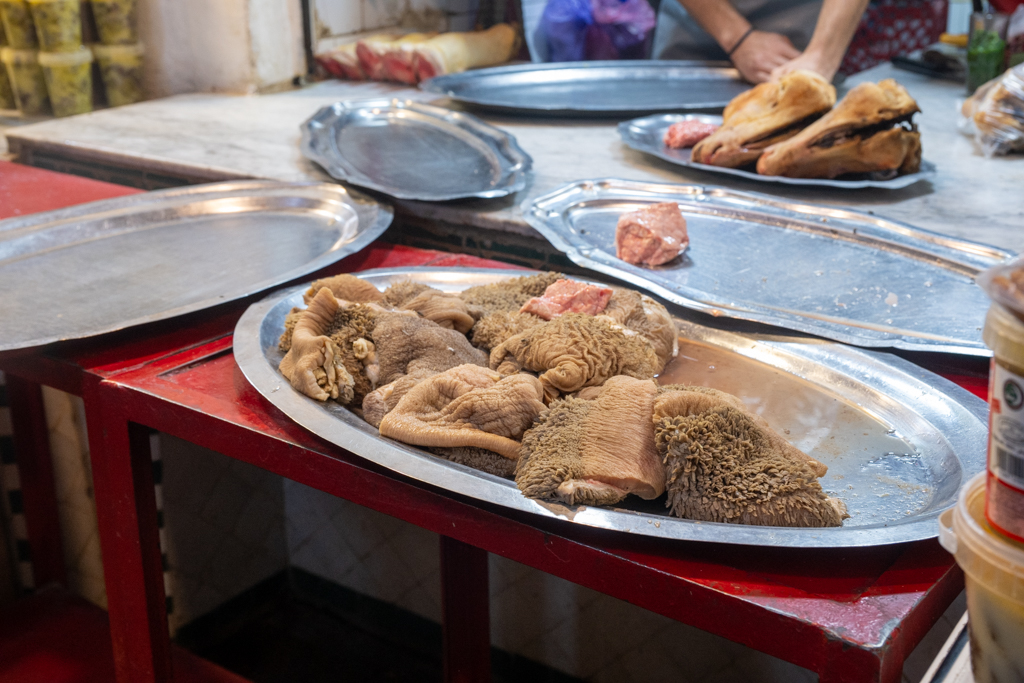
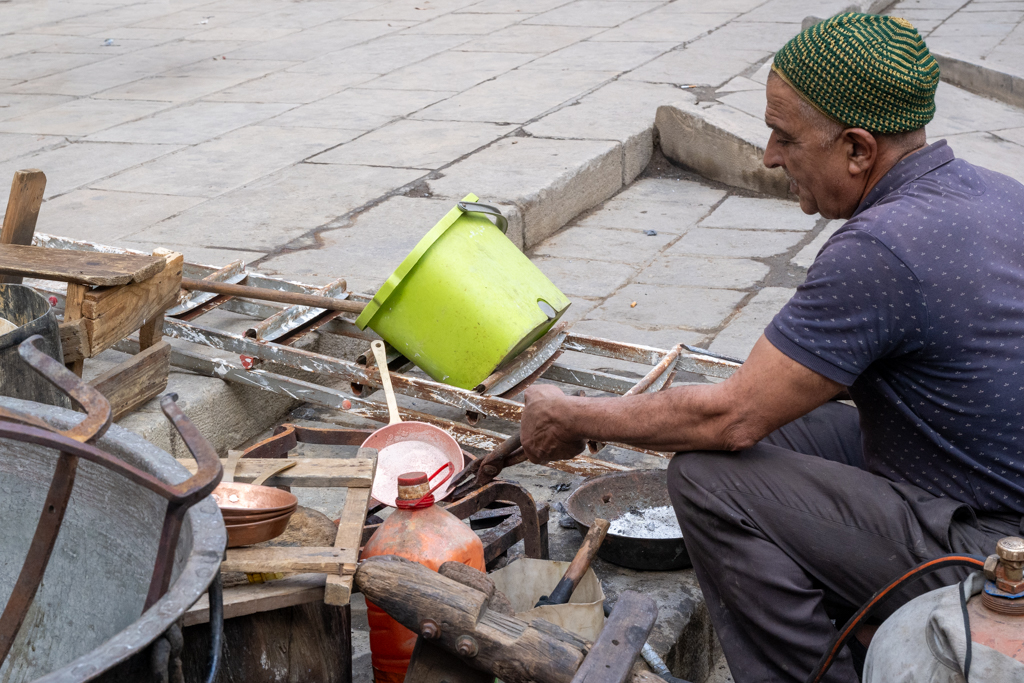
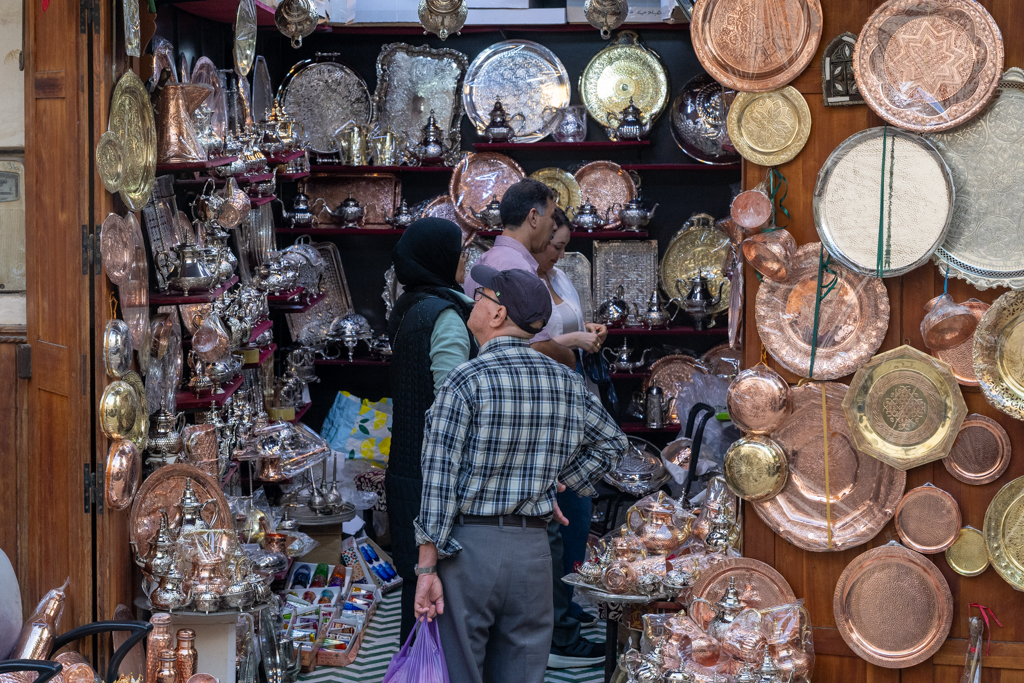
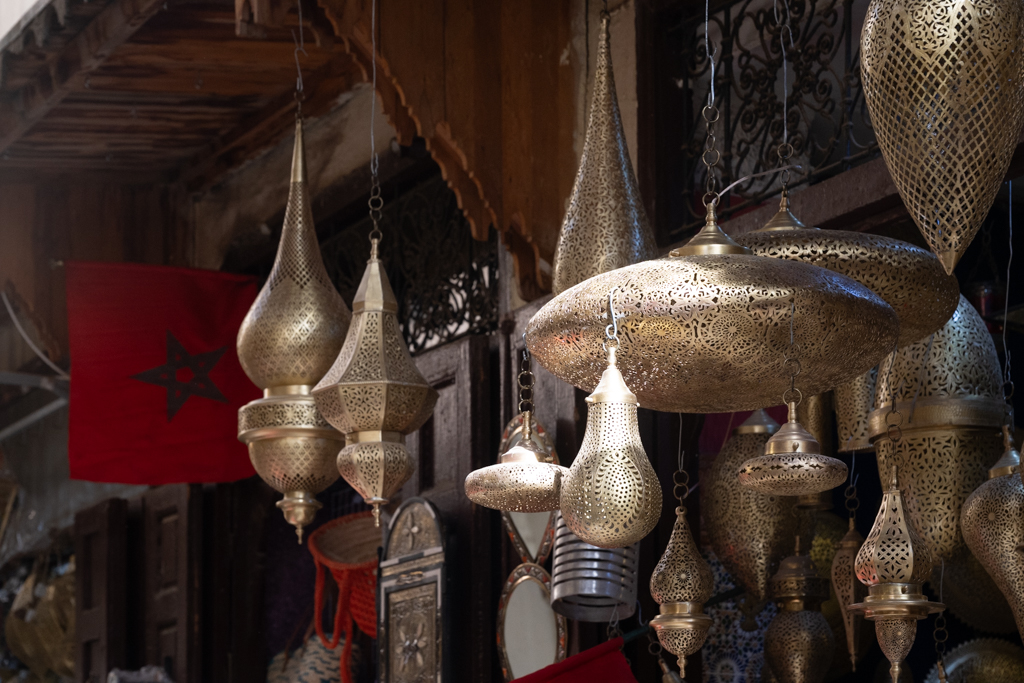
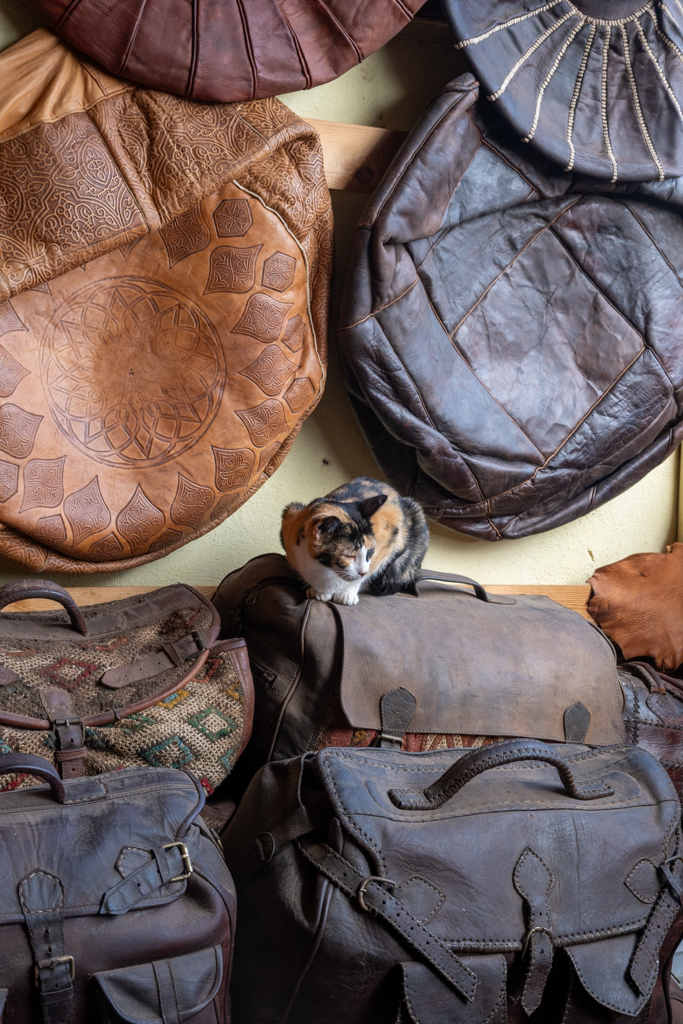
In Fes El Bali, the souks spill into one another: spice sellers with pyramids of saffron and turmeric, leather shops filled with the earthy aroma of the tanneries, copper artisans hammering pots by hand, and stalls stacked high with woven textiles, ceramics, and handmade goods. It’s chaotic, colorful, and endlessly captivating – a living, breathing reminder that the medina is not just a market, but the beating heart of Fes.

Fes is also home to two extraordinary landmarks: the oldest university in the world and the oldest mosque still in continuous use. Both were founded by a woman, Fatima al-Fihri, whose vision helped establish Fes as the cultural and intellectual capital of Morocco. Today, the university focuses on early Islamic studies and continues to be a center of scholarship.
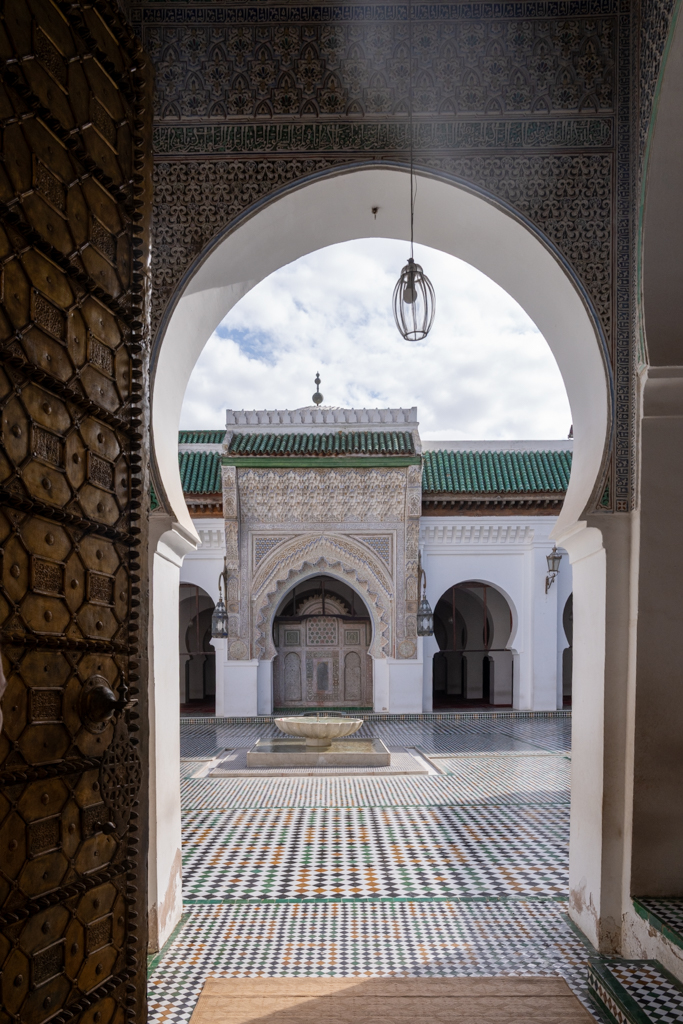
At one point, Layla spoke about women’s modesty practices in religious spaces. Rather than seeing them as restrictive, she explained the deeper purpose: women bow during prayer, and certain clothing styles could draw attention or become a distraction. The intention isn’t about limiting women – it’s about giving them privacy, allowing them to devote themselves fully to the sincerity and stillness of prayer. When she shared this, I understood it in a new way: a space designed to center the heart, not the performance of religion, but its authentic, personal expression.
Chouara Tannery
327F+Q85, Fes
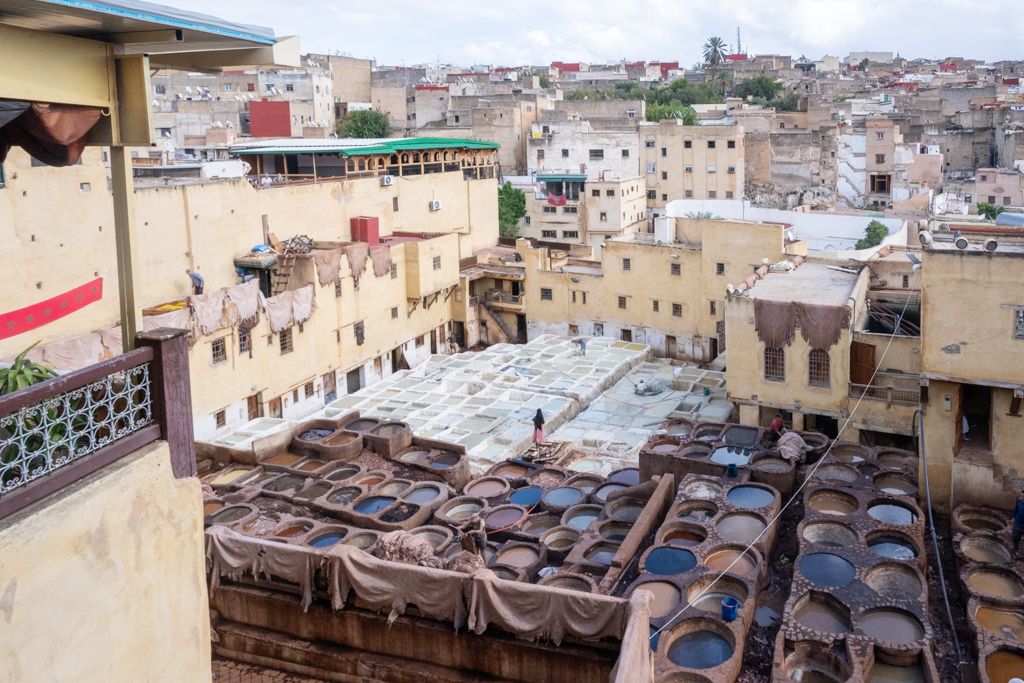
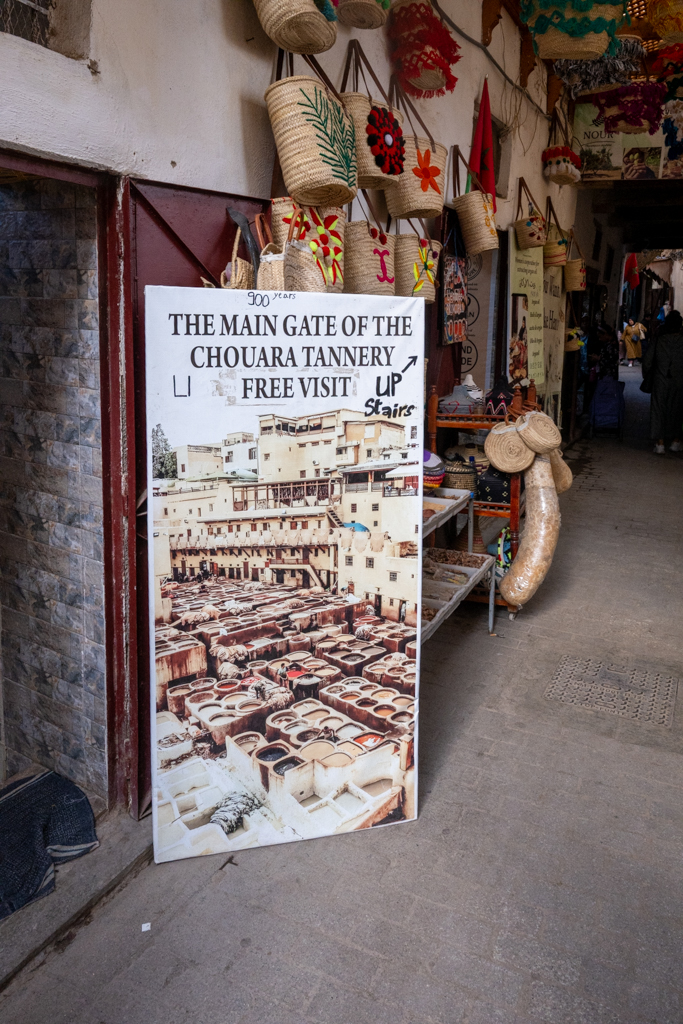
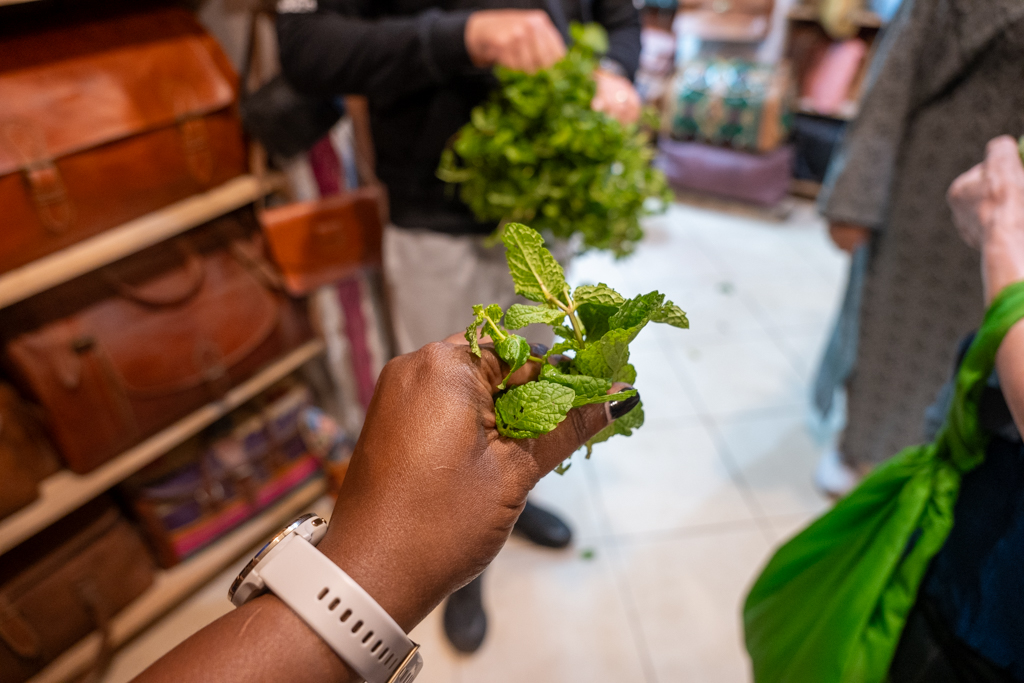
A visit to Fes wouldn’t have felt complete without seeing the iconic Chouara Tannery, the oldest and most renowned tannery in the city. From the balconies above, the view was almost surreal: dozens of stone vats filled with vivid dyes and natural solutions, arranged like an artist’s palette drying under the sun. After receiving fresh mint, I climbed the stairs to behold the most famous area of Fes.
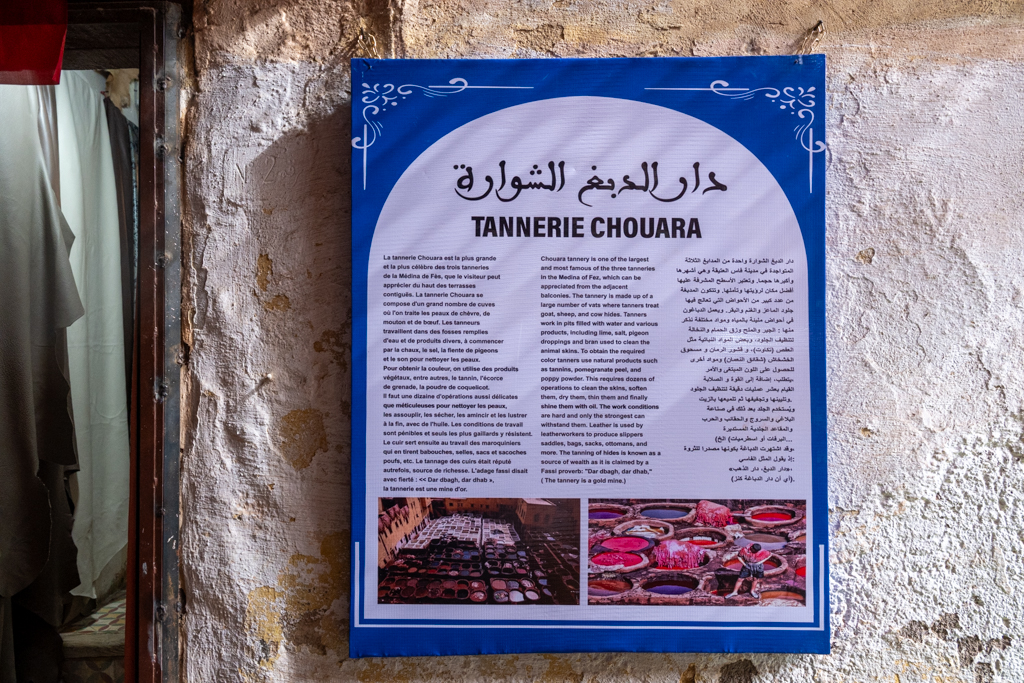
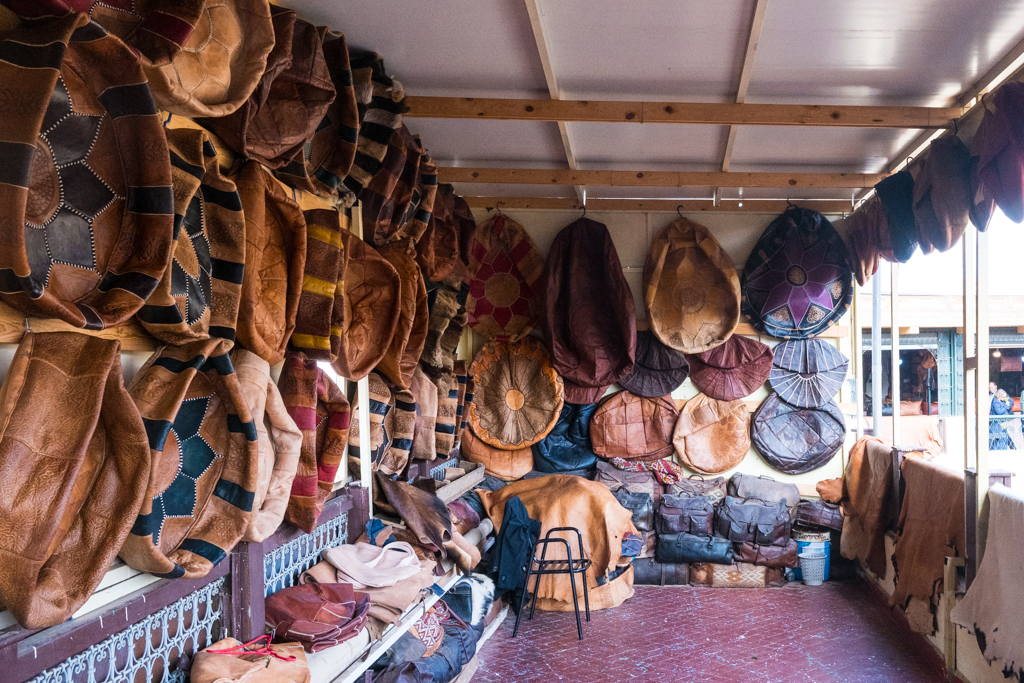
I watched artisans, working with centuries-old techniques, standing waist-deep in the vats as they softened, treated, and dyed the leather that Fes is so famous for.

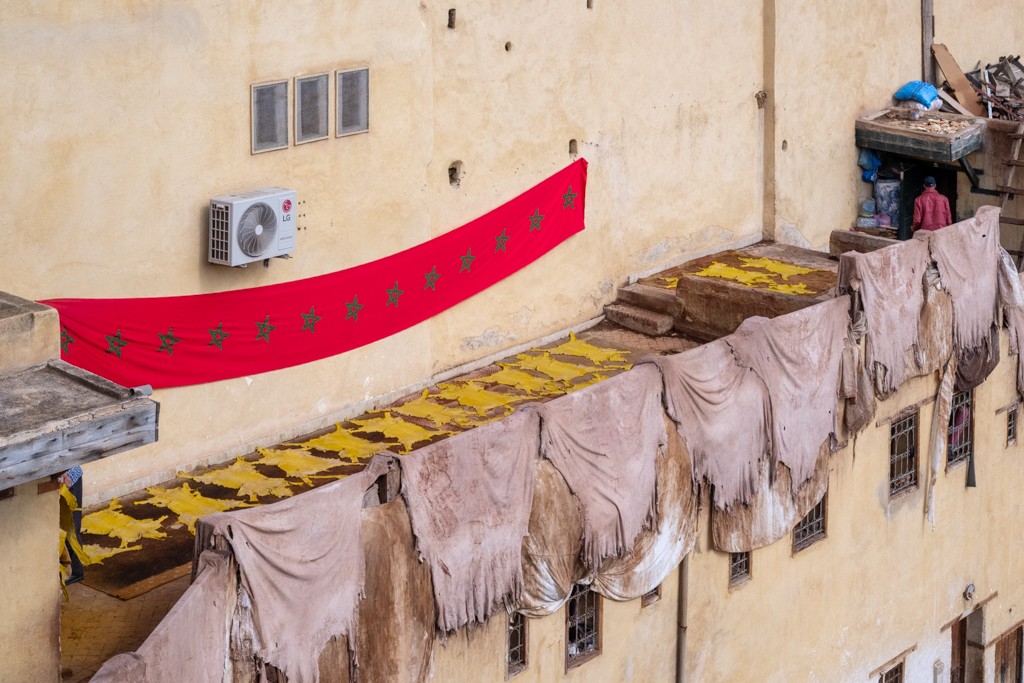
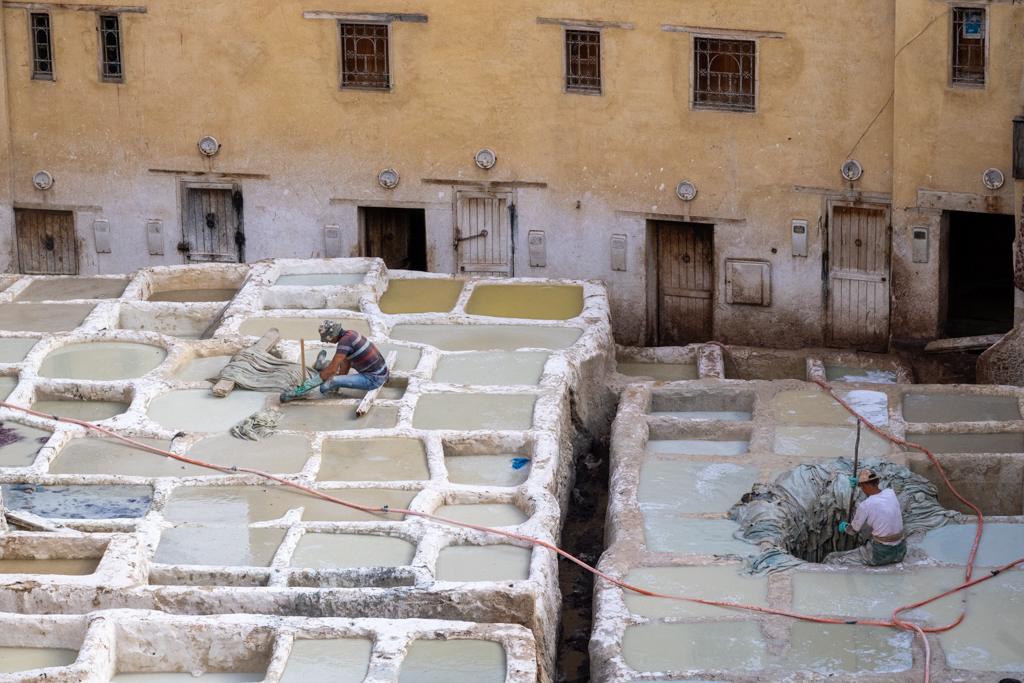

The process was intense, the colors were striking, and the craftsmanship was unforgettable. And although the smell was strong – mercifully softened by a sprig of mint – the Chouara Tannery ended up being one of the most authentic and memorable experiences of my time in the medina.


While I was there, I also found myself in an unexpectedly fantastic conversation about Maine oysters, New Brunswick, Newfoundland, the best spots in Prince Edward Island, and even the tannery itself. I’d overheard an American accent, asked where they were from, and suddenly we were deep in a lively chat about what to look for in great oysters. It was one of those random, delightful travel moments that made the experience even richer.
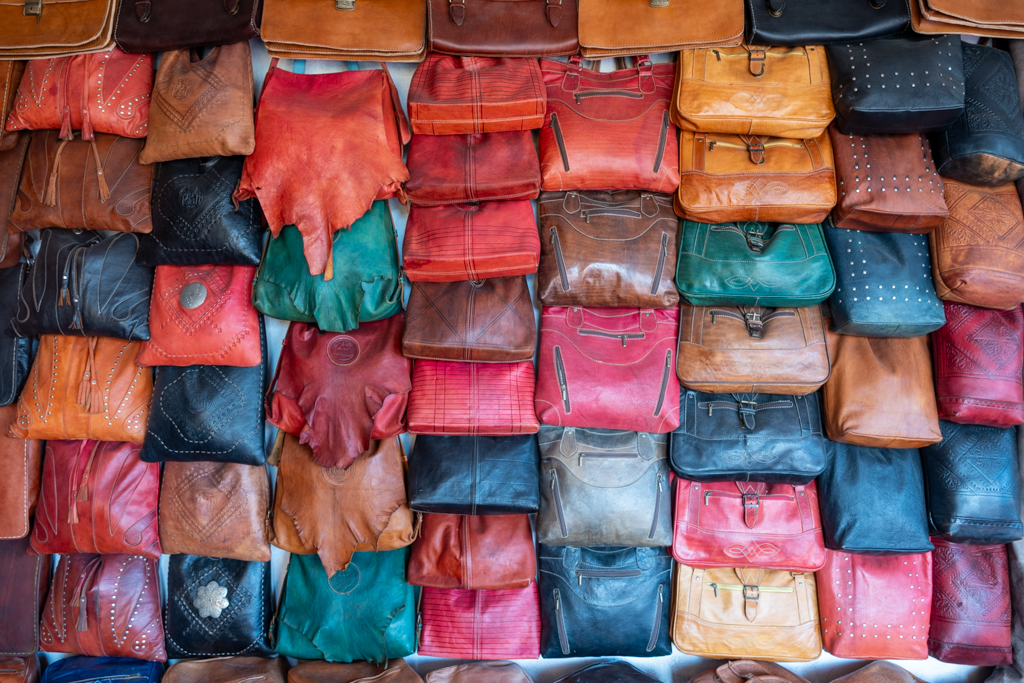
Zawiya of Moulay Idris II
7 souk Sebbat kissariat El Kifah, Fes
After lunch at Dar Alamia & Restaurant, we continued on to the Zawiya of Moulay Idris II. It was a busy moment in the medina, people weaving in and out, but our guide encouraged us to pause, look up at the ornate ceiling, and take in the beauty of the space.
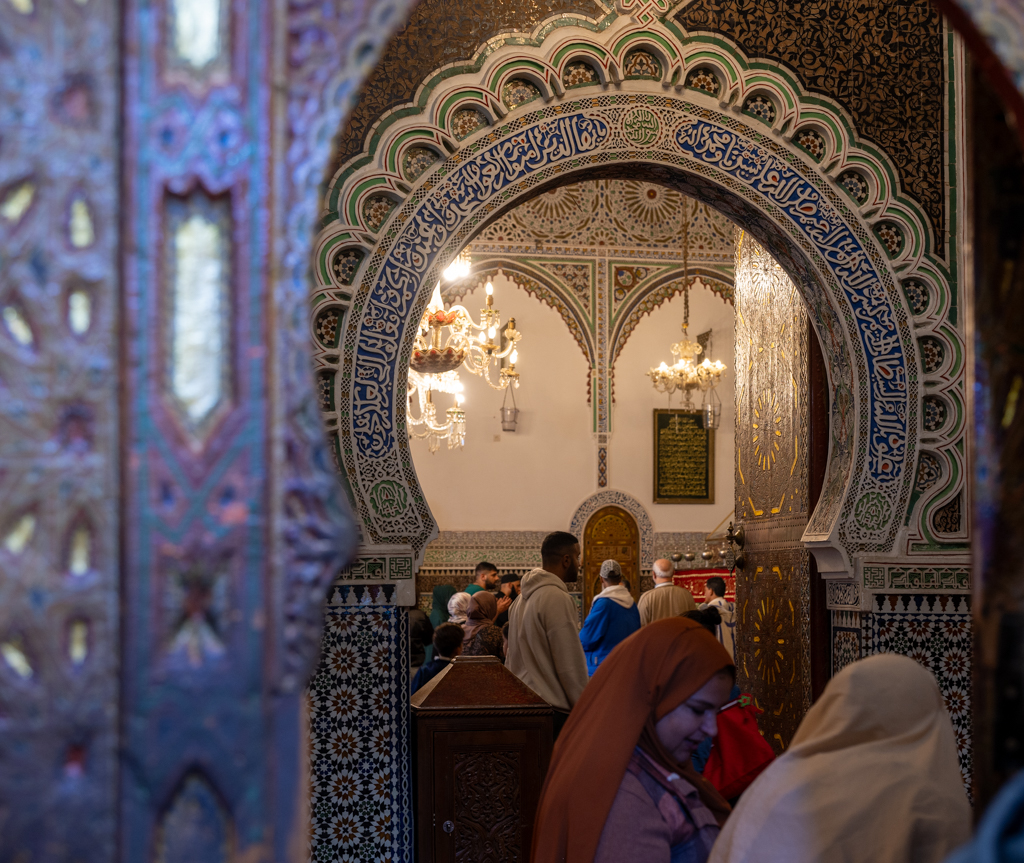
The zawiya contains the tomb of Moulay Idris II, who ruled Morocco from 807 to 828 and is considered the principal founder of the city of Fes. Standing there, I could feel why this place is regarded as one of the holiest sites in the city.
The loom Demonstration and the Weavers
We then made our way to the textile section of the medina, where we watched a demonstration of traditional weaving. The artisans showed us how they use thread made from agave fibers to create beautifully textured fabrics. It was fascinating to see the process up close, though I have to admit – this was the point in the tour where it started to feel a bit like a sales funnel.
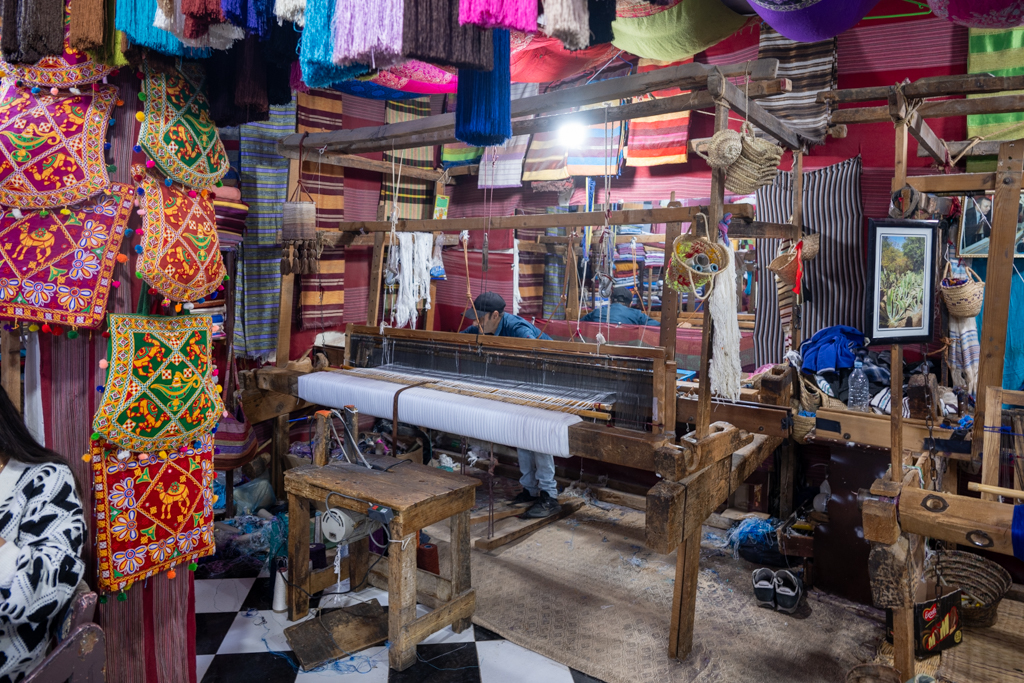
At this point, I was tired and ready for some alone time back at Dar Al Safadi.
Overall
By the end of the day, I was honestly relieved to head back and have some quiet time. Fes was incredible, but it was also a lot to take in all at once. I’d hoped to browse a bit more on my own or look for a pewter tea set, but the pace of the tour made that tough. Even so, I walked away with a better understanding of the culture, some memorable conversations, and a real appreciation for the history and craftsmanship that make Fes so unique. It wasn’t a perfect day, but it was definitely an unforgettable one.
Related Reviews
 Walking the Streets of Marrakesh: the Medina, Dar El Basha, Madrasa Ben Youssef and more with Soufiane Adnane
 A 10 Day Moroccan Adventure with Kim Larkin Adventures
 Private Tour of the Blue City of Chefchaouen, Morocco with Fatima Habte
 One Night in Marrakesh: An Evening Walking Food Tour with Soufiane Adnane