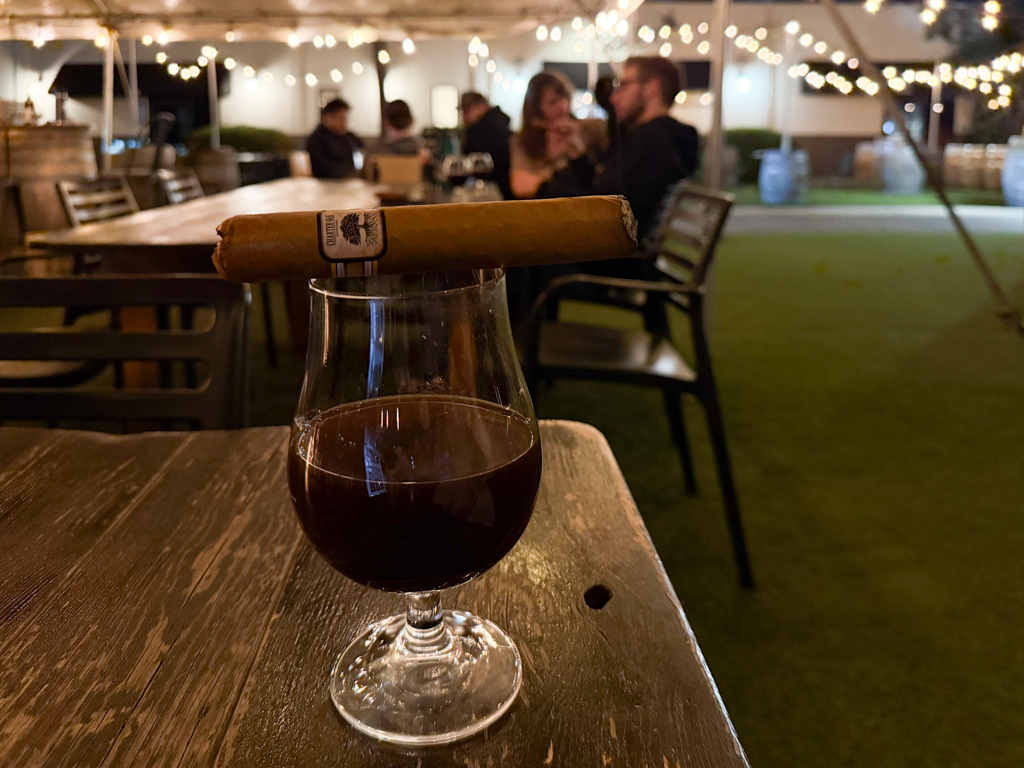
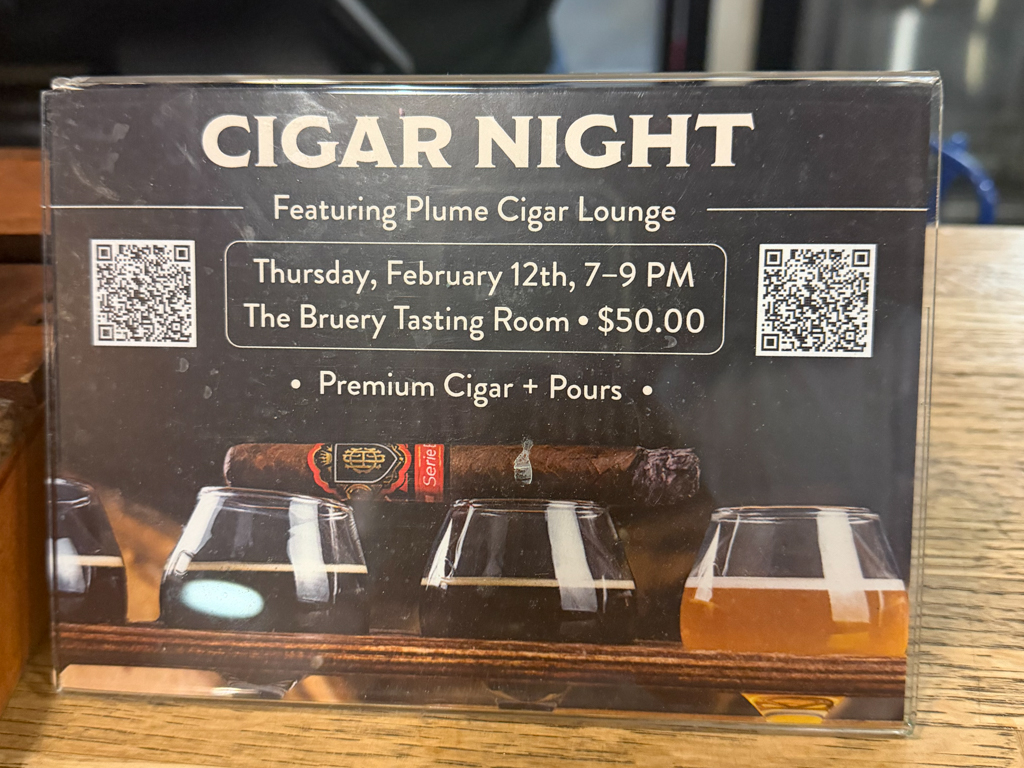
When The Bruery’s email newsletter reached me, I was immediately curious. Cigars and The Bruery’s fantastic barrel aged beers? There was only one answer – yes. Since my first introduction to The Bruery back in 2015, it’s stayed at the top of my list of favorite breweries. I asked a few friends if they would be interested into making the trek down the 5 to the border of Orange County. No one was. So, instead of waiting for others, I booked a ticket for myself.
Now, I’ve always been curious about cigars. While I was in Aruba, I bought some Cuban cigars. I held them in a drawer for a few months because no one was interested in smoking them. Plus, I didn’t know how to. I knew that Cigars By Chivas existed in Pasadena. But I just hadn’t made the time to try it. But, driving over an hour south in traffic to drink some of my favorite beers while smoking a cigar?
Girl math made it work.
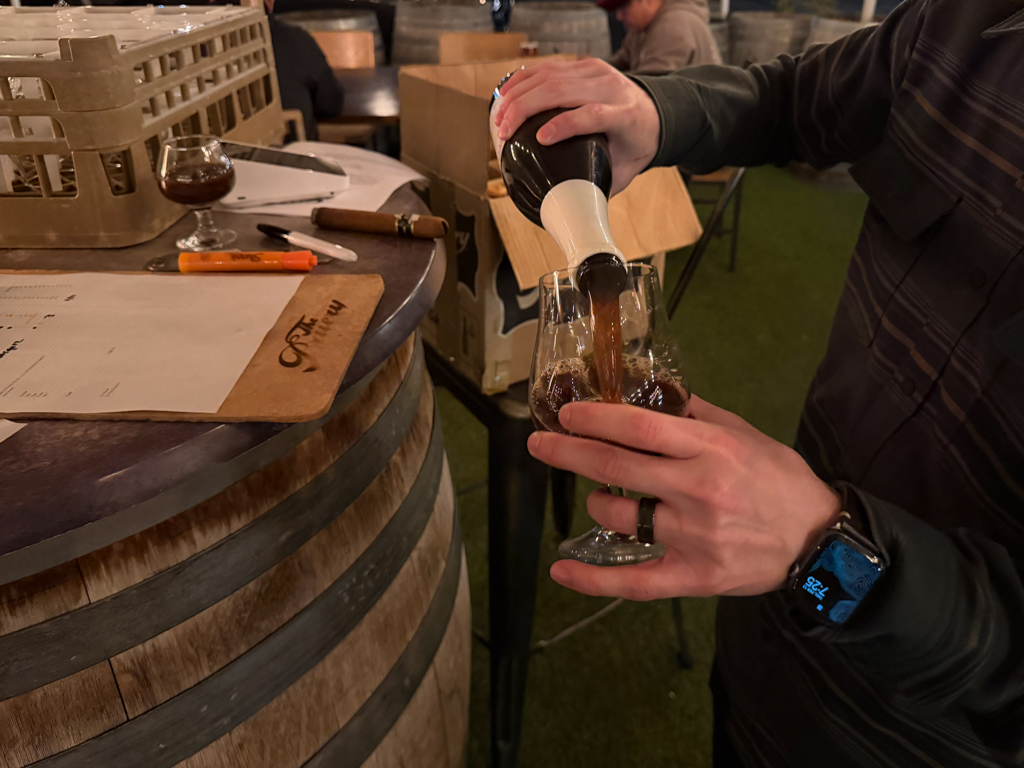
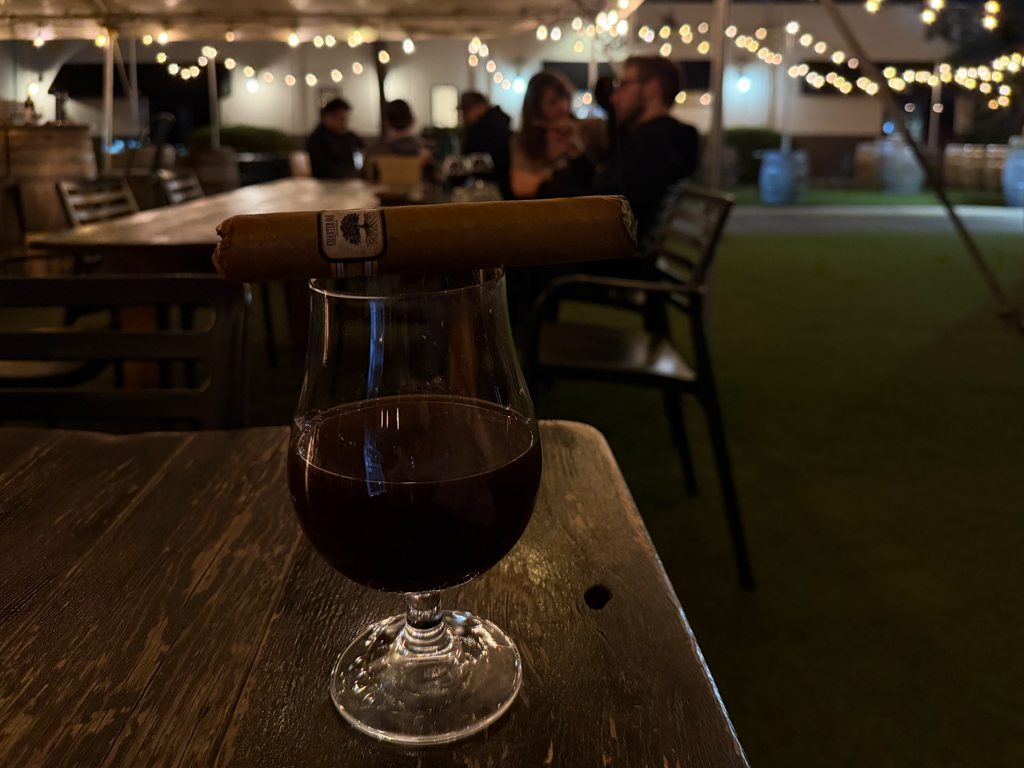
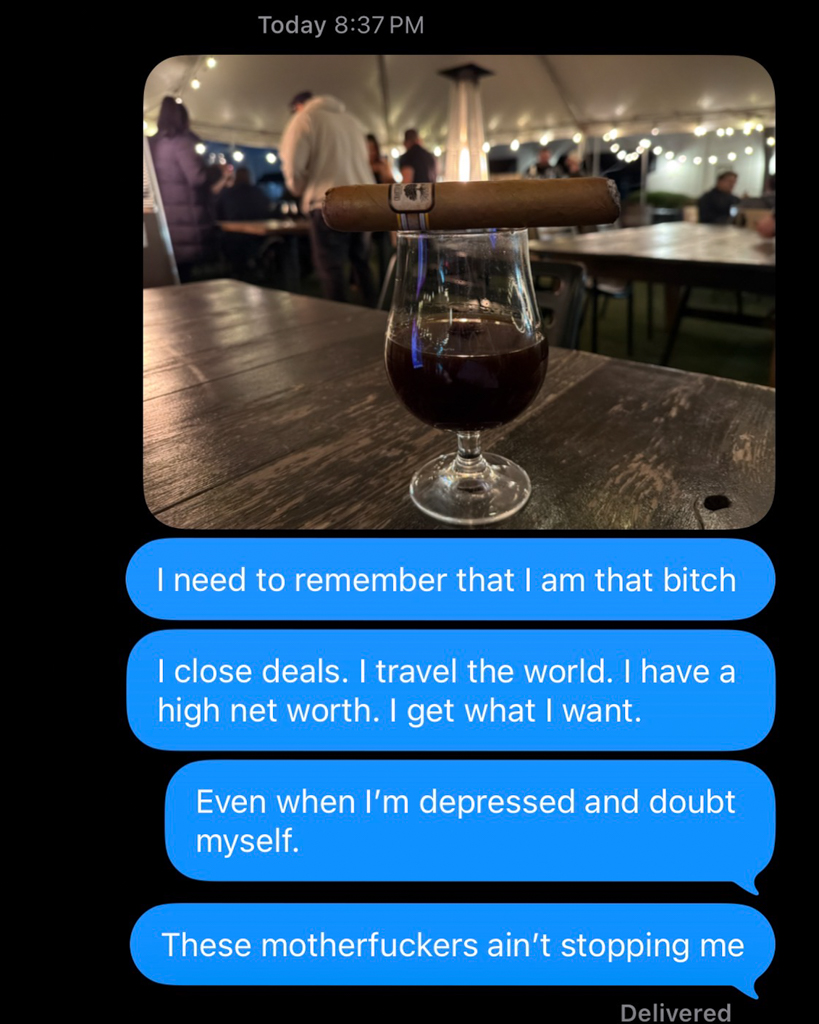
A Cigar with a glass of The Bruery’s Pasas Picasso
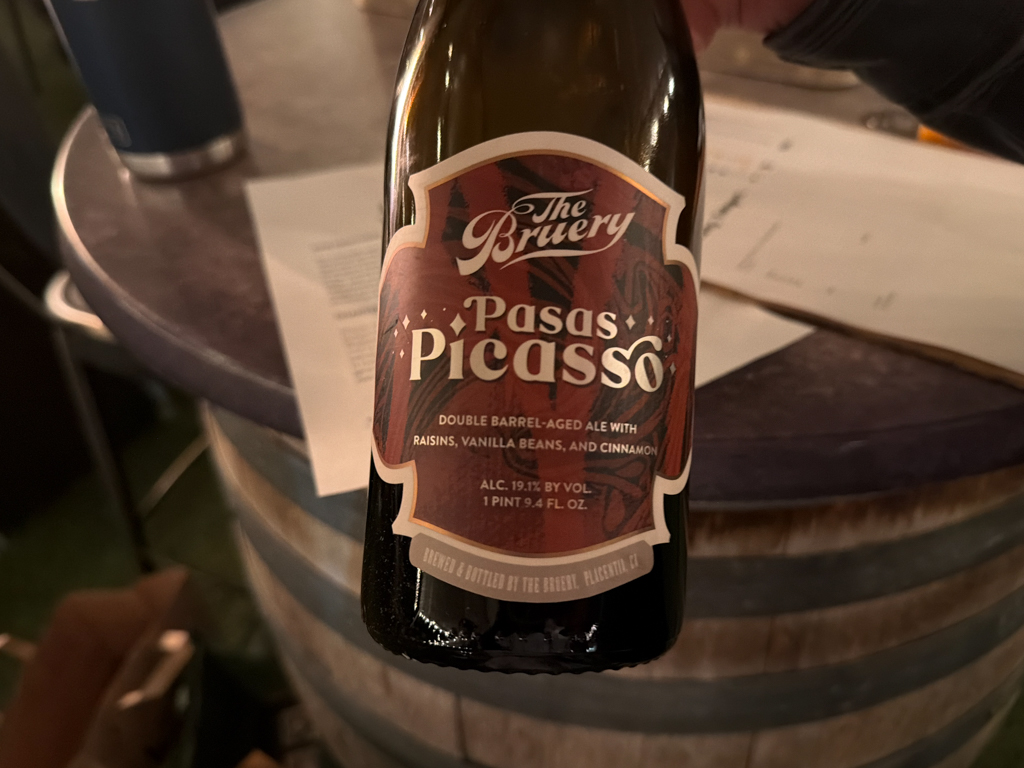
Checking in for the event was easy. Within moments, I was poured a glass of The Bruery’s Pasas Picasso. It’s was a double barrel-aged age with raisins, vanilla beans and cinnamon.
Dean, the cigar connoisseur representative from The Winston’s Club was an outstanding guide. He asked me if I had experience with cigars. As I was completely new to the experience, he selected the Charter Oak Connecticut by Foundation Cigar Company.
The description was fascinating:
Charter Oak Connecticut by Foundation Cigar Company is a smooth, creamy, and budget-friendly premium cigar that delivers exceptional value without sacrificing quality.
Wrapped in a silky Ecuadorian Connecticut leaf over Nicaraguan binder and fillers, it offers a mild-to-medium body with notes of toasted nuts, cedar, light pepper, cream, and a subtle natural sweetness. Crafted at the Aganorsa factory in Nicaragua, Charter Oak Connecticut is known for its consistent construction, easy draw, and balanced flavor profile, making it an ideal everyday smoke for both newer cigar enthusiasts and seasoned aficionados who appreciate a refined, approachable Connecticut with character.
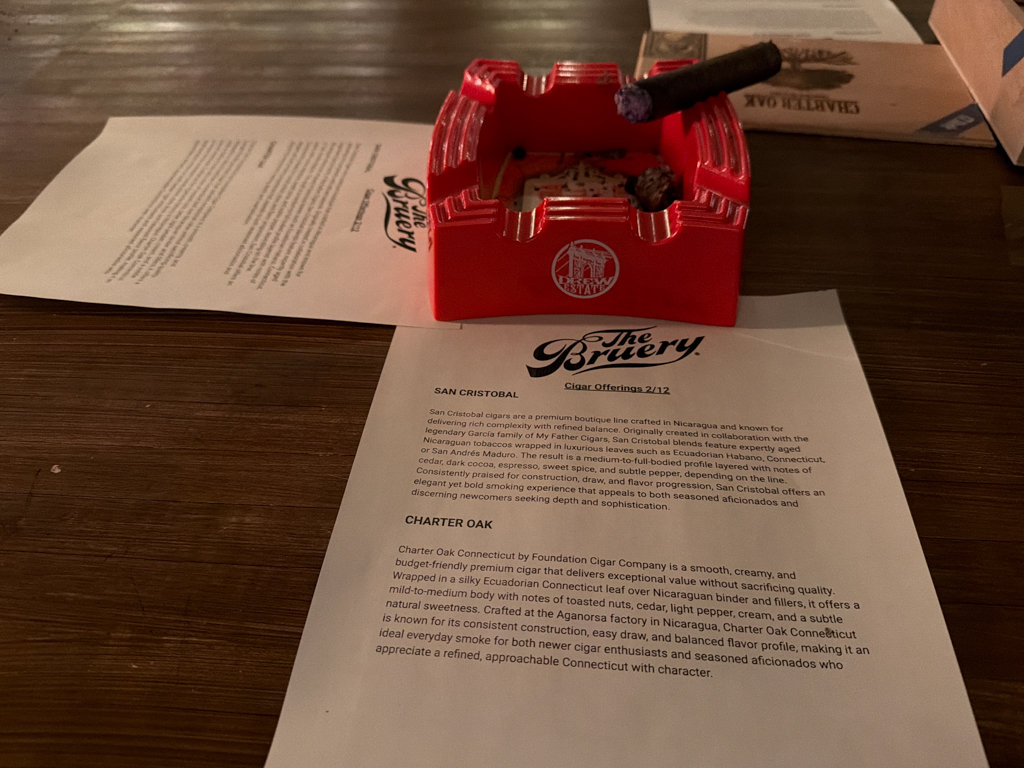
This was different than the San Cristobal:
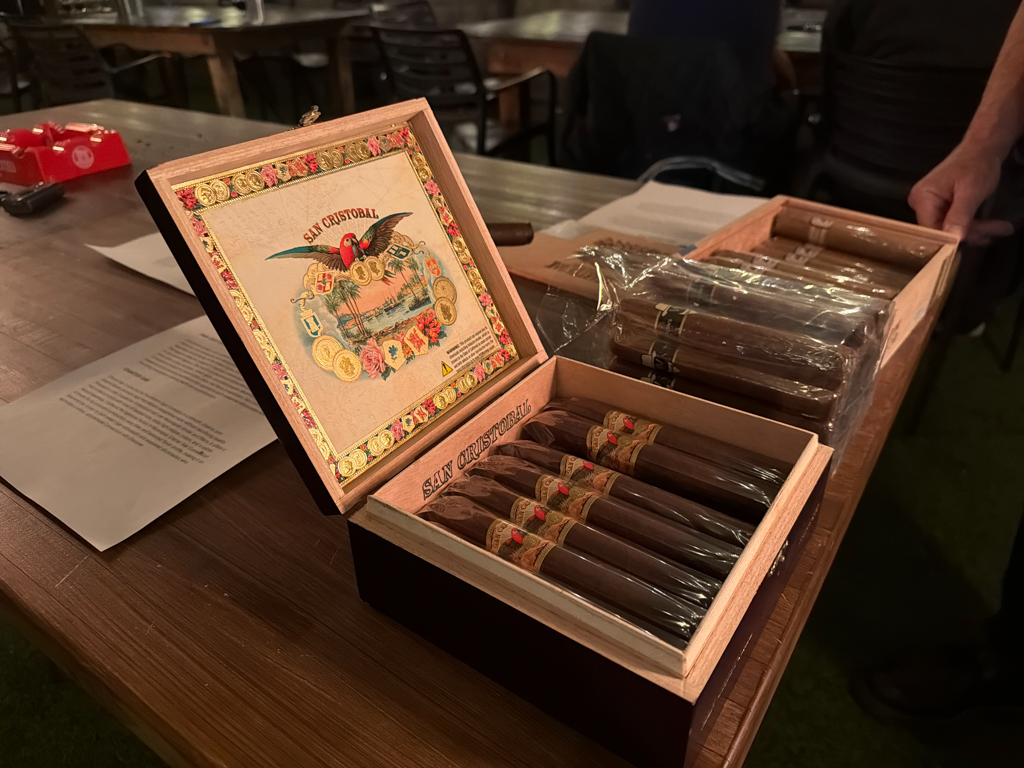
San Cristobal cigars are a premium boutique line crafted in Nicaragua and known for delivering rich complexity with refined balance. Originally created in collaboration with the legendary Garcia family of My Father Cigars, San Cristobal blends feature expertly aged Nicaraguan tobaccos wrapped in luxurious leaves such as Ecuadorian Habano, Connecticut. or San Andrés Maduro. The result is a medium-to-full-bodied profile layered with notes of cedar, dark cocoa, espresso, sweet spice, and subtle pepper, depending on the line.
Consistently praised for construction, draw, and flavor progression, San Cristobal offers an elegant yet bold smoking experience that appeals to both seasoned aficionados and discerning newcomers seeking depth and sophistication.
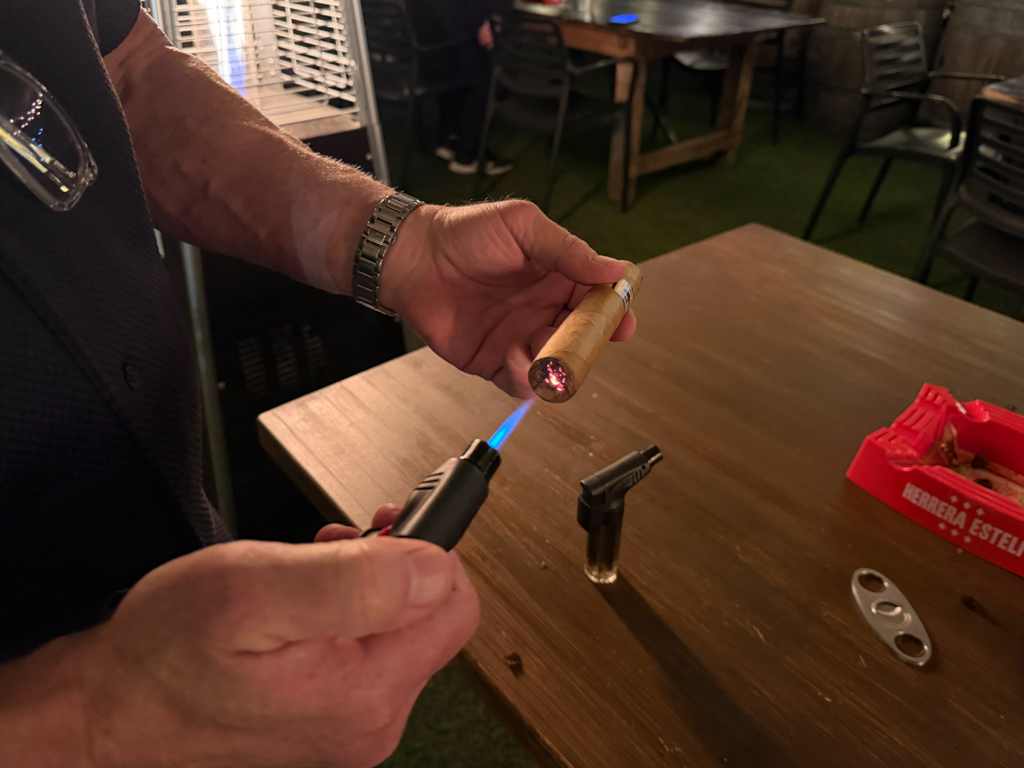
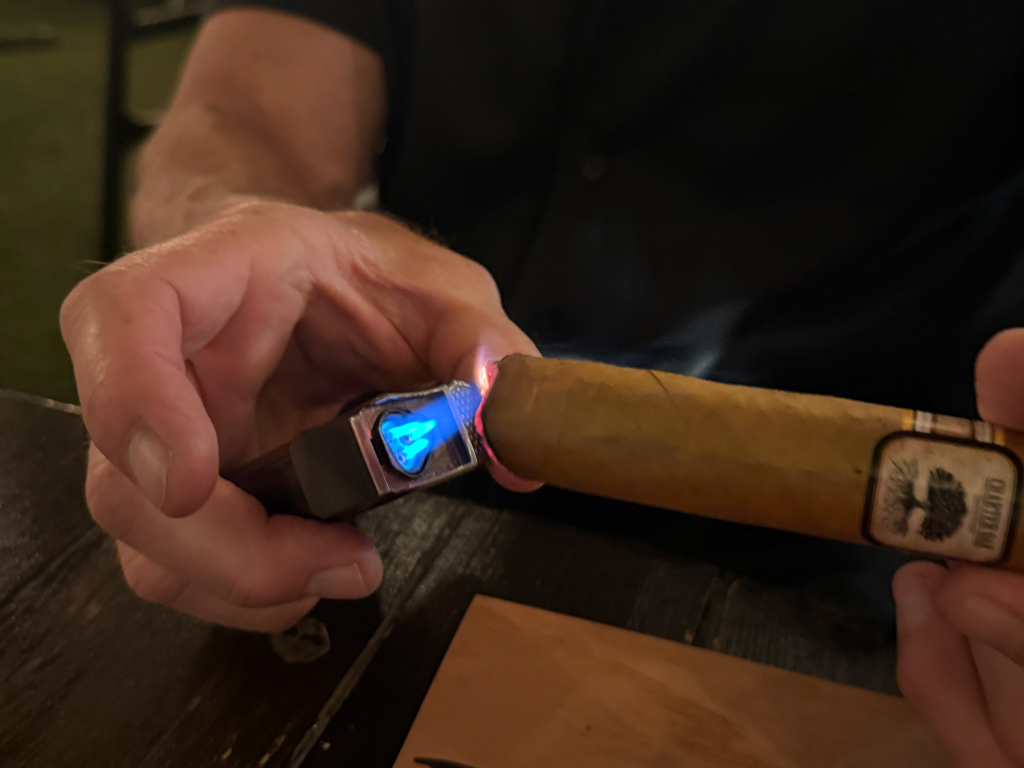
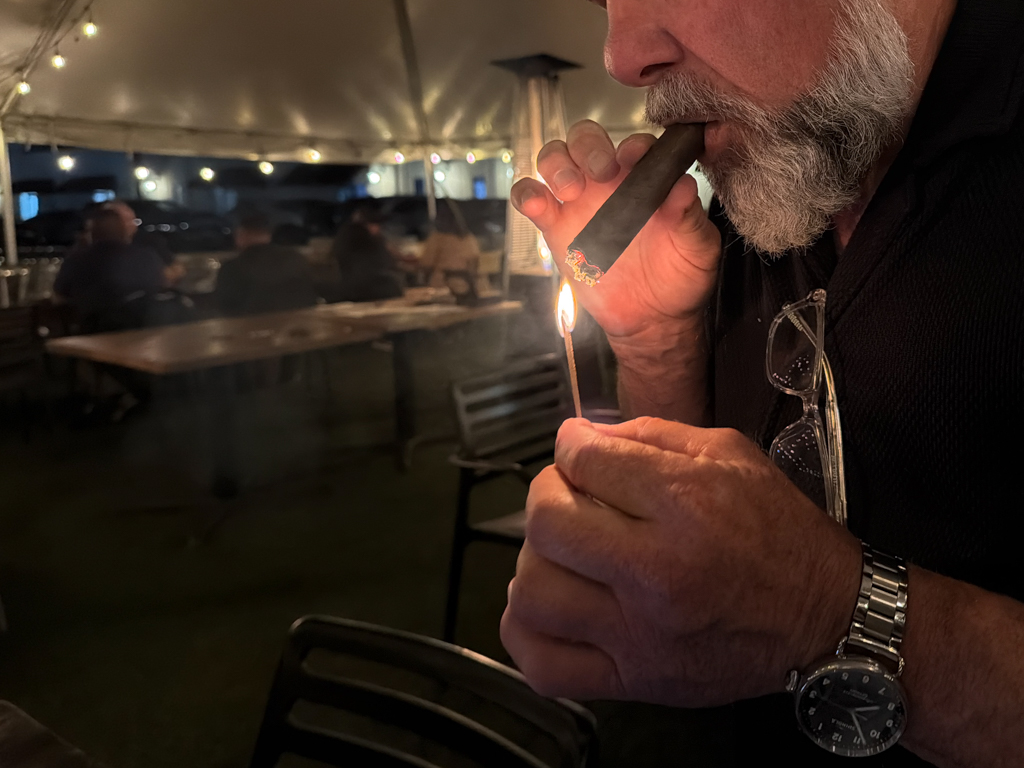
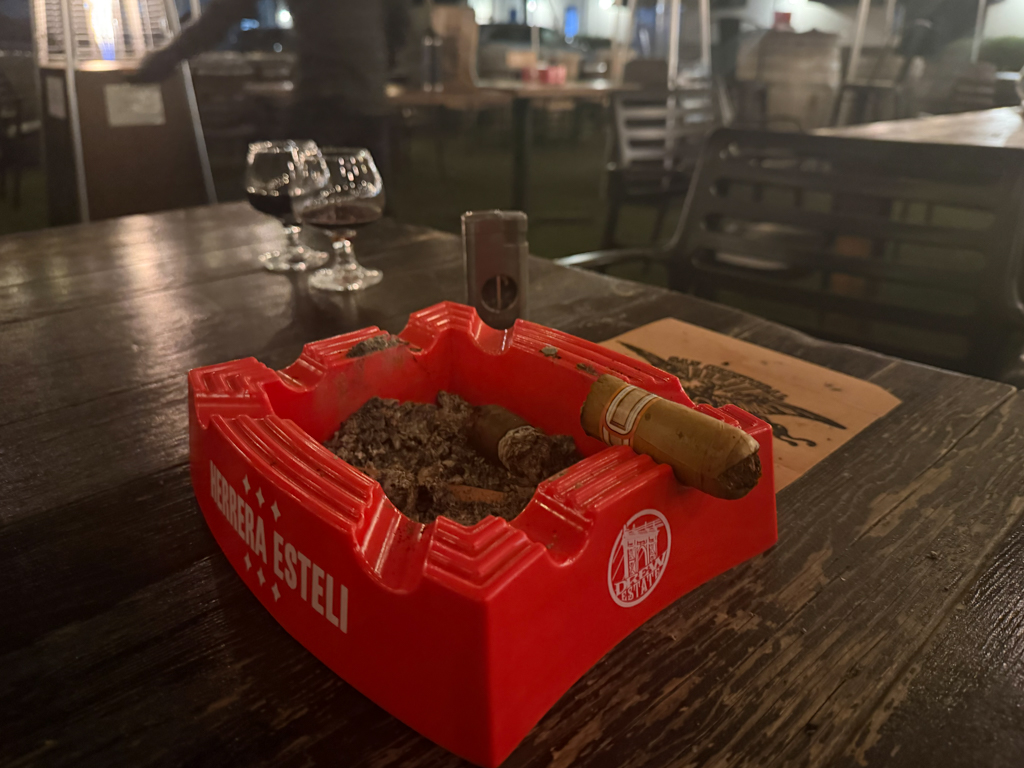
Dean took his time in priming and prepping my cigar for me. First, he made a V shaped cut with a cigar cutter. Then, he cut the tip. Finally, he toasted the tip before he instructed me to start breathing the smoke into my mouth to savor the flavor and keep it going.
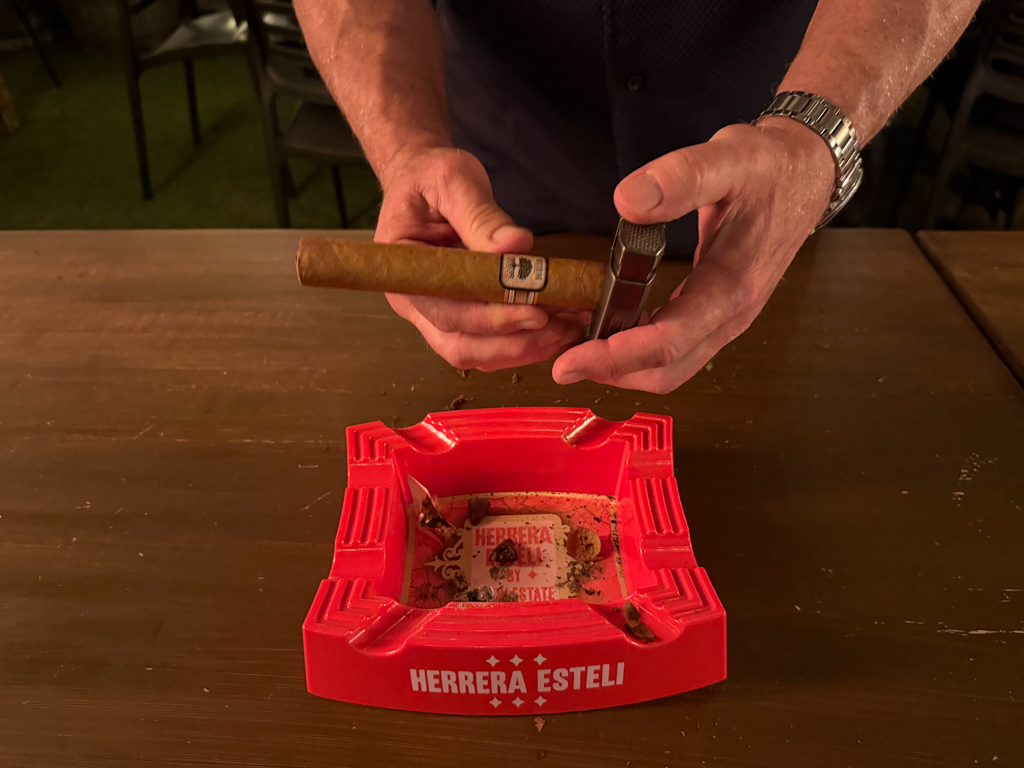
A Private Cigar Lesson
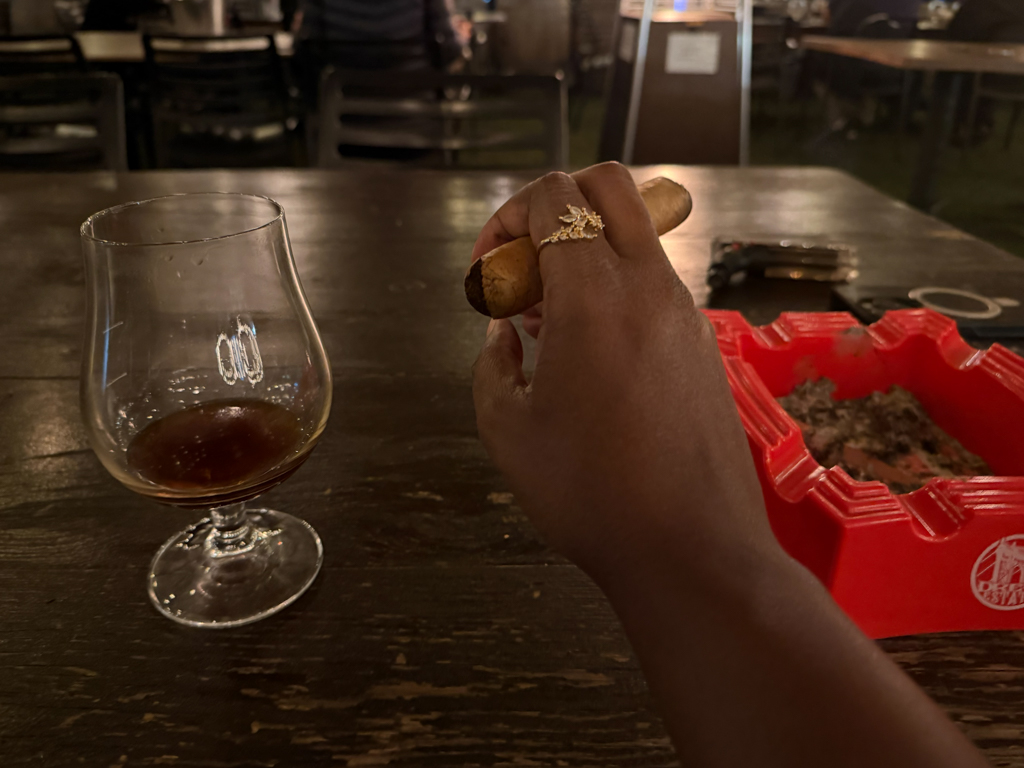
Sipping on my glass of Pasas Picasso and savoring the mouth feel of the Charter Oak Connecticut, I feel powerful and satisfied with the outcome of my day. I’d begun the day in Antelope Valley doing my agent visual inspection at my in escrow listing. Then, I’d headed over to the Antelope Valley Poppy Reserve to take some photos of the emerging California poppies. After that, I’d driven to Santa Ana to relax a bit at Hopper & Burr. And now, I was at one of my favorite places, fulfilling a desire that I’d long had.
As I began jotting down notes about the experience, Dean walked over. What followed was an unexpectedly rich conversation: a private cigar lesson.
I asked him whether he considered cigars gender neutral. He didn’t hesitate. His wife enjoys cigars just as much as he does. While the culture is male dominated and heavily marketed toward men, he doesn’t see it as an exclusively male experience. It’s about appreciation, ritual, and taste.
The CIGAR MAKING process
Over centuries, cigar-making became both an agricultural discipline and an artisanal craft, especially in regions like Cuba, Nicaragua, and the Dominican Republic.
A premium cigar can take up to five years to make. From seed to finished product, roughly 300 hands may touch it.
The process begins with carefully cultivated tobacco seeds. The soil and climate – often referred to as “terroir,” much like wine – have a dramatic impact on flavor. Regions like Nicaragua, the Dominican Republic, and Honduras dominate the premium market, with Costa Rica emerging. In the Dominican Republic especially, you can often taste the richness of the soil in the final product. Yes, Dean stated, Cuba was long popular for their cigars. However, he cited mixed feedback relating to quality control.
After harvest, the tobacco leaves undergo curing in large barns. This air-curing process removes chlorophyll and begins developing flavor. Then comes fermentation – where stacked leaves generate heat, reducing harshness and ammonia while deepening complexity. This stage can take months.
Color comes from priming – where on the stalk the leaf grows. Leaves higher on the plant receive more sun and tend to be stronger and darker. That’s why darker cigars, like Maduros, often carry richer, fuller flavors.
After fermentation, the leaves age – sometimes for years – before rolling even begins.
Dean taught me that a cigar is made of three parts:
- Filler: The long tobacco leaves at the center (long filler in premium cigars).
- Binder: The leaf that holds the filler together.
- Wrapper: The outer leaf, which provides most of the cigar’s flavor and visual appeal.
The filler is carefully blended to create a consistent flavor profile. After rolling the filler and binder, the cigar is draw-tested to ensure proper airflow. Only then is the wrapper applied – a delicate process requiring skill and precision.
Many premium brands of cigar makers are vertically integrated. Meaning they control everything from seed cultivation to box production. I learned that even the boxes matter: they’re made of cedar, never cardboard. Cedar helps regulate humidity and imparts subtle aromatic qualities during aging.
How to smoke a cigar
Dean broke the experience down step by step.
- First, choose based on flavor preference – light, medium, or dark.
- Then, Cut the cigar. There are three primary cuts; he cut mine with a V cut, but it’s personal choice.
- Next, Take a dry draw – place it to your lips and gently pull before lighting to test airflow and preview the flavor.
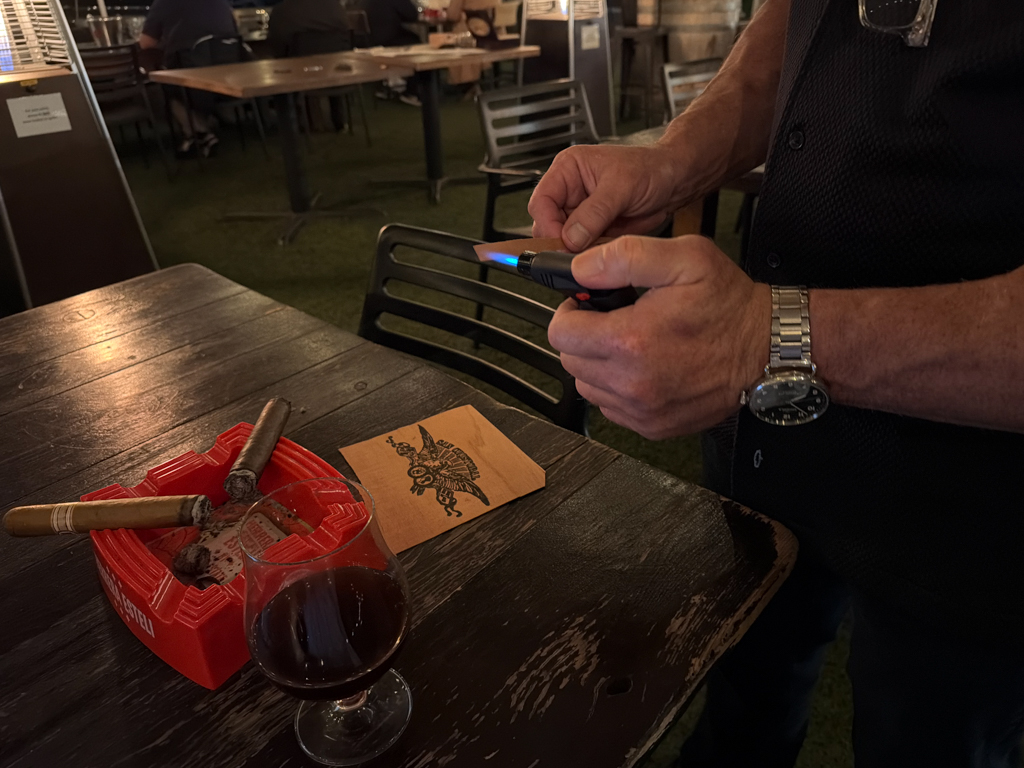
Following that, Toast the foot (the open end) before fully lighting. This ensures an even burn. Some prefer a torch lighter for precision; others use matches for a softer flame. Lighting with cedar paper from the storage box is another traditional option, which Dean excitedly demonstrated to me.
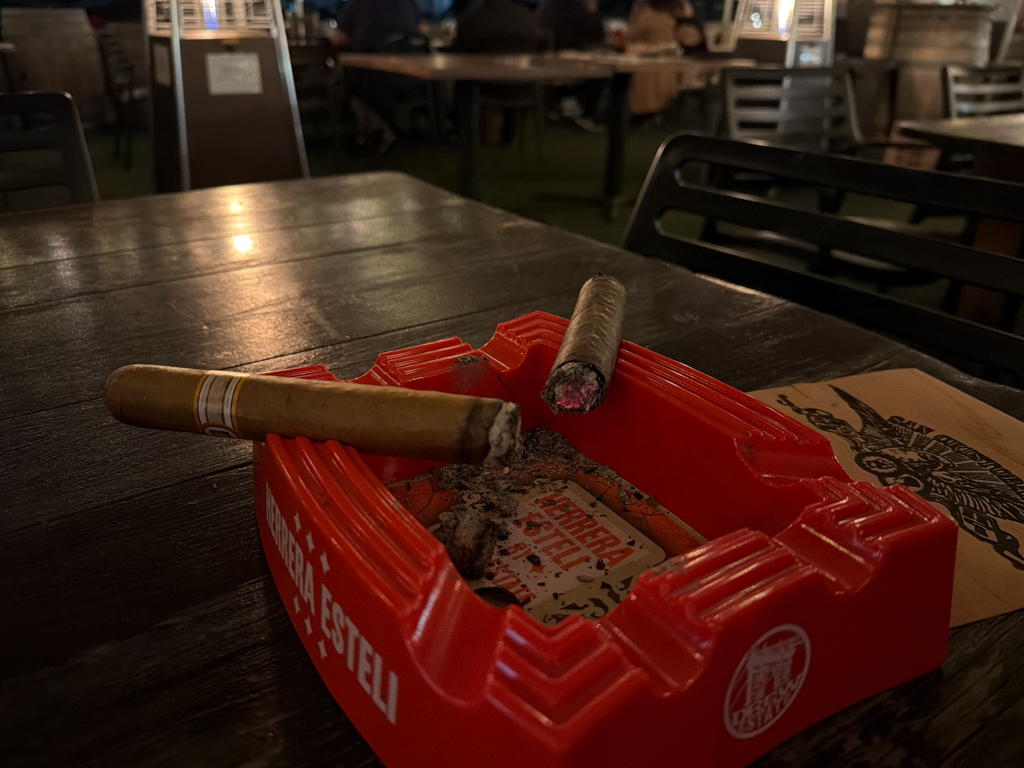
Once lit, don’t inhale to the back of your throat. Draw the smoke into your mouth, let it roll across your palate, and savor it. For a more intense tasting experience, retrohale. Dean demonstrated this to me by moving the smoke from the back of his throat out through his nose. He explained that it amplifies flavor dramatically. I was fascinated.
I then asked Dean about Like wine, cigars can age. Maduros benefit most from aging, developing deeper complexity over time. Lighter Connecticut wrapped cigars are typically intended to be enjoyed sooner.
I also asked about if it’s wise to stop a cigar, cut it a bit after its burn area and then save it. He said that it’s best to smoke a cigar straight through. Relighting later often creates a charred, distorted flavor.
TASTING The Bruery Stacks Reserve: Maple
Even through cigars are made of pure tobacco, rather than filler than cigarettes, nicotine is still present. Dean explained to me that people often underestimate nicotine. So – he taught me – if you if feel lightheaded while smoking – stop. Also, he suggested that newer to smoking people need to eat beforehand. Nicotine may cause severe low blood glucose (hypoglycemia) for certain people.
As we continued our conversation from cigars to new topics of interest, I sipped The Bruery Stacks Reserve: Maple (Double Barrel-Aged Imperial Stout with Maple and Natural Flavor). I reminisced about the full circle nature of distilleries that I’d visited in Tennessee and Kentucky (Woodford Reserve Distillery’s “Path to Flavor” Tour and Whiskey Tasting, James B. Beam Distilling Co: Beam Made Bourbon Tour and Tasting, Buffalo Trace Distillery: The Trace Tour and Jack Daniel’s Distillery Tour and Tasting).
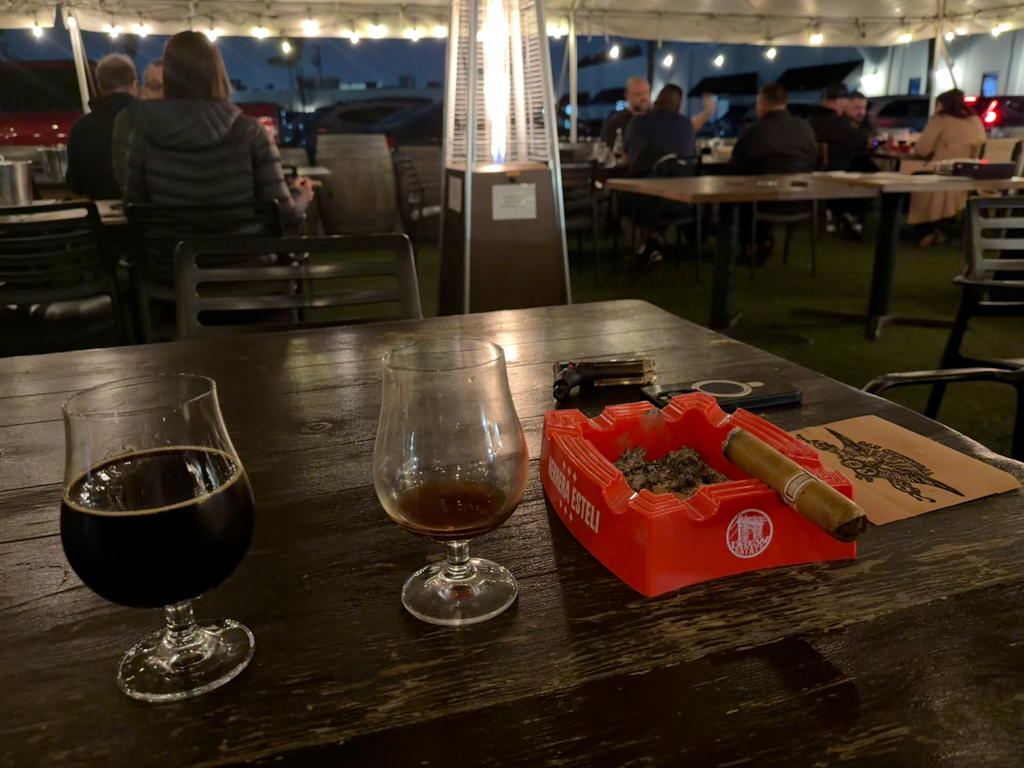
I remember watching the process of American oak barrels moving through the coopering stage – being fire toasted and prepared to impart the wood’s signature character to high-proof spirits. What The Bruery does so exceptionally well is give those used barrels a second life, transforming them into stunning liquid masterpieces. In my experience, no other brewery approaches barrel aging quite the way they do.
When pairing cigars with beer, match intensity. Dark cigars like Maduros pair well with stouts and barrel-aged beers. The same principle applies to wine – rich with rich. IPAs tend to clash with cigars’ nuanced flavors.
Overall
What I expected to be a simple, relaxing indulgence experience turned into something far more meaningful. I had no idea that there was so much depth within the topic of cigars. I was fascinated and appreciated Dean’s attention to educating me.
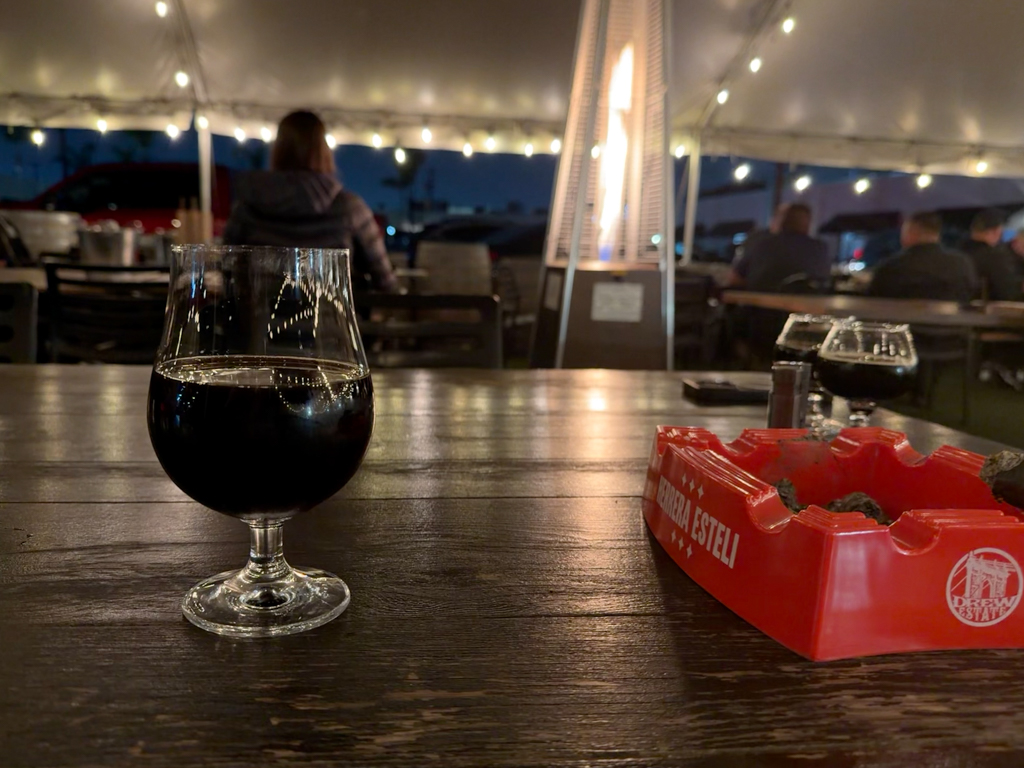
By the time I picked up two bottles of The Bruery’s finest barrel-aged selections and said my goodbyes, I felt that rare kind of satisfaction that comes from following curiosity all the way through.
Smoking a cigar is a ritual. It demands presence. It honors craftsmanship. It rewards patience. And maybe most importantly, it creates space – space to slow down, to sit in community, and to have conversations that actually matter.
And in a mad world, moments of intentional pleasure aren’t frivolous. They’re necessary.
The Bruery
717 Dunn WayPlacentia, California 92870