
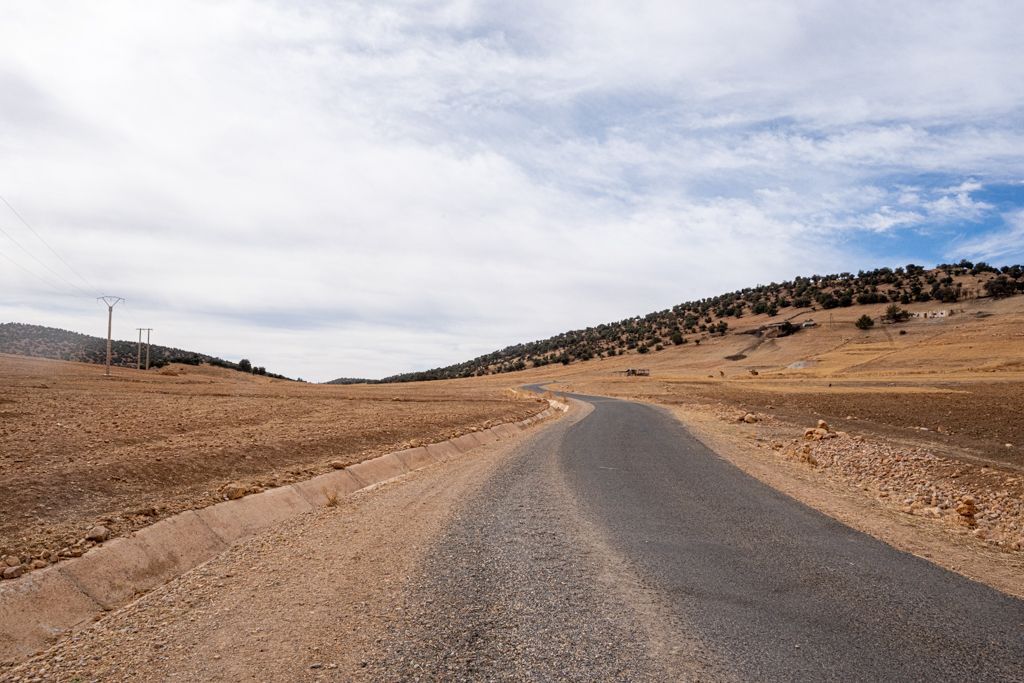
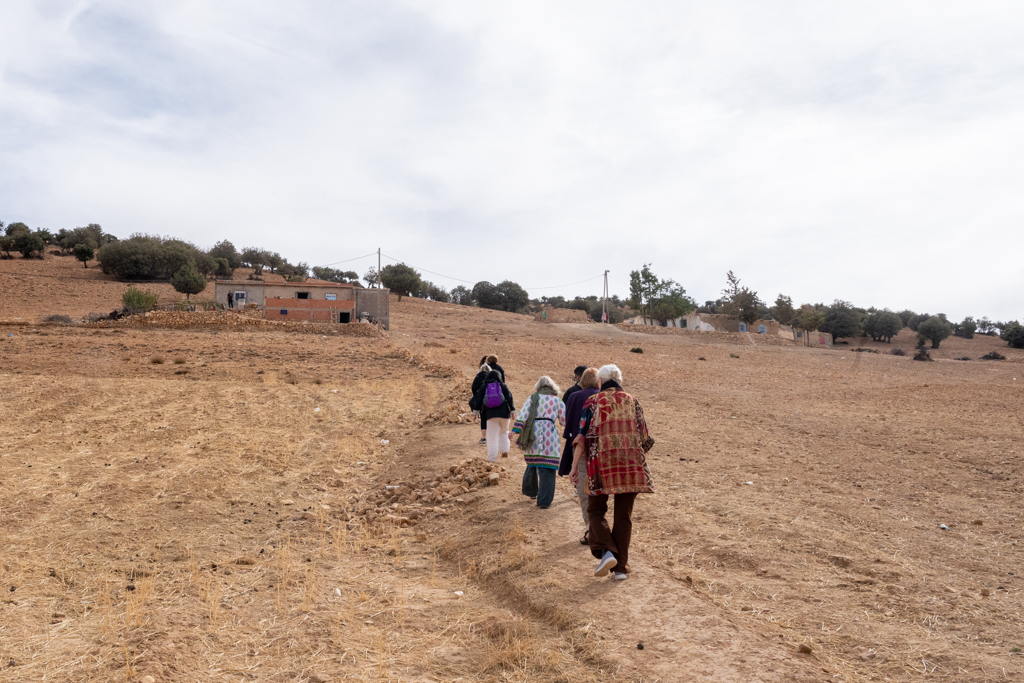
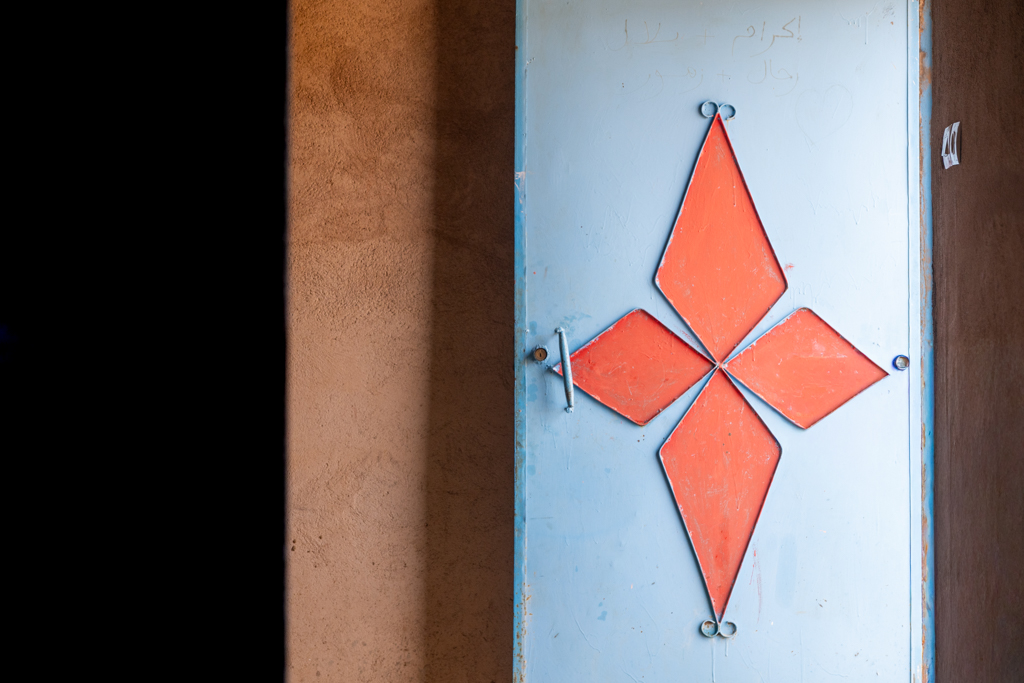
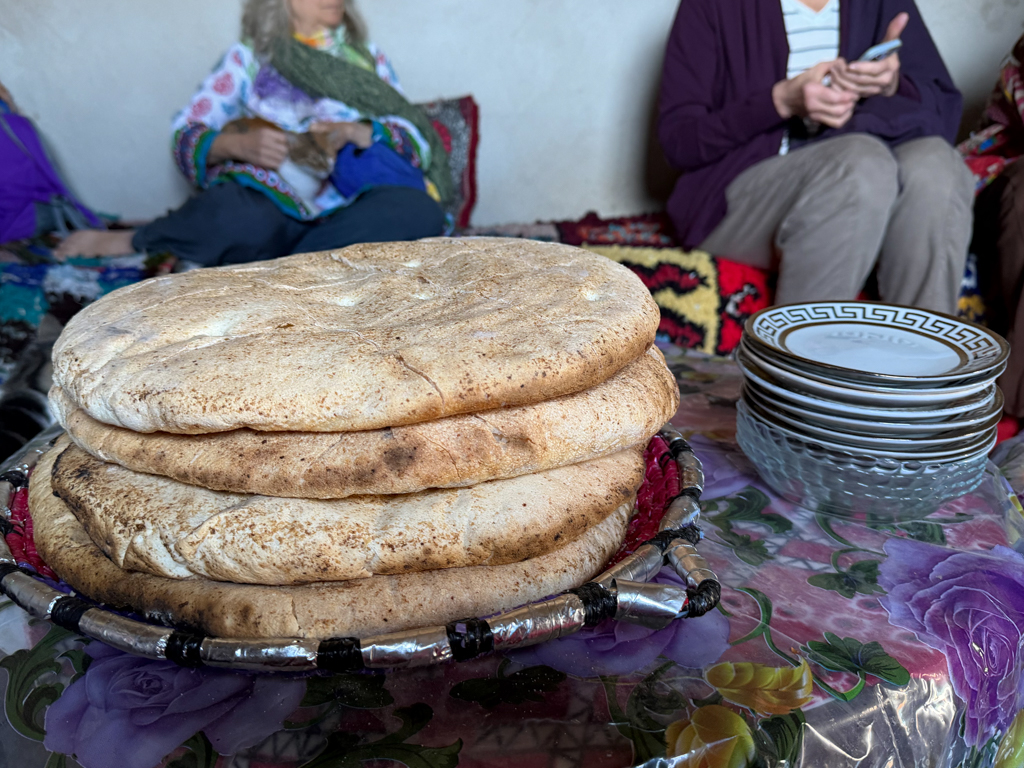
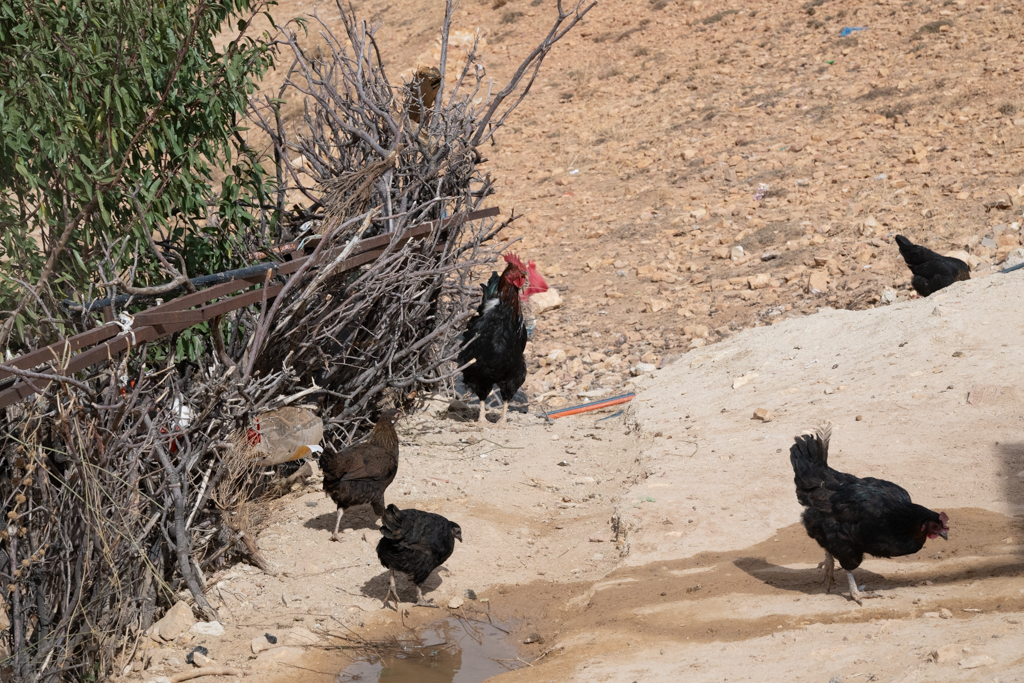
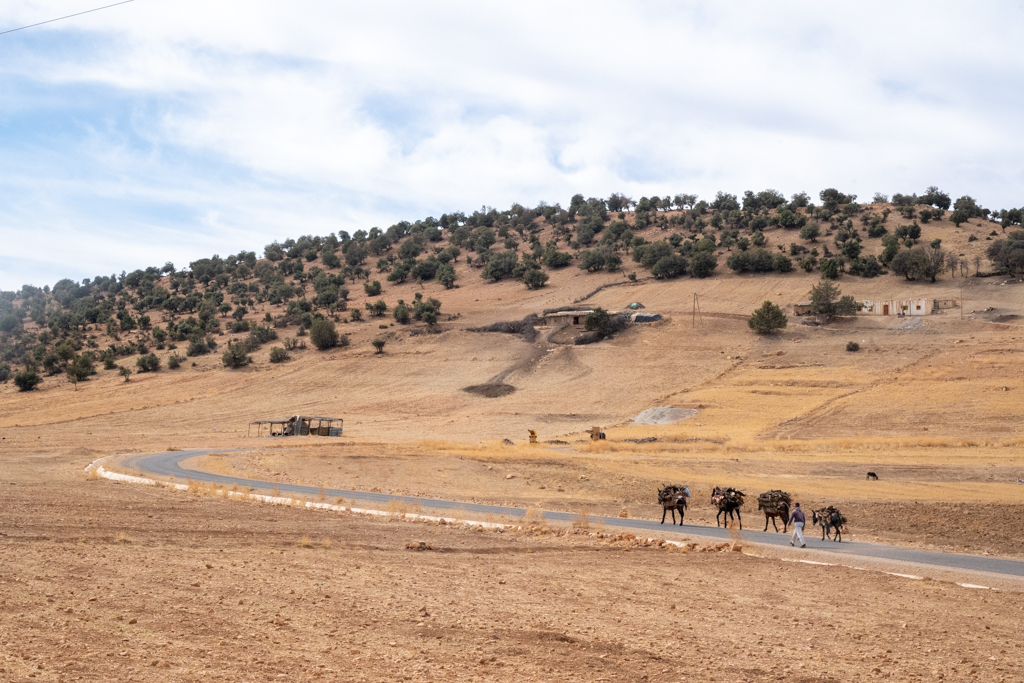
After leaving Fes, we continued our journey toward Merzouga. Along the way, we stopped in Âit Qufella to visit a nomadic Moroccan Amazigh family and share a home cooked lunch in a traditional Berber house.
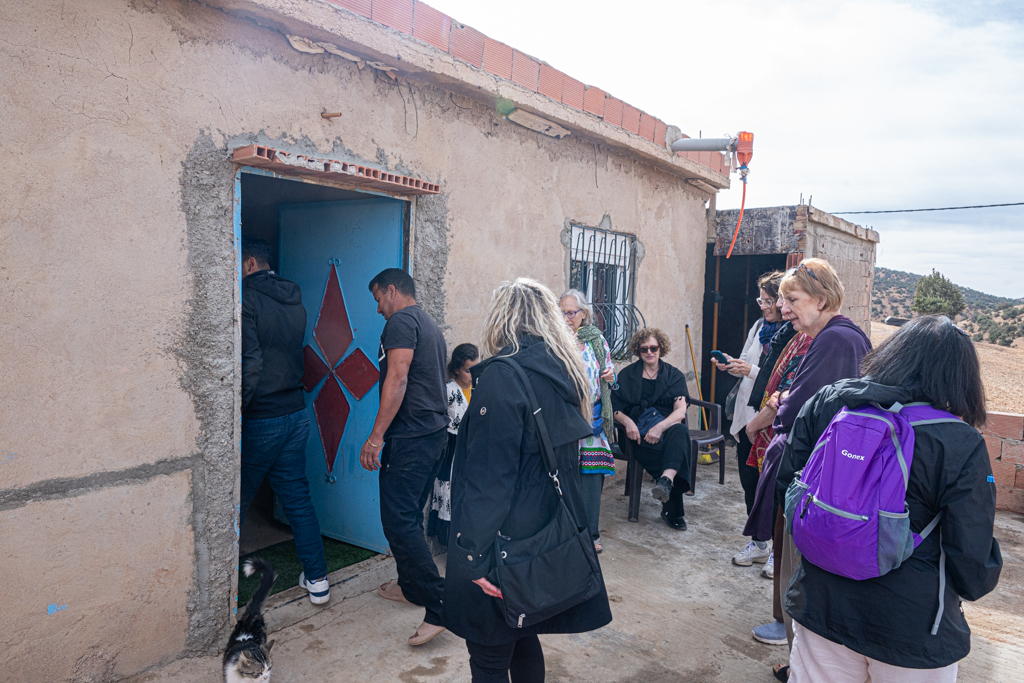
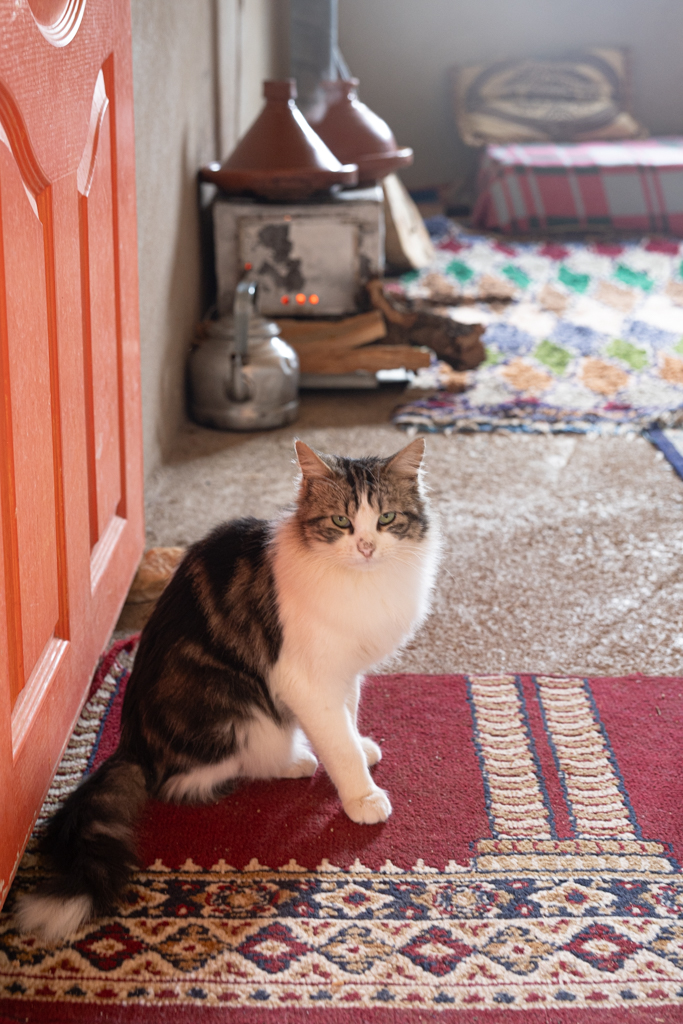
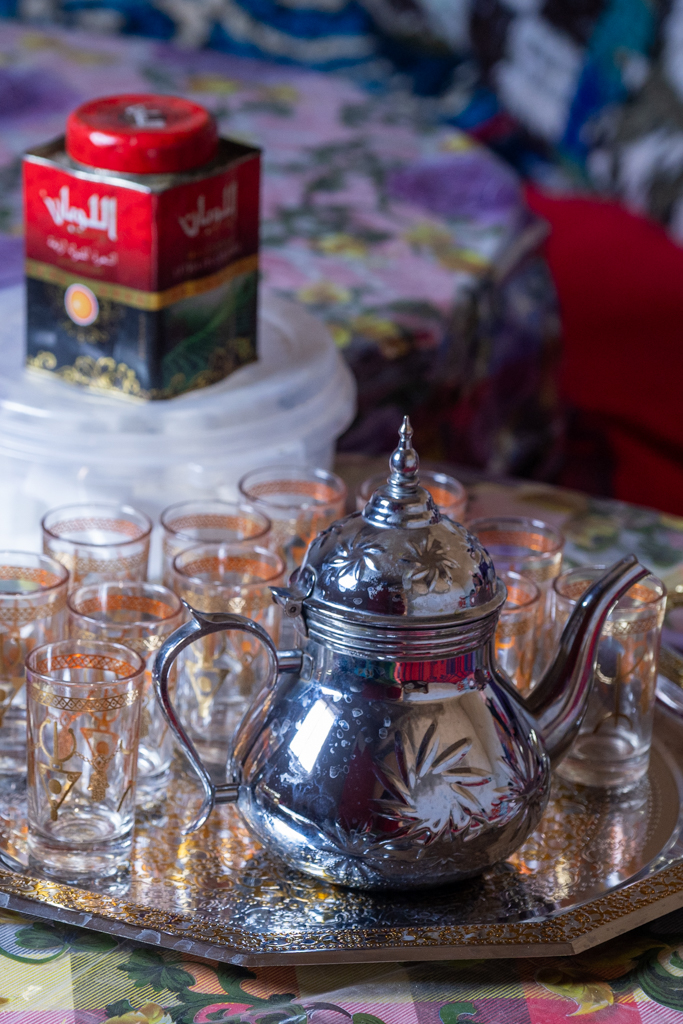
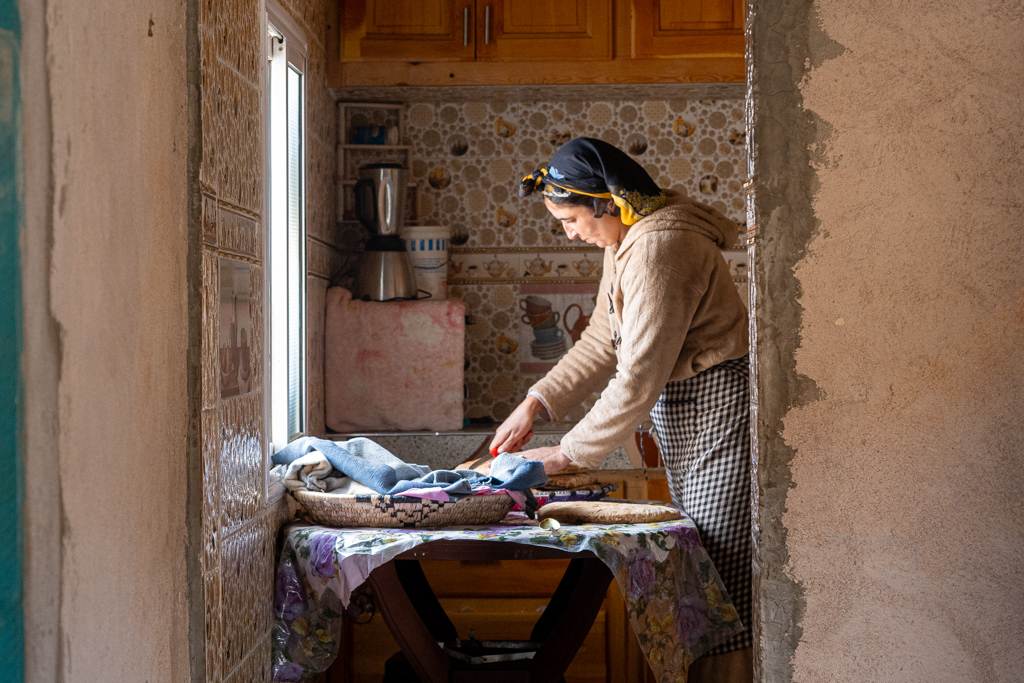
The meal was an egg based dish – almost like a quiche – but since eggs prepared that way aren’t for me, I stuck to a piece of apple and a cup of mint tea.
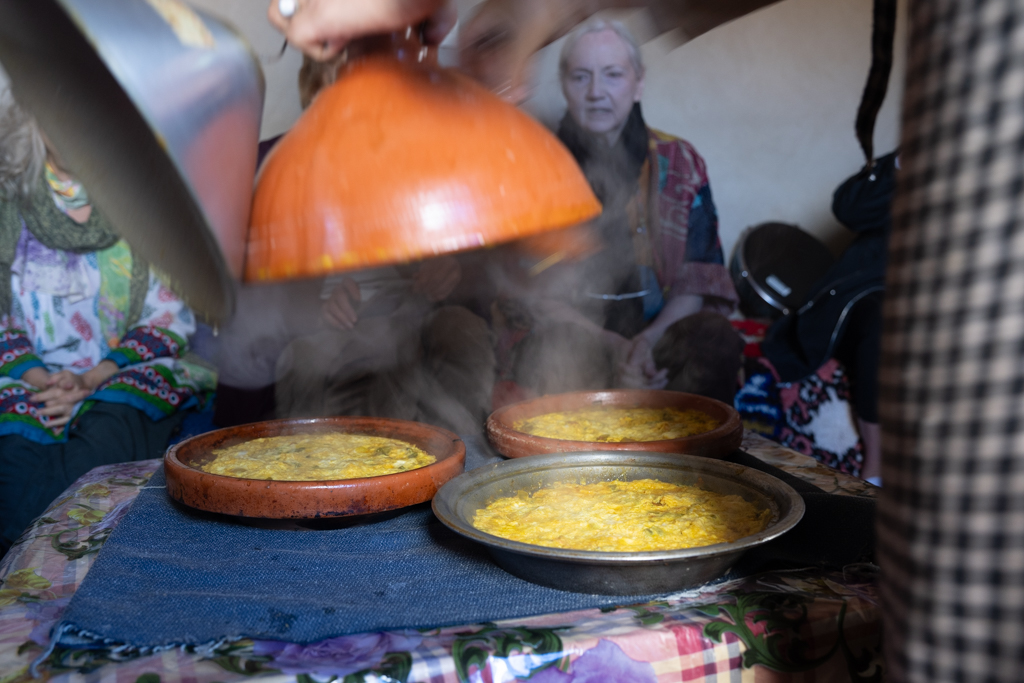
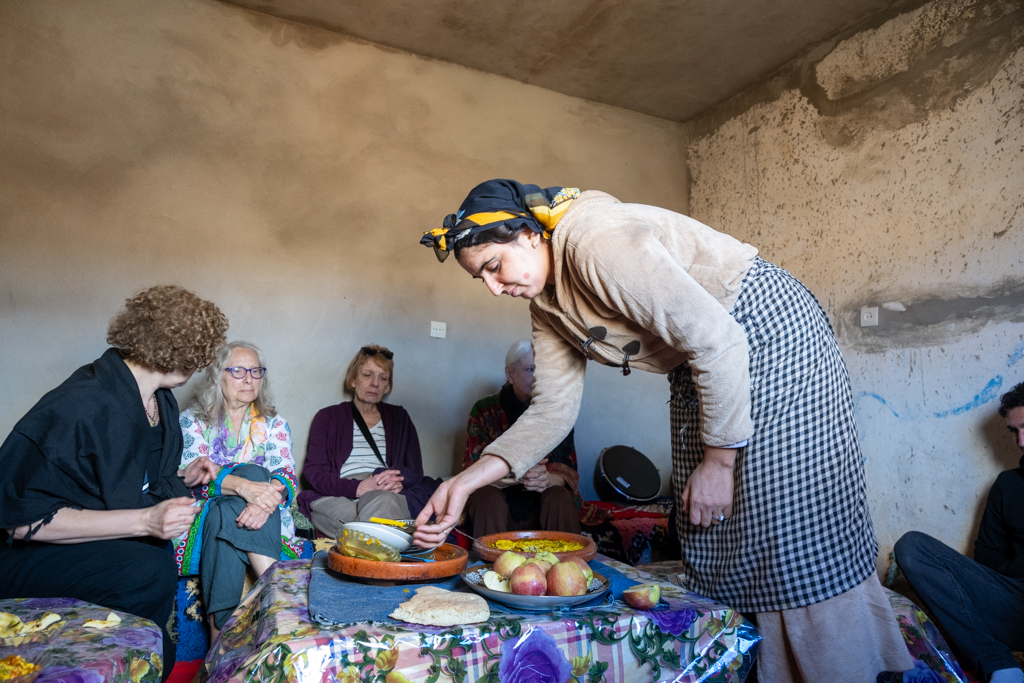
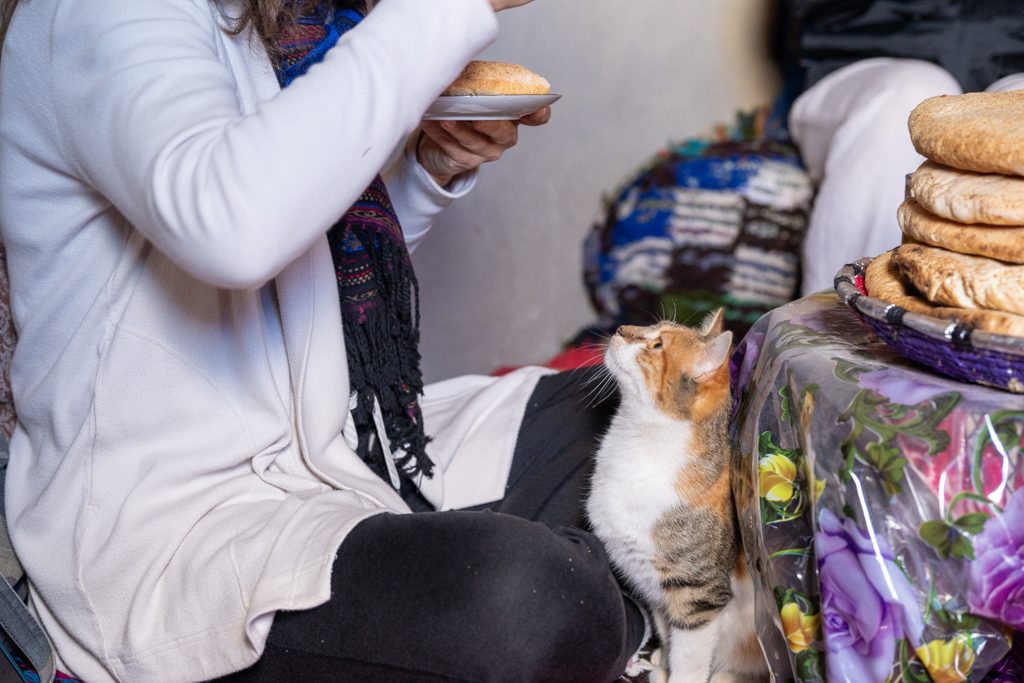
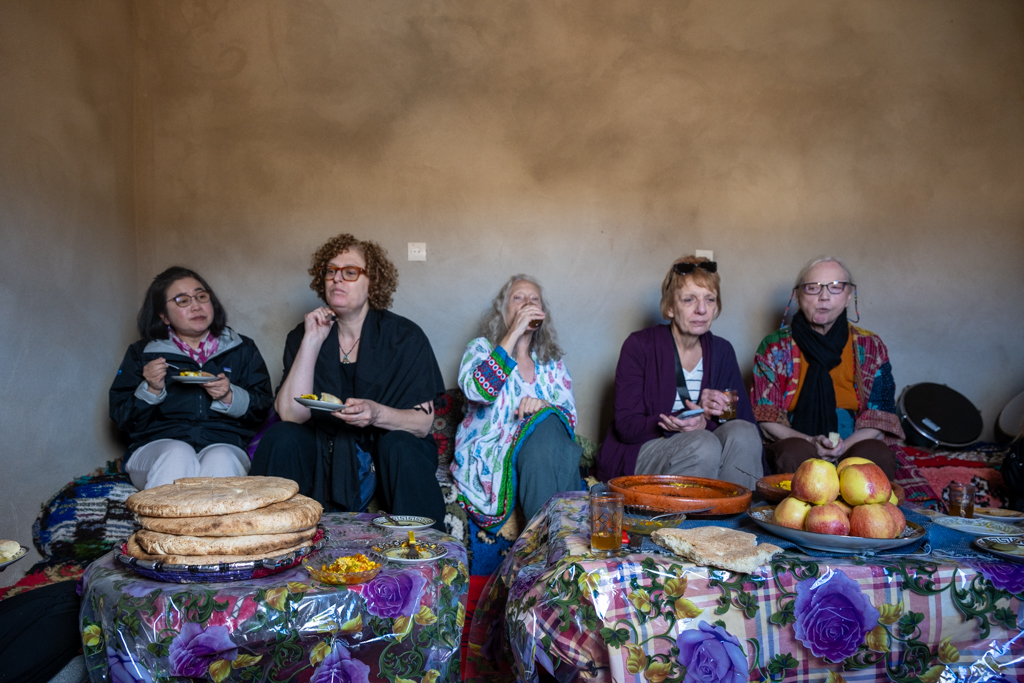
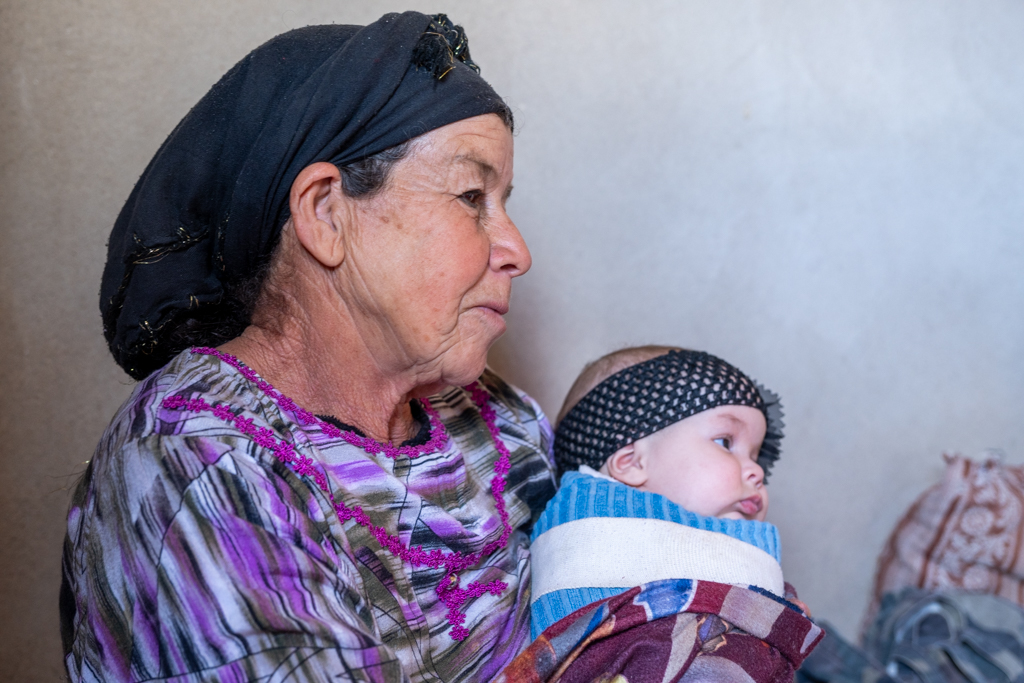
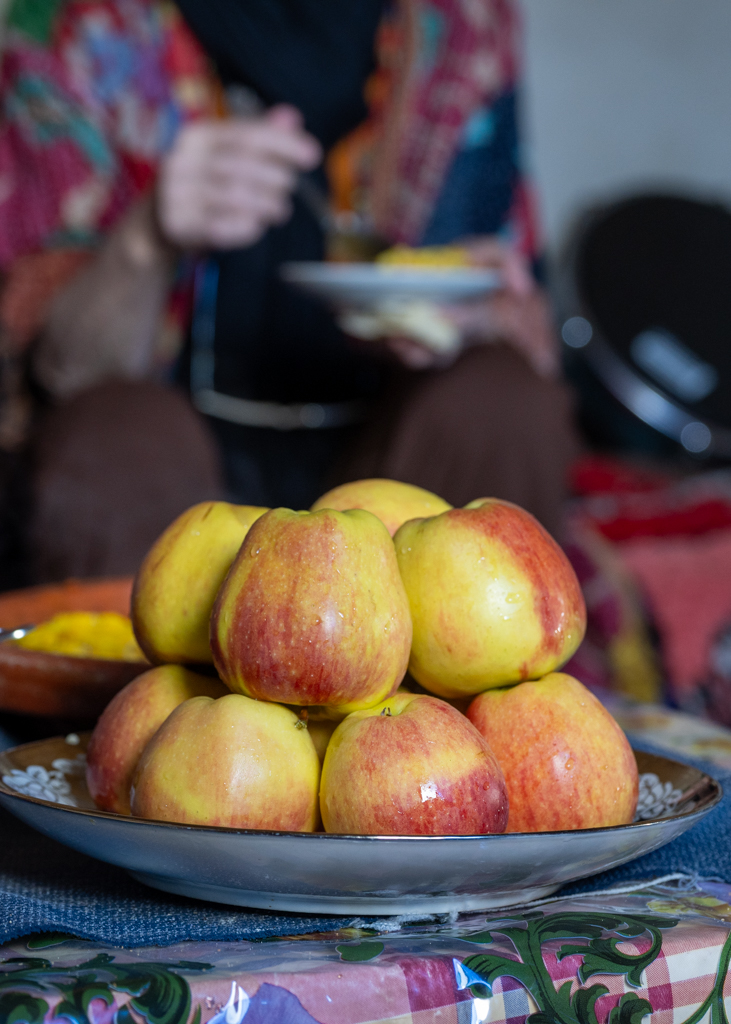
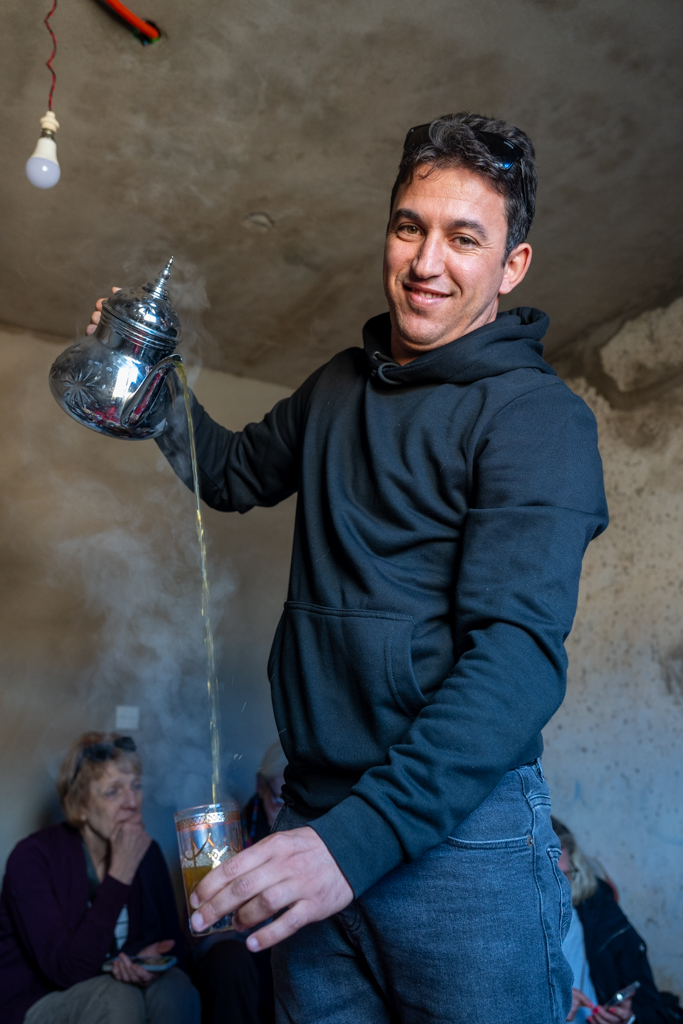
As we sat with the family, Rachid opened a deeper conversation about how technology has changed us. He spoke about creativity, invention, and what we may have lost in exchange for convenience. The topic flowed naturally into a discussion about tradition among nomads, including their incredible method of passing mail: letters written in green ink that must be burned to be read.
We learned small details that reveal so much about their way of life – for example, the way the dogs instinctively protect the flock. If sheep give birth while grazing, the dogs stay behind with the newborns and wait until the shepherd returns.
Rachid also explained the Muslim call to prayer and the blended history of the Amazigh people, touching on how different faiths – Jewish, Muslim, and others – intertwined over generations. When he demonstrated the call to prayer himself, I was completely mesmerized. In a world where “the other” is so often misunderstood or feared, hearing his voice echo through the quiet landscape felt powerful and unexpectedly moving.
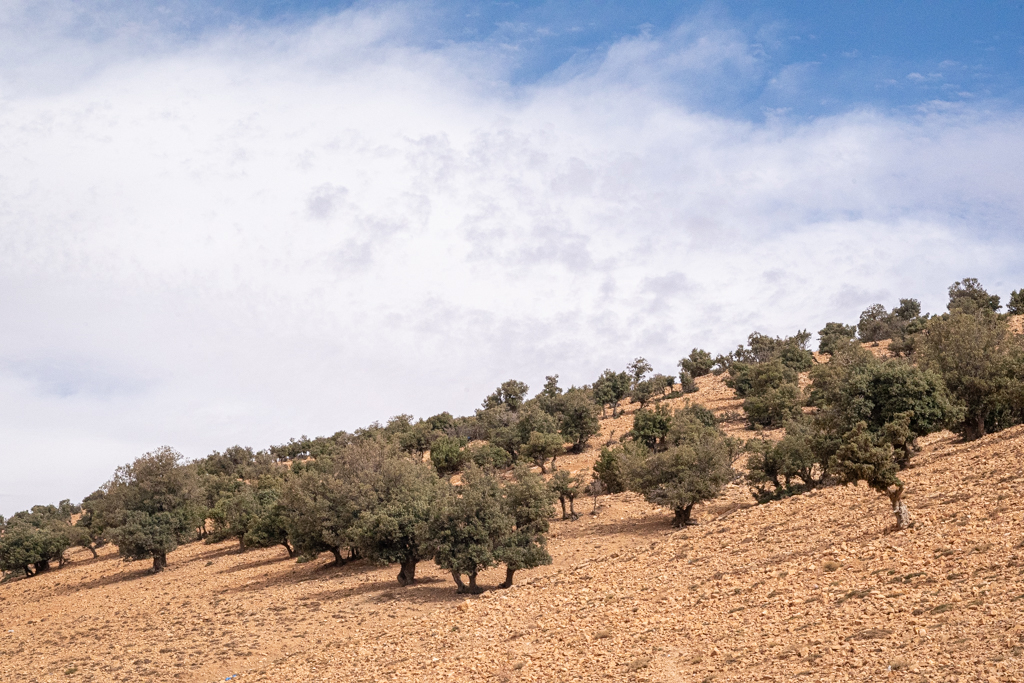
Because of the ongoing drought, the king of Morocco decided that this year there would be no animal sacrifices, and livestock numbers continue to sharply decline. Rachid shared how this shift weighs on him personally; his own generation was the first in his family to step away from nomadic life. He believes that within a century, nomad farmers may exist only as a story. It raised a real question – if meat no longer comes from the mountains, where will future generations turn?
He described how the desire to live from the land comes from the soul. These families don’t need villas or modern luxuries; they find happiness in their environment and in what God provides. No emails. No deadlines. Just the rhythms of the land.
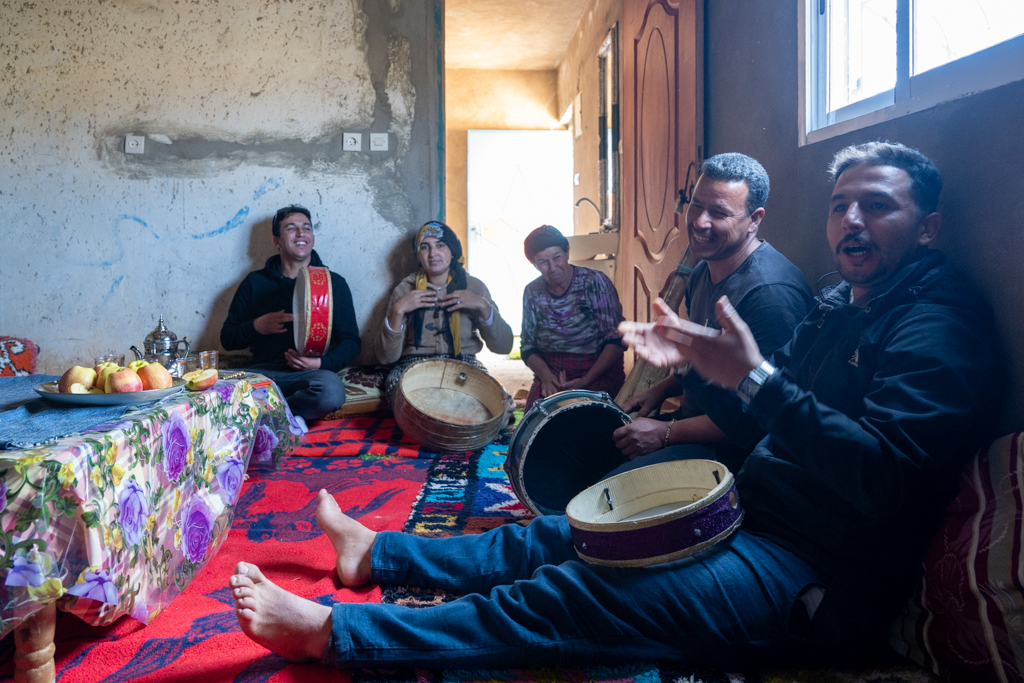
Then, we were treated to music and singing.
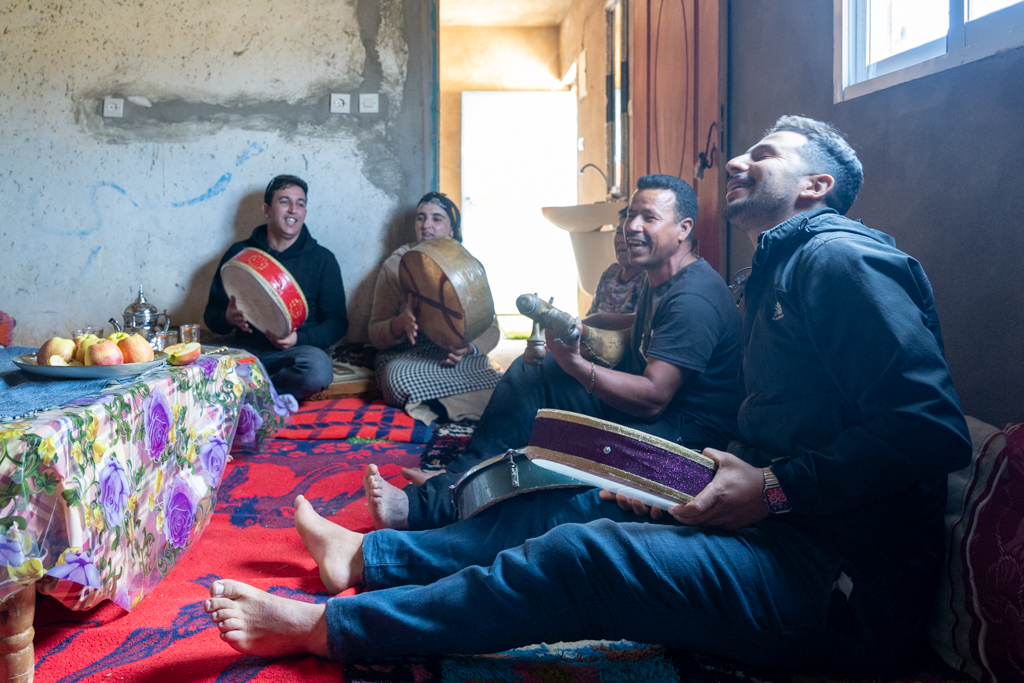
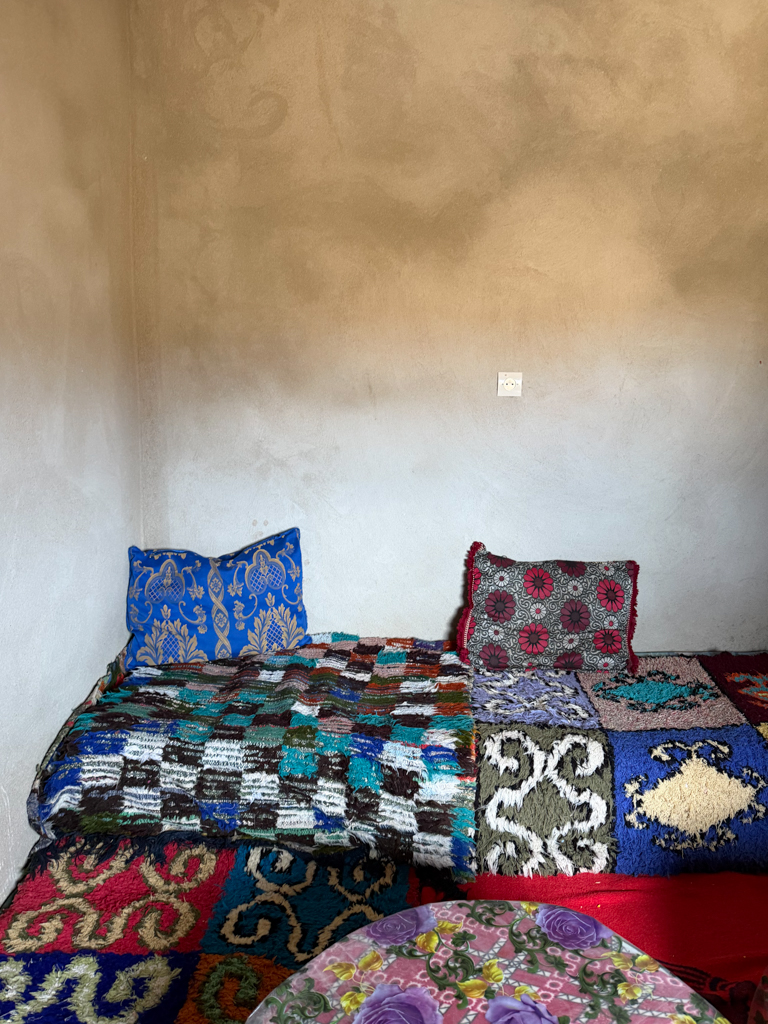
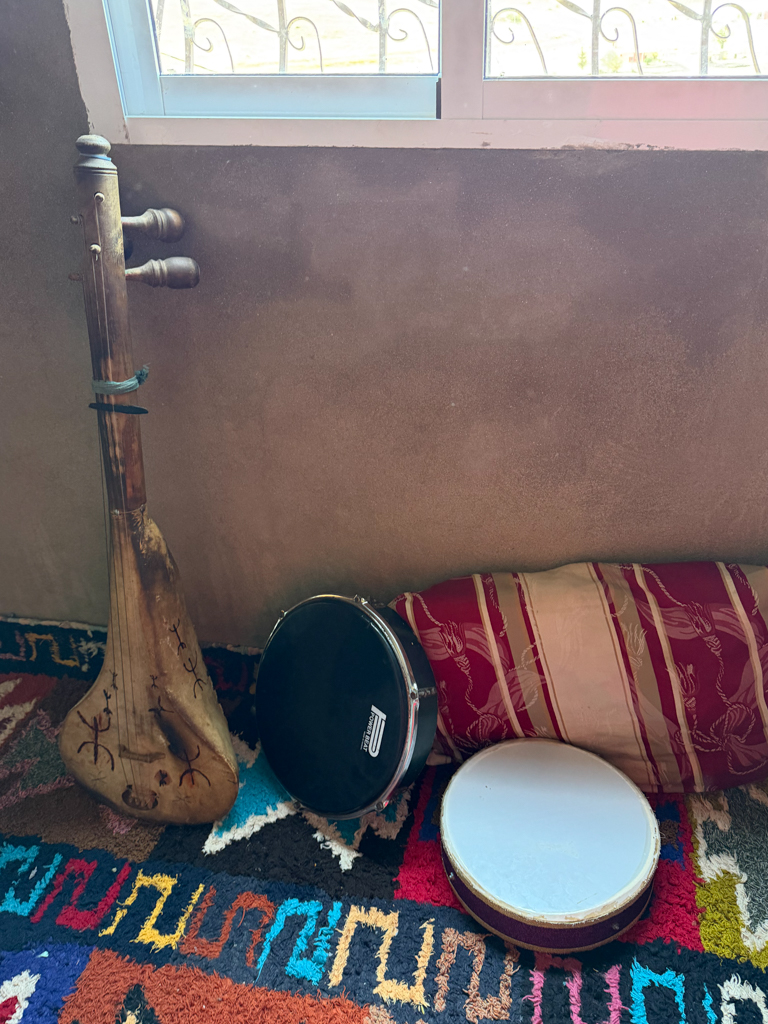
The moment made me reflect deeply on satisfaction and desire. How do we appreciate what we have right now, instead of constantly wanting more? Where does contentment truly come from?
Before leaving, Rachid said something that stayed with me: “We share the salt together.” It’s the Moroccan equivalent of “we break bread together”.
As we left to continue our journey forward, this phrase was a reminder that connection, simplicity, and presence can be their own kind of abundance.
Related Reviews
 One Night in Marrakesh: An Evening Walking Food Tour with Soufiane Adnane
 From Fes to the Sahara: Ifrane, Cedar Forest Monkeys, Berber Culture and the Desert
 Private Tour of the Blue City of Chefchaouen, Morocco with Fatima Habte
 The Road to Marrakech: Atlas Film Studios, the Ksar of Ait-Ben-Haddou, Akhnif Glaoui Carpet Co-Operative and Argan Tichka